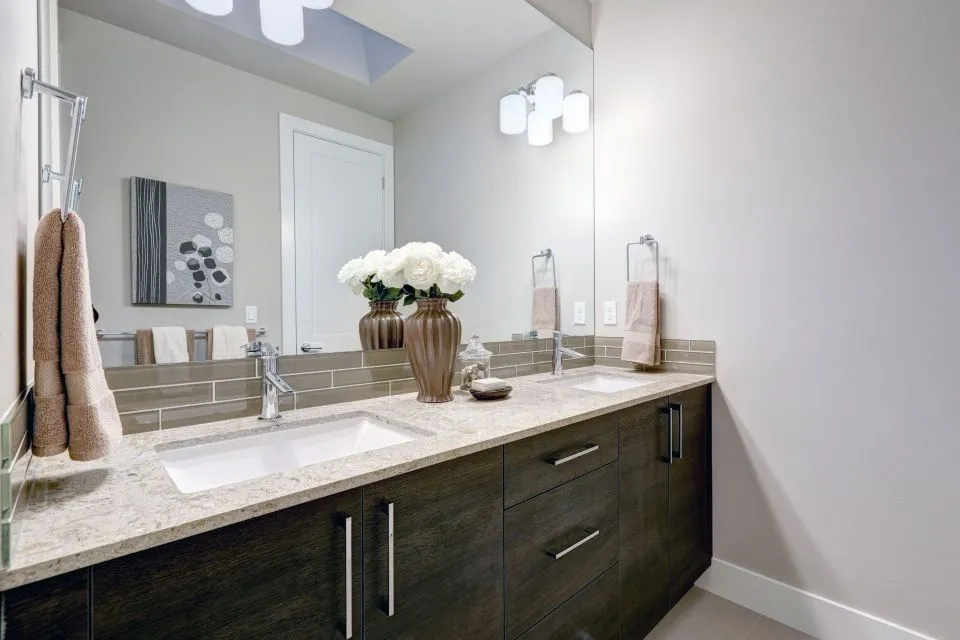
Custom integrated sinks: a seamless look for your bathroom vanity
A bathroom vanity has a major influence on how the entire room looks and functions. The countertop, sink, backsplash, and cabinetry must work together, yet traditional drop-in or undermount sinks can interrupt the surface with visible rims, seams, and transitions. An integrated sink creates a cleaner alternative by forming the basin as part of the countertop itself.
This approach gives a vanity a tailored appearance that suits contemporary, transitional, and minimalist bathrooms. The countertop flows directly into the sink, creating a continuous surface that is easier to coordinate with faucets, mirrors, lighting, and storage. With professional fabrication, the basin can be shaped around the room, the user’s preferences, and the selected slab material.
For homeowners in North Little Rock, Arkansas, and nearby communities, a custom countertop specialist can manage the process from material selection and measurements to templating, fabrication, edging, and installation. The result is a bathroom surface designed for the specific vanity rather than a standard sink added after the fact.
Why an integrated basin changes the vanity
The defining feature of an integrated sink is the uninterrupted transition between the vanity top and basin. Since the sink is fabricated as part of the countertop or bonded with a carefully finished seam, there is no raised rim to catch dust, spilled cosmetics, or standing water. A quick wipe can move debris directly toward the basin without navigating a separate lip.
The visual effect is especially valuable in smaller bathrooms. A continuous surface can make the vanity feel more open because the eye encounters fewer breaks and contrasting edges. In larger primary bathrooms, the same design can provide a calm, architectural appearance that complements oversized mirrors, wall-mounted faucets, floating cabinets, and frameless shower enclosures.
An integrated bathroom sink can also be customized for the way the vanity is used. The basin may be centered, offset, or paired with a second sink. Counter space can be increased beside the bowl, faucet holes can be positioned precisely, and the depth can be coordinated with drawer fronts or plumbing requirements. These details are easier to resolve during custom fabrication than during a basic fixture replacement.
Materials that support a seamless bathroom surface
The material selected for an integrated vanity sink affects appearance, durability, maintenance, and fabrication possibilities. Quartz is a popular choice because it offers consistent color, low routine maintenance, and a broad range of patterns. It can coordinate with a quartz shower wall or backsplash for a unified bathroom design.
Porcelain and sintered surfaces such as Dekton provide a refined, durable finish with strong resistance to moisture, staining, and everyday bathroom products. Their thin visual profile can work well in modern designs, although fabrication requires specialized equipment and experienced installers. Large-format porcelain can also reduce visual interruptions across a long vanity wall.
Natural stone creates a different character. Granite brings varied mineral movement and dependable performance, while marble offers distinctive veining and a classic appearance. Soapstone has a soft, rich look that suits historic, rustic, and relaxed interiors. These materials require appropriate sealing and care, particularly around cosmetics, hair products, and acidic cleaners.
Butcher block is another option for a warm vanity top, although it generally requires more maintenance around wet areas than stone or engineered surfaces. An integrated sink made from the same material may not be suitable for every wood design, so the fabrication method and moisture protection should be discussed early. A custom fabricator can explain whether a carved basin, a complementary sink, or a contrasting material will provide the best long-term result.
Details that make the design feel custom
The sink shape is one of the first design decisions. A rectangular basin reinforces clean lines and makes efficient use of a wide vanity. A softly curved or trough-style basin can create a gentler appearance and may work well in a family bathroom. The interior slope, drain placement, and overflow design also affect how quickly water clears from the surface.
Edge treatment deserves equal attention. A simple eased edge keeps the vanity modern and understated, while a more decorative profile can support a traditional bathroom. On a thick-looking countertop, a laminated edge can create visual weight without requiring a solid slab of the same thickness. The edge should be comfortable to touch and compatible with cabinet doors, drawers, and nearby walls.
Backsplashes and side splashes can be fabricated from matching material to complete the seamless effect. A short backsplash protects the wall behind the faucet, while a full-height backsplash can connect the vanity to a mirror or accent wall. For bathrooms with a strong design direction, matching surfaces can extend into shower walls, niches, quartz shower pans, or shelving.
Custom fabrication can also support features beyond a standard vanity. A long double-sink top, a makeup counter with a lower section, an integrated drainboard, or a furniture-style vanity can be measured and built as one coordinated project. Examples of distinctive residential surfaces and specialty features can be explored through custom project work, including details that bring the same tailored approach to fireplaces, mantels, outdoor kitchens, and furniture pieces.
Comparing common sink and countertop approaches
An integrated basin is one of several ways to build a bathroom vanity. The right choice depends on the desired look, budget, cabinet layout, cleaning preferences, and selected countertop material. A conventional undermount sink remains practical and flexible, while a vessel sink can act as a prominent decorative feature. An integrated design is most compelling when visual continuity and easy surface cleaning are priorities.
The table below outlines general differences. Fabrication methods vary by material, so final recommendations should be based on the actual slab, vanity dimensions, and installation conditions.
| Vanity sink approach | Visual character | Cleaning considerations | Customization potential | Best suited for |
|---|---|---|---|---|
| Integrated sink | Continuous, tailored, minimalist | Few transitions and no exposed rim | High; basin size, position, slope, and shape can be coordinated | Modern, transitional, and custom bathrooms |
| Undermount sink | Clean countertop with a separate bowl | Easy to wipe from the counter into the sink | Moderate; broad selection of bowl sizes and styles | Flexible remodels and many stone countertops |
| Drop-in sink | Defined rim around the fixture | Rim can collect residue and require extra wiping | Moderate, with many ready-made options | Budget-conscious updates or existing cutouts |
| Vessel sink | Decorative, elevated focal point | Exterior and rim need regular cleaning | Moderate; many colors and forms available | Statement vanities and furniture-style designs |
| Trough sink | Long shared basin with linear appearance | Open basin is easy to access but may need more frequent wiping | High for wide vanities and shared use | Family bathrooms and double-faucet layouts |
The countertop installation method also influences the finished look. With an integrated sink, the opening, basin, drain, faucet placement, and cabinet support must be coordinated before fabrication. This makes accurate measurements and templating essential. A small discrepancy can affect wall clearances, drawer operation, plumbing connections, or the alignment of the sink with the mirror above it.
Planning measurements and installation
The process begins with a discussion of the vanity layout, household needs, preferred material, and overall bathroom style. Measurements should account for wall conditions, cabinet dimensions, plumbing locations, door swings, shower enclosures, and the distance between the sink and adjacent surfaces. If the vanity is replacing an existing top, the fabricator may need to verify whether the walls and cabinets are level and square.
Templating creates a precise pattern for the countertop and basin. The template identifies sink placement, faucet holes, backsplash dimensions, edge details, exposed ends, and cutouts for accessories. It also confirms how the top will meet a side wall or return. Careful templating is particularly important for a double vanity, where even small alignment issues can become obvious across a long surface.
Installation includes setting the countertop securely, connecting the sink and drain, sealing appropriate joints, and checking that doors and drawers operate correctly. Heavy stone and porcelain surfaces may require proper cabinet support, while plumbing access should be planned before the top is permanently installed. A professional team can coordinate these details with the homeowner, cabinet installer, plumber, and remodel contractor.
Although the business is known for kitchen work as well, its broader countertop expertise applies to many wet-area projects. Homeowners planning several rooms may find kitchen and surface services useful when coordinating material, edging, fabrication, and installation details across a kitchen and bathroom renovation.
Caring for a seamless vanity top
Daily maintenance is straightforward when the countertop and sink have a smooth, well-finished transition. Use a soft cloth or nonabrasive sponge with mild soap and water for routine cleaning. Wipe away toothpaste, cosmetics, hair products, and standing water rather than allowing residue to dry on the surface. A squeegee or microfiber towel can help keep a broad vanity top looking polished.
Cleaning products should match the selected material. Harsh abrasives, highly acidic solutions, and scouring pads may dull polished stone, damage a finish, or weaken sealers. Marble and some other natural stones can be sensitive to acidic substances, while wood surfaces need particular attention to moisture and periodic maintenance. Quartz, porcelain, and Dekton still benefit from gentle cleaning even when they offer strong resistance to stains and water.
The sink drain and overflow should be checked periodically for buildup. Avoid forcing heavy objects against thin edges or using the basin as a place to store sharp tools. If a seam, chip, stain, or persistent drainage issue appears, early attention can prevent a minor concern from becoming a larger repair. Proper installation and material-specific care preserve the clean appearance that makes an integrated vanity attractive.
A practical selection checklist
Before approving the design, review how the vanity will function every day as well as how it will look in photographs or showroom lighting. Bring together the cabinet plan, plumbing information, mirror dimensions, faucet specifications, and preferred countertop samples. Coordinating these elements early reduces last-minute changes and helps the finished room feel intentional.
Use the following points when discussing the project with a countertop fabricator:
- Select a surface material that matches the bathroom’s moisture exposure, cleaning habits, and desired style.
- Decide whether the basin should be rectangular, curved, trough-style, centered, offset, or divided into two sinks.
- Confirm faucet locations, drain positions, overflow requirements, backsplash height, and clearance from walls.
- Review edge profiles, exposed ends, cabinet support, drawer clearance, and access for plumbing connections.
- Ask for a detailed measurement and installation plan that includes seams, templating, fabrication, sealing, and final adjustments.
Samples should be viewed in the bathroom’s actual lighting whenever possible. A quartz pattern may appear more dramatic beside a neutral cabinet, while marble movement can change significantly across a long vanity. The sink interior should also be considered: lighter colors show residue more readily, whereas darker surfaces can emphasize mineral deposits from hard water.
Custom vanity fabrication is most successful when aesthetic decisions and construction details are handled together. The material, sink shape, edge, backsplash, and installation method should support one another rather than being chosen as unrelated components. That coordination creates a result that feels built into the room from the beginning.
A seamless integrated sink can give a bathroom lasting visual order while simplifying daily cleanup. For homeowners in North Little Rock and surrounding areas, The Countertop Store provides consultation, material guidance, precise templating, fabrication, custom edging, and installation for bathroom surfaces and related remodeling features. Begin planning your vanity with a design team that can turn the available space, preferred material, and practical needs into a finished countertop made specifically for your home.