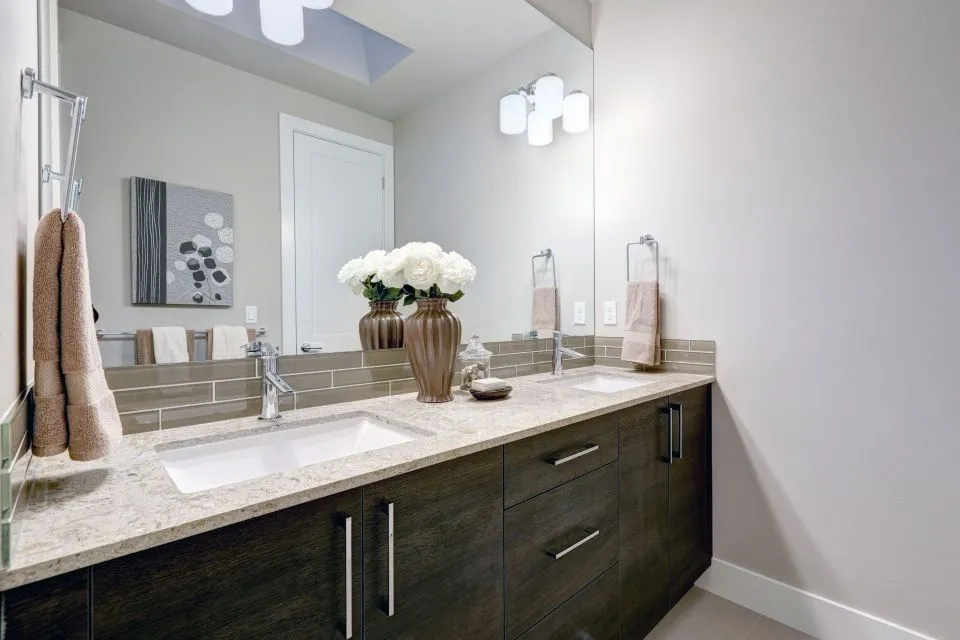
Granite vs. Quartz for a Functional, Beautiful Bathroom
Bathroom countertops need to handle moisture, daily grooming routines, cleaning products, and occasional spills without losing their visual appeal. Granite and quartz are both strong candidates, but they behave differently in terms of maintenance, design, heat resistance, installation, and long-term value.
The best choice depends on how the bathroom is used, the style of the home, and the type of surface you want to create. A busy family bathroom may benefit from quartz’s consistent performance, while a custom primary bath may be enhanced by the natural movement and individuality of granite.
A professional fabricator can help you compare slabs, edge profiles, sink options, and backsplash details before you commit. The local countertop specialists at The Countertop Store serve North Little Rock and surrounding Arkansas communities with measurement, templating, fabrication, and installation for bathroom remodeling projects.
How granite and quartz are made
Granite is a natural stone quarried from the earth and cut into slabs. Each piece develops through natural geological processes, so its color, mineral pattern, veining, and grain can vary significantly. Two slabs labeled with the same granite name may still look noticeably different, making in-person selection especially valuable.
Because granite is a natural material, it can bring depth and movement to a bathroom vanity. Flecks, crystalline details, subtle veins, and dramatic color transitions can create a one-of-a-kind focal point. This variation works especially well in bathrooms where the countertop is intended to be a prominent design feature.
Quartz countertops are engineered surfaces made from ground natural quartz combined with resins, pigments, and other materials. The manufacturing process creates a dense slab with more predictable color and pattern control. Many quartz designs imitate marble, limestone, or other natural stones, while others offer solid colors and contemporary textures.
Quartz’s consistency makes it easier to coordinate a vanity top with floor tile, shower walls, cabinetry, and plumbing fixtures. If you need two countertops to look closely matched, engineered quartz generally offers a simpler path than natural granite.
Durability and everyday bathroom use
Both materials are hard, durable, and suitable for bathroom vanities. Granite resists scratches and performs well under normal household use. Properly fabricated granite can support undermount sinks, vessel sinks, wide vanity tops, and custom overhangs when the cabinetry and installation are designed correctly.
Quartz is also highly resistant to scratching and everyday wear. Its nonporous composition helps prevent common bathroom substances from soaking into the surface. Toothpaste, cosmetics, soap, and water are usually easy to remove when the counter is cleaned regularly with an appropriate product.
Neither surface should be treated as indestructible. Heavy objects can chip a corner or edge, particularly around sink cutouts and narrow overhangs. Hair tools and very hot objects should not be placed directly on either material. While bathrooms generally present fewer heat concerns than kitchens, curling irons, flat irons, and heated styling tools can still damage some surfaces or leave marks.
Granite has a practical advantage when exposed to moderate heat because natural stone is generally more heat tolerant than resin-based engineered surfaces. However, heat resistance does not eliminate the possibility of thermal shock or damage to sealers, cabinetry, or nearby materials. Using a heat-resistant mat remains a sensible habit.
Stain resistance and maintenance needs
The maintenance difference between granite and quartz often influences a homeowner’s decision more than durability does. Granite is porous to varying degrees, depending on its mineral composition and finish. It normally receives a penetrating sealer during or after installation, and that sealer may need periodic renewal.
Sealing does not make granite maintenance-heavy. Routine care usually involves wiping up spills, using a soft cloth, and choosing a cleaner designed for natural stone. Acidic or abrasive products can dull the finish or weaken the protective seal. Cosmetics and hair dye deserve prompt attention, particularly on lighter granite colors.
Quartz is nonporous, so it does not require routine sealing. This makes it appealing for homeowners who want a low-maintenance vanity surface with a simple cleaning routine. A mild, non-abrasive cleaner and a damp cloth are generally appropriate, though product instructions from the manufacturer should guide care.
Quartz is not automatically resistant to every stain or chemical. Strong solvents, concentrated dyes, harsh acids, and prolonged exposure to certain products can discolor or damage the resin component. A quartz vanity should still be wiped clean after spills rather than treated as a surface that needs no care.
| Feature | Granite | Quartz |
|---|---|---|
| Material type | Natural quarried stone | Engineered quartz and resin |
| Appearance | Unique variation in every slab | Consistent patterns and colors |
| Sealing | Usually required periodically | Not routinely required |
| Moisture resistance | Strong when properly sealed | Naturally nonporous |
| Heat tolerance | Generally higher | Use care with hot styling tools |
| Scratch resistance | Very good | Very good |
| Repair considerations | Chips can often be professionally repaired | Chips may be repairable, depending on location |
| Design flexibility | Natural mineral movement and veining | Broad range of modern and stone-inspired looks |
| Best fit | Distinctive, natural, custom designs | Predictable, low-maintenance, coordinated designs |
Appearance, color, and bathroom style
Granite can add a sense of permanence to a bathroom. Dark granite may complement walnut cabinetry, matte black fixtures, and warm wood accents. Light granite can brighten a compact vanity area and pair well with white cabinets, brushed nickel hardware, or traditional tile.
The natural variation in granite can be a major design benefit, but it needs to be considered alongside the rest of the room. A highly patterned slab may compete with busy floor tile or a decorative shower wall. A quieter granite design may work better when the bathroom already includes several textures.
Quartz provides extensive control over the finished appearance. Its manufacturing process supports clean white surfaces, soft gray veining, warm beige tones, concrete-inspired patterns, and bold contemporary colors. This variety makes it useful for transitional, modern, minimalist, and traditional bathrooms.
The edge detail also shapes the result. A simple eased edge creates a clean contemporary look, while a rounded edge can soften a traditional vanity. More decorative profiles may suit a furniture-style cabinet, but they can collect dust and require additional cleaning. A fabricator can show how the slab thickness and edge treatment will affect the final design.
Sinks, backsplashes, and shower surfaces
Countertop selection should happen alongside decisions about sinks and surrounding surfaces. Granite and quartz can both be fabricated for undermount sinks, top-mount sinks, vessel sinks, faucet holes, side splashes, and full-height backsplashes. The right configuration depends on the cabinet layout, wall conditions, plumbing, and the visual style of the room.
An integrated sink or custom sink area can create a streamlined appearance with fewer visible transitions. Quartz is often chosen for this clean, coordinated effect, while granite can provide a richer natural-stone statement around a classic undermount basin. Sink cutouts must be measured precisely, and the cabinet must provide adequate support before fabrication begins.
A matching backsplash can protect the wall behind the vanity while tying the room together. Some homeowners prefer a narrow backsplash, while others extend the countertop material up the wall for a dramatic slab backsplash. Quartz and granite may also be coordinated with shower walls, niches, thresholds, and other bathroom remodeling surfaces.
For a broader remodeling project, it helps to work with a company that handles more than a single slab. The Countertop Store provides remodeling surface services that can support coordinated material decisions across kitchens, bathrooms, backsplashes, and custom applications.
Installation, cost, and long-term value
The price of a granite or quartz bathroom countertop depends on more than the material name. Slab quality, color availability, vanity size, sink cutouts, backsplash requirements, edge complexity, delivery, demolition, and installation all influence the final cost. A smaller bathroom may still require a custom slab layout and careful templating.
Granite pricing can vary widely because some colors are common while others are rare or difficult to source. Quartz also spans a broad price range, with premium collections, intricate veining, and specialized finishes increasing the investment. Comparing samples without reviewing fabrication details can lead to an inaccurate budget.
Professional installation matters for both options. The installer must verify walls, cabinets, plumbing clearances, support points, and appliance or fixture locations before the slab is cut. A precise template helps prevent problems around corners, backsplash joints, sink openings, and faucet placement.
Long-term value comes from combining suitable material with reliable workmanship. A beautiful slab may disappoint if the vanity is inadequately supported or the sink is poorly aligned. Clear communication about measurements, seams, edge profiles, maintenance, and installation timing helps protect the result.
Which material suits your bathroom?
There is no universal winner between granite and quartz. Each offers a strong combination of beauty and performance, but the priorities differ. Granite is especially appealing when natural variation, heat tolerance, and a distinctive stone pattern matter most. Quartz is often the better match for low-maintenance living, consistent design, and easy coordination with other finishes.
Use these priorities to narrow the decision:
- Choose granite when you want a naturally unique slab with mineral variation and a traditional or organic character.
- Choose quartz when you prefer predictable color, nonporous performance, and no routine sealing.
- Review full-size slabs before choosing a strongly patterned material, especially for a small vanity.
- Select sink cutouts, backsplash dimensions, and edge profiles at the same time as the countertop.
- Ask about cleaning instructions, support requirements, fabrication details, and installation timing before approving the project.
The bathroom’s lighting should also influence the selection. Natural light may reveal subtle granite movement that is easy to miss in a showroom, while artificial lighting can change the appearance of white, gray, and beige quartz. Bring cabinet, tile, paint, and fixture samples when comparing slabs so the material is judged within the actual design palette.
For North Little Rock homeowners, a local consultation can make the process more efficient. Measurements and templates account for uneven walls, cabinet variations, plumbing placement, and the exact position of the sink and faucet. Those details are difficult to resolve from a material sample alone.
A well-chosen vanity top should suit the room’s design and the household’s habits for years. Contact The Countertop Store to compare granite and quartz options, review available finishes, and plan professional fabrication and installation for your bathroom remodeling project.