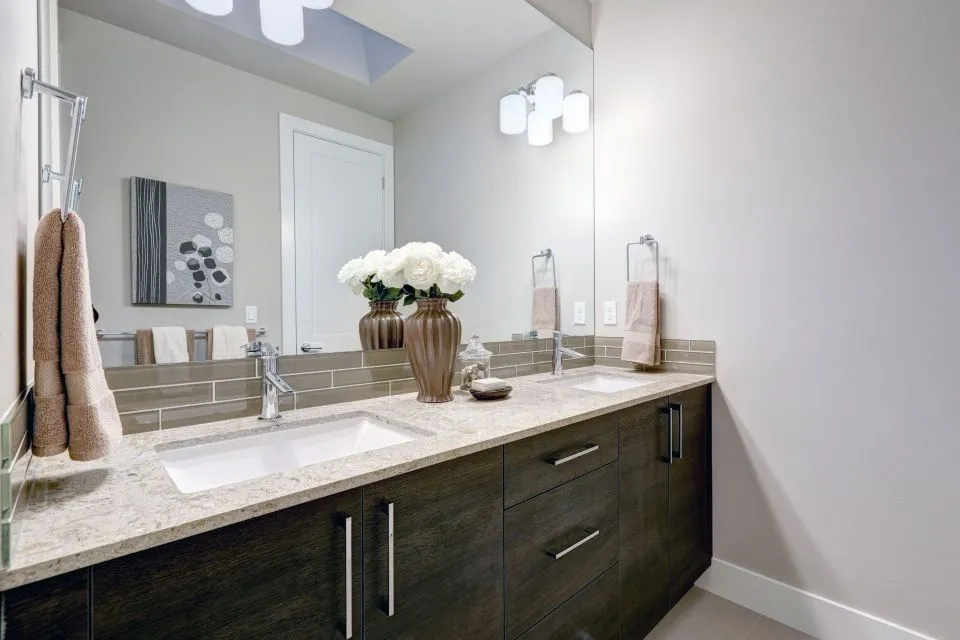
How Thick Should Your Kitchen Countertop Be?
Countertop thickness affects far more than appearance. It influences the visual weight of a kitchen, the strength of an overhang, the way an edge profile looks, and whether a sink or cooktop can be installed correctly. The right dimension depends on the material, cabinet layout, support system, and the style you want to create.
For many kitchens, a standard countertop is approximately 1¼ inches thick, or 3 centimeters. That measurement is especially common for quartz and granite slabs. However, “standard” does not mean every countertop should use the same thickness. Some materials are fabricated at 2 centimeters, while porcelain and certain specialty surfaces may be much thinner.
A professional fabricator can help balance design preferences with practical requirements. At The Countertop Store, the process includes consultation, field measurements, templating, fabrication, edging, and installation for homes in North Little Rock, Arkansas, and surrounding communities. That full-service approach helps ensure the chosen thickness works with the room rather than being selected in isolation.
What Standard Countertop Thickness Means
Countertop thickness is usually discussed in centimeters or inches. A 3cm slab measures approximately 1.18 inches, commonly rounded to 1¼ inches in residential discussions. A 2cm slab is about ¾ inch thick, while a 12mm porcelain slab is close to ½ inch. Small differences in measurement can produce a noticeably different edge and may affect how the surface is supported.
Natural stone and quartz countertops are frequently available in 2cm and 3cm options. In many residential kitchens, 3cm is installed as a single solid slab, creating a substantial edge without additional work. A 2cm slab can also perform well, but fabricators often add a laminated edge or “build-up” strip along the front to create the appearance of a thicker countertop.
A build-up does not make the entire slab thicker. It adds material at selected edges, usually the exposed front, while the main field of the countertop remains 2cm. This approach can reduce material weight and cost while producing a traditional 1¼-inch profile. The seam must be fabricated carefully so it is subtle and durable.
How Countertop Material Changes the Answer
Quartz and granite are among the most flexible choices for standard kitchen applications. A 3cm slab typically offers a strong, substantial surface with fewer visual interruptions at the edges. It is a popular selection for islands, perimeter counters, and areas where the edge will be prominently visible. Two-centimeter quartz or granite may be appropriate when the design includes a laminated edge and adequate cabinet support.
Marble has similar thickness options, but its structure and veining deserve careful consideration. A thinner marble slab may be more vulnerable around sink cutouts, cooktop openings, narrow sections, and unsupported overhangs. Thickness alone does not prevent cracking, but a suitable slab dimension combined with proper support can reduce stress at vulnerable areas.
Porcelain is engineered differently from quartz and natural stone. Large-format porcelain may be available in 6mm, 12mm, or other thicknesses, depending on the manufacturer and application. It can provide excellent resistance to staining, heat, and everyday wear; homeowners researching its performance can explore these porcelain countertops for busy family kitchens. Because porcelain can be thinner and more rigid, fabrication, transportation, seam placement, and substrate support require specialized planning.
Dekton and other sintered stone surfaces also need material-specific guidance. Some versions are designed for countertops at approximately 2cm, while other products may be used in thinner formats for walls or specialized applications. Soapstone often has a softer, more tactile appearance and may be fabricated at a substantial thickness to complement its traditional character. Butcher block is commonly made between 1½ and 2¼ inches thick, although custom dimensions are possible.
Choosing Thickness By Kitchen Layout
A perimeter countertop that rests continuously on cabinets usually has straightforward support requirements. In this setting, 3cm quartz, granite, or marble is a dependable and visually balanced choice. A thinner slab can work when the cabinets, plywood substrate, and edge treatment are designed for it, but the installer must account for appliances, cutouts, and seams.
Kitchen islands require more detailed planning because they often include seating overhangs. An island with minimal overhang may use the same thickness as the perimeter counters. An island with a deep breakfast bar, however, may need steel brackets, corbels, concealed supports, or another structural solution. The stone or quartz cannot be expected to carry a long unsupported projection safely.
Sink and cooktop cutouts are also important. These openings interrupt the slab and create areas where stress can concentrate. A thicker material may provide greater rigidity, but even a thick countertop can fail if the cutout has sharp corners, inadequate clearance, or insufficient support. The fabricator should review the sink type, faucet placement, dishwasher support, and cooktop specifications before the slab is cut.
Wall length, seam placement, and access to the home can influence the practical choice as well. A large, heavy 3cm slab may be ideal once installed but difficult to transport through a tight stairway or doorway. In some cases, a carefully planned seam or a different slab format creates a safer installation without compromising the design.
Edge Profiles And Visual Weight
Thickness is especially noticeable at the edge of a countertop. A square edge on a 3cm slab creates a clean, modern line, while a small eased edge softens the corner without changing the overall profile. Beveled, bullnose, ogee, and custom edge treatments can make the same slab feel contemporary, traditional, or transitional.
A 2cm countertop with a laminated edge can appear nearly identical to a 3cm slab from the front. The difference is usually more visible at corners, seams, waterfall ends, and areas where the top and edge meet. Matching the material’s pattern across the build-up is essential, particularly with veined marble, quartzite, porcelain, and heavily patterned quartz.
Very thick visual edges can become a strong architectural feature. A 4cm or thicker appearance may suit a substantial island, rustic kitchen, or furniture-style vanity, but it can overwhelm a small room if used everywhere. Conversely, a thin porcelain edge may support a minimalist design and allow cabinetry, backsplash, or hardware to remain the visual focus.
Edge fabrication also affects cost. More material, labor, polishing, shaping, and seam work may be required for a custom profile or laminated edge. Discussing the desired edge before finalizing the slab helps align the appearance with the project budget.
Comparing Common Countertop Thicknesses
The following ranges are general residential guidelines rather than universal rules. Availability varies by manufacturer, and some products are approved only for specific uses. A fabricator should verify the exact slab specifications before ordering or cutting.
| Material or Format | Common Thicknesses | Typical Uses | Important Considerations |
|---|---|---|---|
| Quartz | 2cm or 3cm | Perimeter counters, islands, vanities | A 2cm slab may need a laminated edge and proper substrate |
| Granite | 2cm or 3cm | Kitchen counters, islands, outdoor kitchens | Check support around cutouts and overhangs |
| Marble | 2cm or 3cm | Islands, baking areas, vanities | Veining, cutouts, and unsupported areas require careful planning |
| Porcelain | 6mm, 12mm, or product-specific | Counters, backsplashes, walls, islands | Specialized fabrication and full support may be necessary |
| Dekton or sintered stone | Product-specific, often 2cm | Counters, islands, outdoor applications | Follow manufacturer requirements for support and installation |
| Soapstone | Often approximately 3cm | Farmhouse, traditional, and specialty kitchens | Weight and softer surface require appropriate handling |
| Butcher block | Approximately 1½–2¼ inches | Islands, worktops, accent counters | Wood movement, sealing, and moisture management matter |
| Laminate | Varies by construction | Budget-friendly perimeter counters | The finished edge usually determines the apparent thickness |
A comparison like this is useful at the early design stage, but it cannot replace a project-specific review. The same thickness may be suitable for one material and unsuitable for another. Cabinet spacing, plywood decking, support rails, appliance openings, and the intended overhang all change the calculation.
A custom countertop may combine several thicknesses in one kitchen. For example, a 3cm quartz perimeter can be paired with a butcher block prep section, a porcelain backsplash, and a thicker-looking island edge. Coordinating those transitions during the design phase produces a more intentional result than trying to match every surface dimension exactly.
A Practical Thickness Selection Checklist
Before choosing a slab thickness, consider how the surface will be used and how it will be supported. A rarely used vanity can have different requirements from an island where several people sit, prepare food, and gather every day. The visual style matters, but structural planning should come first.
The following points can help organize a conversation with your countertop professional:
- Confirm the manufacturer’s approved thicknesses and installation requirements for the selected material.
- Identify all sink, faucet, cooktop, outlet, and appliance cutouts before fabrication begins.
- Measure island overhangs and plan concealed brackets, legs, corbels, or steel supports where needed.
- Decide whether the edge should show a solid slab, a laminated build-up, or a thinner contemporary profile.
- Review seams, access paths, cabinet support, and backsplash dimensions during templating.
It is also worth considering the relationship between the countertop and nearby surfaces. A thick island edge may coordinate with a furniture-style base, while a slim porcelain surface may work better with full-height backsplash panels and modern cabinetry. Countertop thickness should support the overall composition rather than be treated as a separate technical choice.
Homeowners in North Little Rock and nearby areas can benefit from reviewing material samples, edge options, and layout drawings together. A professional can explain where a thicker slab adds value, where a build-up is sufficient, and where additional structural support is necessary.
The best kitchen countertop thickness is the one that suits the material, layout, support system, and design intent at the same time. For many kitchens, 3cm quartz or granite provides a reliable standard with a substantial finished edge. Other projects may benefit from 2cm stone with a build-up, a thin porcelain profile, or a custom butcher block dimension.
The Countertop Store can help take the decision from an early idea to a properly measured, fabricated, and installed surface. Contact the team to discuss your kitchen layout, material preferences, edge profile, and overhang requirements, and plan a countertop that looks right and performs reliably for years.