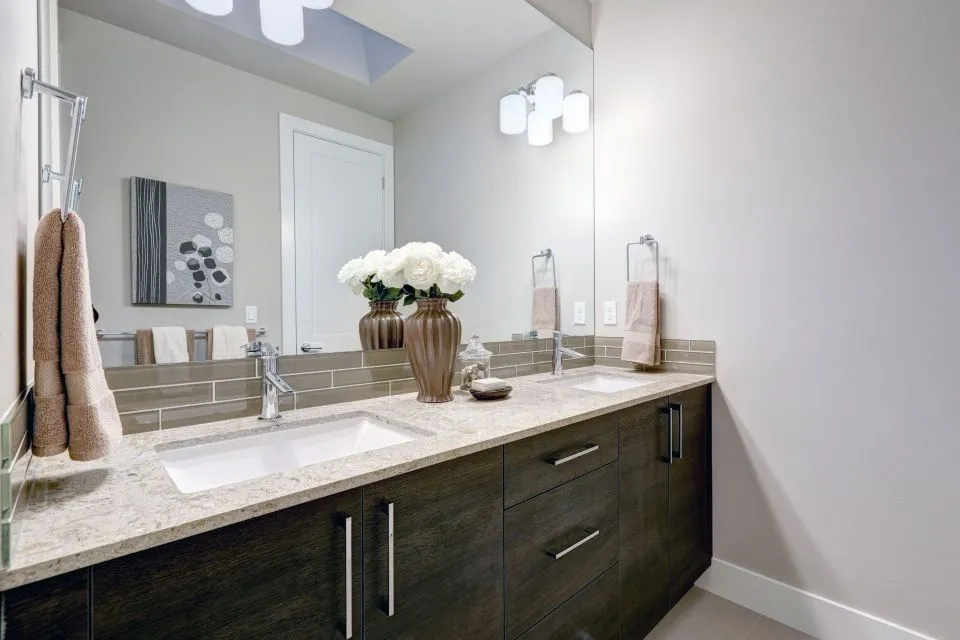
Choosing a Countertop for Your Laundry Room or Mudroom
Laundry rooms and mudrooms have become hardworking utility spaces rather than areas hidden behind a closed door. They may handle sorting, folding, pet care, school bags, sports equipment, gardening supplies, and everyday messes. A durable, well-planned work surface can make these rooms easier to use while giving them the same polished appearance as the rest of the home.
The right countertop depends on how the room functions, how much maintenance you want, and how the surface will coordinate with cabinets, flooring, appliances, and wall finishes. A folding counter above a washer and dryer has different needs from a deep mudroom worktop used for crafts, planting, or household storage.
Material, edge profile, sink configuration, wall protection, and installation quality all affect the finished result. With careful planning and professional fabrication, a utility countertop can be attractive, practical, and tailored to the exact dimensions of your North Little Rock home.
Start With The Room’s Daily Work
Begin by identifying the tasks the surface must support. In a laundry room, the countertop may be used for folding clothes, treating stains, organizing clean garments, or storing baskets. A mudroom worktop may serve as a drop zone for keys and backpacks, a bench surface, a pet-washing station, or a place to prepare gardening supplies.
Measure the available footprint, including the distance between side walls, the location of doors, and the clearance needed for appliance doors to open fully. If the counter will sit over a front-loading washer and dryer, confirm the appliance height and allow enough depth for hoses, vents, controls, and future servicing. A surface that looks streamlined but blocks access can quickly become frustrating.
Consider how the countertop connects to nearby storage. Cabinets, open shelves, cubbies, and tall utility units should work together rather than leave awkward gaps. In a mudroom, a slightly deeper worktop may provide useful space for baskets or equipment, while a laundry counter often benefits from a clean, uninterrupted span for folding.
Compare Surfaces For Utility Areas
Quartz is a popular choice for laundry and mudroom countertops because it offers a consistent appearance, strong everyday performance, and simple cleaning. Its broad range of colors can imitate marble, concrete, or natural stone while coordinating with painted cabinetry. For households that want a low-maintenance surface for frequent use, quartz is often a practical starting point.
Granite provides natural variation and excellent durability. Each slab has its own movement, color shifts, and mineral pattern, which can add character to a utility room with simple cabinetry. Granite generally tolerates heat, moisture, and heavy use well, although the specific stone and its sealing needs should be discussed during the selection process.
Porcelain and Dekton are useful options when stain resistance, modern styling, and hard-wearing performance are priorities. Their large-format designs can create a clean look with fewer visual interruptions. These materials require experienced fabrication because cutting, transporting, and installing thin or large slabs demands careful handling.
Marble brings distinctive veining and a refined appearance, but it can be more vulnerable to etching and staining than quartz or many granite options. It may suit a lightly used laundry folding station or a mudroom designed around decorative appeal, provided the homeowner is comfortable with natural patina and appropriate care.
Match The Material To Moisture And Mess
Utility rooms frequently encounter water, detergent, dirt, pet supplies, and cleaning products. A countertop should be selected with these exposures in mind. Smooth, nonporous materials are usually easier to wipe clean after spills, especially around utility sinks and areas where damp clothing may be placed.
If a sink is part of the design, think beyond the basin itself. The countertop needs enough landing space on one or both sides, and the surrounding wall may need a backsplash or durable vertical surface. Integrated sinks can create a streamlined appearance with fewer seams, while an undermount sink keeps the counter easy to sweep or wipe into the basin.
Mudrooms may face a different type of wear. Sand, grit, muddy shoes, sports equipment, and pet-related messes can scratch or soil a surface over time. A strong stone or engineered surface with a well-finished edge can handle daily activity, while a highly porous or delicate option may require extra care.
Butcher block can bring warmth to a mudroom, especially when paired with painted cabinets, hooks, and wood accents. It can work well as a bench or folding surface, but it needs proper finishing and routine maintenance to protect it from moisture. It is less suitable where standing water is common unless the homeowner is prepared to maintain it carefully.
Balance Appearance With Maintenance
Color and pattern affect how often a surface appears clean. Light counters can brighten a compact laundry room, but very pale finishes may show dye, dirt, or detergent residue more readily. Medium tones and subtle patterns can conceal everyday marks while still keeping the room visually open.
Dark countertops can create contrast against white or light cabinetry, though they may reveal dust, lint, and water spots. Strong veining can become a focal point, but a busy pattern may compete with patterned tile, colorful storage bins, or heavily detailed flooring. Samples viewed under the room’s actual lighting are more reliable than small online images.
Maintenance expectations should be discussed before choosing a slab. Ask how the surface should be cleaned, whether it requires sealing, how it responds to common household products, and what happens if it is chipped or scratched. The easiest material is the one that matches the way the household already cares for its home.
A professional fabricator can also help coordinate the countertop with a backsplash, shower-style wall panel, or other custom surface in the home. Reviewing examples of finished work and customer experiences can provide useful insight into communication, workmanship, scheduling, and installation quality.
| Material | Useful Qualities | Points To Consider | Good Applications |
|---|---|---|---|
| Quartz | Consistent color, low routine maintenance, broad design range | Seams and slab layout still require careful planning | Folding counters, utility sinks, mudroom worktops |
| Granite | Natural variation, durability, strong visual character | Some stones need periodic sealing | Heavy-use laundry rooms and mudrooms |
| Porcelain | Stain-resistant, contemporary styles, large-format options | Requires skilled cutting and handling | Modern utility spaces and wall applications |
| Dekton | Very hard-wearing, sleek appearance, heat and stain resistance | Fabrication and installation require specialized experience | High-traffic mudrooms and demanding work areas |
| Marble | Distinctive veining and classic appeal | Can etch or stain and may need more attentive care | Decorative folding stations and design-focused rooms |
| Butcher Block | Warm, inviting appearance and easy customization | Needs sealing and protection from standing moisture | Mudroom benches, accents, and dry folding zones |
Plan Edges, Seams, And Wall Protection
The edge profile may seem like a small detail, but it influences both style and durability. A eased edge has a clean, understated appearance and avoids a sharp corner. A small bevel can add definition, while a more decorative profile may suit traditional cabinetry. Rounded edges are especially useful where children, pets, or frequent traffic are present.
Seams should be placed where they are least noticeable and least exposed to water. Long counters may require more than one slab, and appliance layouts can affect the best seam location. Skilled templating helps account for walls that are not perfectly square, cabinet irregularities, sink openings, and the direction of the material’s pattern.
A backsplash can protect drywall from splashes behind a utility sink or along a folding counter. It may be a short matching strip, a full-height stone panel, porcelain tile, or another washable wall finish. In a mudroom, a durable vertical surface can also protect walls from bags, boots, pet activity, and garden tools.
Think about transitions around appliances and cabinetry as well. The finished installation should leave room for ventilation, drawer operation, and access to shutoff valves. These practical details are easier to resolve during templating than after the countertop has been fabricated.
Consider Custom Features And Storage
A custom countertop can do more than cover a row of cabinets. In a laundry room, it may include a built-in drop zone, an integrated sink, a pet-care area, or a raised section for sorting supplies. In a mudroom, the surface can be coordinated with a bench, cubbies, hooks, and tall storage for coats or cleaning equipment.
A quartz or stone counter can also extend into a small work surface for wrapping packages, arranging flowers, or completing household projects. If the room connects to an outdoor area, a durable material may be carried through to an outdoor kitchen or secondary prep space for a cohesive design language.
Integrated sinks are especially attractive when cleanliness and visual simplicity matter. With the basin formed as part of the countertop system, there may be fewer crevices where grime can collect. The design must still account for plumbing access, faucet placement, cabinet support, and the sink’s intended use.
Custom fabrication is valuable when walls are angled, appliances have unusual dimensions, or the room includes furniture-like cabinetry. Accurate field measurements and templates help ensure the finished piece fits the actual space rather than relying solely on assumed cabinet dimensions.
Choose Details That Support Long-Term Use
A successful utility-room countertop should still work if appliances are replaced or household routines change. Leave service access where possible, avoid permanently blocking important valves, and verify that the counter height feels comfortable for folding or sorting. If children use the mudroom, consider reachable storage and edges that are easy to navigate.
Lighting deserves attention because surface color and pattern can look different under overhead fixtures, windows, and under-cabinet lights. A sample viewed in a showroom may appear warmer, cooler, lighter, or darker once installed. Place samples near the cabinets and flooring before making a final decision.
- Select a material based on actual exposure to water, dirt, chemicals, and impact.
- Confirm the counter depth, appliance clearances, sink dimensions, and cabinet support.
- Review full slabs when possible so veining and color variation are understood.
- Choose an edge and backsplash that improve safety, cleaning, and visual continuity.
- Ask about sealing, daily care, repairs, and future service access before fabrication.
The installation team should review measurements, overhangs, seams, cutouts, wall conditions, and any special features before production begins. This is also the time to confirm the sink, faucet, backsplash, edge profile, and final color. Clear decisions early in the process reduce delays and help the finished countertop feel intentional.
A laundry room or mudroom does not need to look purely functional. Quartz, granite, porcelain, Dekton, marble, soapstone, and butcher block can each create a different balance of warmth, durability, and maintenance. The best choice reflects the room’s workload while supporting the style of the surrounding home.
Bring your room dimensions, cabinet plans, appliance information, and design preferences to The Countertop Store for a personalized consultation in North Little Rock and surrounding areas. With professional measurement, templating, fabrication, edging, and installation, your utility space can gain a surface designed for the way your household actually lives.