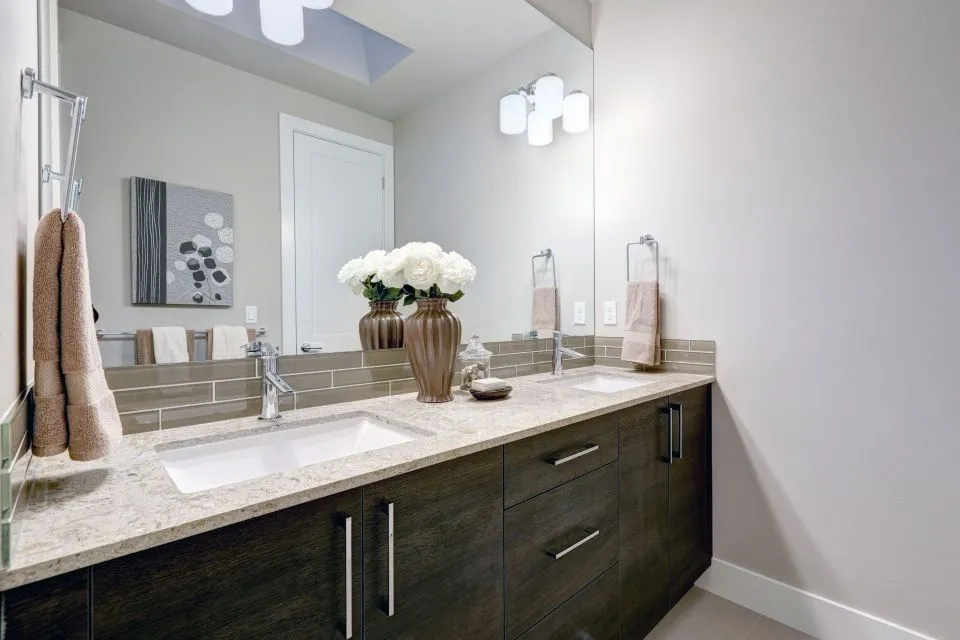
Building a Vanity Countertop with a Floating Shelf Aesthetic
A vanity that appears to float is one of the most talked-about looks in contemporary bathroom design. Homeowners love the way a cantilevered shelf or a recessed ledge gives the room an airy, weightless feeling, especially in compact ensuites where every centimetre counts. Rather than installing a separate timber shelf beneath the basin, designers are increasingly turning to solid surface fabrication so the shelf and the benchtop read as a single piece of stone. The result feels custom, looks expensive, and removes the visual clutter of brackets or wall-mounted hardware.
Creating this effect requires more than clever carpentry. It depends on careful structural planning, accurate templating, and the right choice of slab material so the projecting shelf can carry real weight without sagging or cracking. Whether you are rebuilding a powder room in a Brisbane townhouse, refreshing a master bathroom in Adelaide, or commissioning a new build on the Central Coast, the same fabrication principles apply. The vanity becomes the focal point, and the floating shelf becomes its signature detail.
Australians have been quick to adopt this style because it pairs beautifully with the indoor-outdoor living many households pursue. A vanity that flows from benchtop to shelf without seams echoes the clean lines of coastal architecture from Bondi to Cottesloe. It also offers a practical surface for towels, candles, and everyday toiletries, which suits busy family homes and compact apartments alike.
Understanding the Floating Shelf Look in Modern Vanities
The term floating shelf effect describes a vanity where part of the countertop projects outward or downward in a way that appears suspended in mid-air. Sometimes the shelf extends off the end of the bench as a cantilevered ledge. Sometimes it drops below the top in a stepped profile, creating a built-in storage tier. In both cases, the supporting structure is hidden behind the cabinetry, inside the wall framing, or concealed within the slab itself.
A well-executed design hides any brackets, dowels, or steel rods inside the stone. The illusion works best when the shelf is at least 50 millimetres thick and made from a dense material like engineered quartz, porcelain, or granite. Thinner profiles can still achieve the look, but they usually require internal reinforcement and a careful choice of stone to span the gap without flexing.
In Australian bathrooms, the floating effect also solves a common problem: limited floor space. A wall-hung vanity with a cantilevered shelf keeps the floor clear, making small rooms feel larger and easier to clean. Many renovators in inner Sydney and Melbourne are choosing this layout specifically because it suits heritage terraces where wall-mounted fixtures help preserve the original floorboards and skirtings.
Material Choices That Bring the Design Together
The slab you choose determines how realistic the floating shelf effect will appear. Engineered quartz remains the most popular option in Australian renovations because it offers consistent colour, minimal visible veining, and excellent strength-to-thickness ratios. A quartz shelf that projects 150 to 250 millimetres from the face of the vanity will hold everyday items without bowing, provided it is bonded to a concealed steel spine during fabrication.
Porcelain slabs have surged in popularity across Brisbane and the Gold Coast, particularly for bathrooms where heat and humidity are constant concerns. Large-format porcelain can be mitred at the edges to create a thick, monolithic shelf without the seams that betray a thinner build. Natural marble still appeals to homeowners seeking classic luxury, though it needs sealing and careful placement away from high-moisture zones.
For households wanting an outdoor-friendly option that can extend onto a patio or alfresco vanity, Dekton and similar ultra-compact surfaces deliver outstanding performance. Outdoor entertaining spaces in Perth and Darwin often demand materials that resist UV exposure, and the durability of Dekton countertops in direct sunlight for outdoor bars makes it a strong candidate where the vanity connects to an exterior wall. Soapstone and butcher block remain appealing for warmer, traditional interiors, though both require more frequent maintenance.
Planning the Structure and Support Behind the Effect
A floating shelf looks effortless, but the engineering behind it is anything but. Before fabrication begins, the installer needs to know exactly how far the shelf will project, what it will carry, and how it will be fixed back to the cabinetry or wall. Cantilevered stone shelves exert leverage on their fixing points, so the longer the projection, the more critical the internal support becomes.
For most vanity shelves in Australia, fabricators use one of three approaches. The first embeds a steel rod or flat bar inside a routed channel in the underside of the slab, then anchors that steel directly into the wall framing. The second relies on a full-height cabinet with a notched top, so the shelf appears to float while actually resting on the cabinet carcass. The third uses a hidden cleat system fixed to the studs behind the wall lining, giving the shelf the appearance of complete suspension.
Whichever method is chosen, compliance with the National Construction Code and relevant Australian standards is essential. Waterproofing in particular must follow AS 3740, especially where the vanity meets a tiled splashback or shower screen. Many renovators engage a licensed builder or waterproofing specialist to sign off on these details, and a growing number of Australian homeowners rely on renovation platforms to coordinate trades. Some readers exploring full-home makeovers find value in services like right choice homes when researching how integrated renovation teams handle structural and cosmetic work together.
Templating, Cutting, and Edge Profiles
Accurate templating is where most floating shelf projects succeed or fail. A digital or laser template captures the exact wall plane, plumbing locations, and any out-of-plumb corners, allowing the fabricator to cut the slab so the shelf sits flush with the surrounding surfaces. In older Australian homes, walls are rarely perfectly square, so this step prevents the awkward gaps that can ruin the illusion of a seamless floating plane.
Once the template is approved, the slab is cut using CNC machinery or waterjet technology. The shelf section can be mitred back to the main benchtop to create the appearance of a single thick block, or it can be bonded at a right angle with colour-matched adhesive for a sharper architectural look. Edge profiles play a quiet but important role. A simple pencil round or eased edge keeps the focus on the form, while a thicker mitered edge exaggerates the sense of weight and permanence.
Fabricators also need to consider drainage and fall. If the floating shelf sits beneath a tap or near a basin splash zone, a slight fall toward the vanity or a discreet channel along the back edge prevents water from pooling. Australian bathrooms frequently deal with hard-water deposits, so smooth, non-porous surfaces around the shelf make daily cleaning far easier.
Installation Day and Finishing Touches
Installation usually takes a few hours once the slab is ready, though the lead-up involves more work than most homeowners expect. The cabinetry must be fully installed, level, and securely fixed before the stone arrives. Plumbing rough-in should be complete, with shut-off valves and waste points protruding at the correct locations. Any wall sheeting behind the shelf needs to be in place, because post-install access is often impossible without removing the stone.
On the day, the installers dry-fit the top, check alignment, and then apply structural adhesive or mechanical fixings as specified. The floating shelf is usually bonded and pinned from inside the cabinet, with the fixings hidden once the doors and drawer fronts are fitted. Silicone is applied along the rear edge where the bench meets the splashback or wall, and a quality mould-resistant sealant protects the joint long-term.
After installation, many homeowners add a soft LED strip beneath the shelf to emphasise the floating effect at night. Others prefer a minimalist look with no lighting at all, letting the stone itself do the talking. Either way, the final impression is a vanity that feels custom-built and architecturally considered, even in modest renovations.
Care, Styling, and Considerations for Australian Homes
Looking after a floating shelf vanity is straightforward once the surface is sealed correctly. Quartz and porcelain need only a mild pH-neutral cleaner and a soft cloth, while natural stones benefit from resealing every twelve to twenty-four months depending on use. Avoid harsh abrasives or acidic sprays near mitred joins, where repeated chemical exposure can dull the resin over time.
Styling should keep the shelf relatively clear so the floating illusion remains intact. A neatly folded towel, a small ceramic vessel, or a single trailing plant often reads better than a crowded arrangement. In Australian homes where bathrooms open onto courtyards or gardens, choosing stone tones that complement outdoor materials such as timber decking or bluestone pavers helps tie the interior and exterior palette together.
Climate matters as well. Coastal properties in Sydney and Perth face salt-laden air that can affect metal fixings inside the shelf, so stainless steel or aluminium reinforcement is recommended. Homes in Queensland and the Northern Territory should prioritise UV-stable materials around windows and skylights, since prolonged sun exposure can yellow certain resins. Building sustainably also appeals to many Australian renovators, and choosing locally fabricated stone reduces transport emissions while supporting regional workshops.
A vanity with a floating shelf effect brings together precision craftsmanship and everyday function, transforming a routine bathroom upgrade into a piece of considered design. With careful planning, the right materials, and a fabricator who understands structural detailing, the result is a vanity that feels light, looks substantial, and adds lasting value to the home.