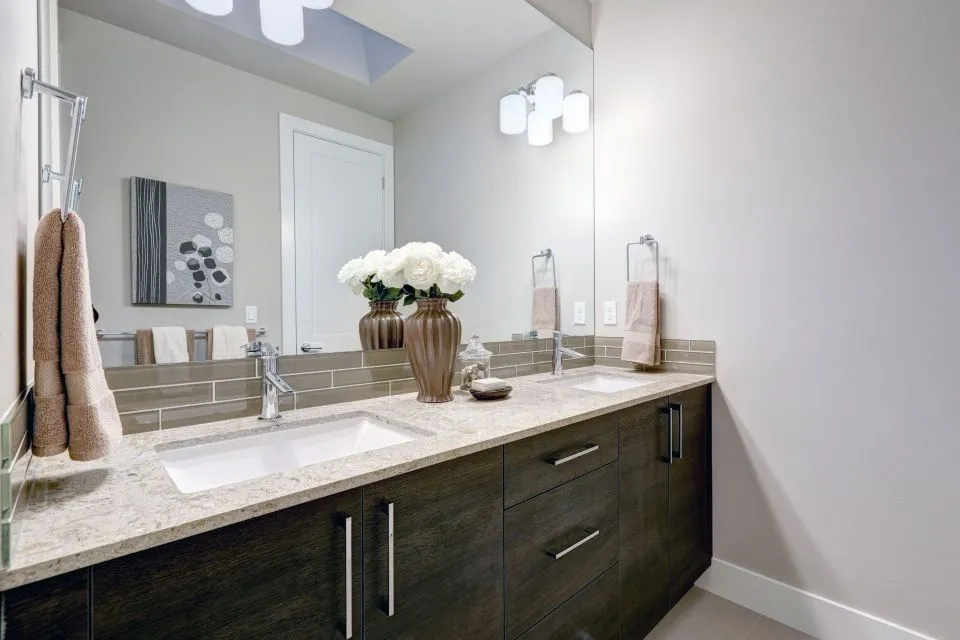
Designing a Bathroom with a Floating Vanity and Stone Countertop
A floating vanity changes the entire mood of a bathroom. By lifting the cabinet off the floor, the room feels lighter, easier to clean, and unexpectedly spacious, qualities that matter in Australian homes where ensuites are often compact but expected to feel luxurious. Pairing that open base with a stone vanity top introduces weight, texture, and permanence, balancing the airy feel of the wall-mounted cabinet with something tactile and grounded.
For homeowners in cities like Brisbane, Sydney, or Perth, the appeal runs deeper than aesthetics. Many newer apartments and townhouses in Melbourne's inner suburbs favour small-format ensuites, and a wall-hung vanity frees up valuable floor space while still delivering generous storage. Stone, whether quartz, granite, or porcelain, also handles Australia's harsh bathroom humidity, coastal salt spray, and temperature swings far better than laminate or timber alone.
Why Floating Vanities Work So Well in Modern Bathrooms
Floating vanities create visual breathing room that traditional floor-standing cabinets cannot match. Without a bulky base competing for attention, the eye travels across the floor uninterrupted, which makes even a narrow ensuite in a renovated Queenslander feel generous. The open space beneath the cabinet also reveals more of the floor tile, allowing pattern, colour, or texture to shine rather than being chopped up by cabinetry.
Practical benefits follow the visual ones. Mopping, sweeping, or vacuuming becomes effortless when there is no toe-kick to navigate around, a feature many homeowners in Adelaide or Hobart appreciate. Modern wall-mount designs also accommodate plumbing modifications, allowing the drain to run behind the wall and keep the floor entirely clear for a true wet-room effect. The result is a bathroom that looks contemporary and stays hygienic with far less daily effort.
Designers across Australia also favour floating vanities because they suit open-plan living. In apartments where the ensuite is visible from the bedroom, a wall-hung unit keeps sightlines uncluttered. The illusion of more space is especially valuable in inner-city Sydney and Melbourne renovations where every square metre counts.
Choosing the Right Stone for Your Vanity Top
The stone you choose influences everything from how the bathroom feels each morning to how it ages over decades. Quartz remains a favourite for busy family bathrooms because it resists stains from cosmetics, toothpaste, and hard-water spots, which are common in regions like Sydney where mains water carries mineral content. Granite brings natural depth and unique veining, while porcelain slabs offer ultra-thin profiles ideal for minimalist designs. Marble delivers timeless luxury, though it requires sealing and care, and Dekton handles heat and scratches with ease for households that want low-maintenance surfaces. Soapstone suits heritage homes with its soft, matte patina that deepens with age.
If you are weighing options, it helps to compare the most popular materials side by side. The following overview summarises the practical differences for a bathroom environment.
| Material | Water Resistance | Maintenance | Typical Thickness | Best For |
|---|---|---|---|---|
| Quartz | Excellent | Very low | 20–30 mm | Family bathrooms, high-use ensuites |
| Granite | Very good | Periodic sealing | 20–30 mm | Statement vanities, natural stone lovers |
| Porcelain | Excellent | Very low | 12–20 mm | Modern thin profiles, large-format slabs |
| Marble | Good | Regular sealing | 20–30 mm | Luxury finishes, low-traffic powder rooms |
| Dekton | Excellent | Very low | 12–20 mm | Ultra-modern designs, heat resistance |
| Soapstone | Good | Oil treatments | 20–30 mm | Heritage homes, soft matte finishes |
Browsing a curated stone material options gallery can help you compare veining patterns and edge profiles before committing to a slab. Each material responds differently to Australian UV exposure near windows, so seeing samples in person matters more than swatches online. Local suppliers in Queensland and Western Australia often carry different ranges to international distributors, so seeing what is locally stocked can speed up the timeline considerably.
Structural and Plumbing Realities Behind the Wall
A wall-mounted vanity is only as strong as the framing inside the wall. Standard plasterboard alone will not support the weight of a stone countertop, a loaded basin, and the cabinet once water gets into the cabinetry. Most installations require either a reinforced nogging, a steel carrier bracket, or a full structural ply backer fixed between studs. This is especially important in upper-storey bathrooms in Perth or Brisbane, where timber frames shift slightly with seasonal humidity changes.
Plumbing rough-in also demands planning ahead. Drain and supply lines typically enter through the wall rather than the floor, which keeps the floating look intact but means the plumber must position outlets precisely before tiling begins. In older Federation homes in Sydney, where walls are often brick or double-skin, chasing pipes into masonry adds labour that should be budgeted from the start. Failing to plan for these realities leads to costly rework and compromised waterproofing.
It is worth engaging a structural engineer or experienced cabinetmaker before committing to a layout. They can confirm whether the existing wall can carry the intended load, identify any need for additional support, and coordinate the plumbing rough-in with the tiler. Skipping this step risks cracked tiles, sagging cabinets, or worse once the stone is set.
Sizing, Proportions, and Australian Bathroom Standards
Getting the proportions right prevents the floating vanity from looking either top-heavy or insubstantial. A common guideline is to mount the vanity top between 850 mm and 900 mm above the floor, aligning it with the standard Australian vanity height for comfortable use without stooping. The cabinet depth usually sits between 450 mm and 500 mm, while the length varies from 600 mm for compact powder rooms to 1800 mm or more for double-basin layouts in master ensuites.
Australian Standard AS 3740 governs waterproofing in wet areas, and any wall behind a vanity with a basin must be properly sealed even though splashes are limited. Ventilation matters as much: bathrooms in humid climates like Cairns or the Sunshine Coast benefit from extraction fans rated for the room's volume, reducing moisture that could compromise stone sealants over time. Allow at least 100 mm of clearance on either side of the vanity where walls meet cabinetry to prevent moisture from being trapped against the stone edge.
Storage needs should also guide sizing. Drawers tend to be more usable than cupboards beneath a wall-hung vanity because they pull straight out without reaching around pipes. Soft-close runners and internal organisers transform a small cabinet into something genuinely practical for daily essentials.
Styling, Lighting, and Finishing Touches
The styling choices surrounding a floating vanity and stone top will determine whether the bathroom reads as serene retreat or busy showroom. Soft, layered lighting works best, with a wall-mounted sconce or vertical LED strip beside a mirror providing task light without casting harsh shadows across the stone surface. Warm-white colour temperatures around 3000K complement natural stone veining, while cooler tones suit porcelain or quartz with grey undertones. Dimmer switches allow the same vanity to shift from morning utility to evening spa mood.
Hardware and tapware deserve deliberate choices. Matte black or brushed brass tapware pairs well with veined marble and warm granites, while polished chrome suits ultra-modern quartz or Dekton. Towel rails, robe hooks, and drawer pulls should align visually so the eye reads the vanity as a single composition rather than a collection of parts. Drawer organisers, soft-close runners, and integrated power points for shavers or electric toothbrushes add everyday function without cluttering the stone surface.
Stylistic foundations for the rest of the space:
- Choose one hero surface and let the rest of the palette support it, whether that is a bookmatched porcelain slab or a richly veined granite
- Layer textures through timber accents, woven baskets, or soft linen to soften the stone's hardness
- Coordinate tapware finish, mirror frame, and light fittings in a single metal family
- Use plants suited to bathroom humidity, such as ferns or pothos, to introduce organic movement
Practical touches that protect the stone over years of daily use:
- Apply a quality penetrating sealer to natural stone every 12 to 24 months depending on use
- Place a small tray on the vanity top to catch cosmetics and prevent direct contact with stone
- Keep pH-neutral cleaners on hand and avoid acidic products that etch marble and limestone
- Ensure the extraction fan runs for at least 15 minutes after showering to clear humidity