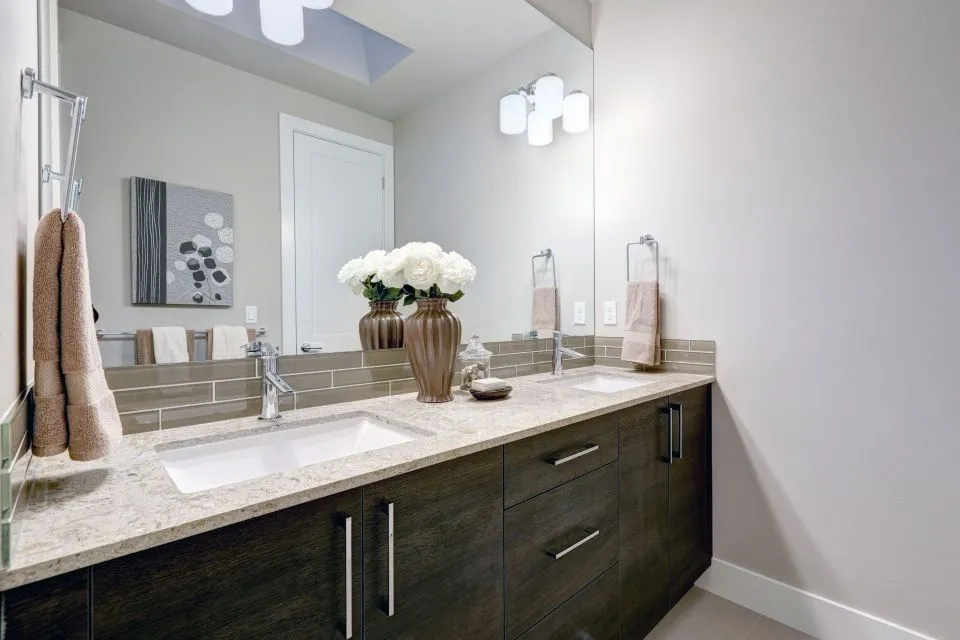
Planning a countertop replacement in a rental property
Australia's rental market has shifted considerably in recent years, with investment properties in Sydney, Melbourne, Brisbane, and Perth often commanding premium weekly returns. Many landlords now recognise that a tired kitchen benchtop can drag down rental appeal, especially when competing listings feature engineered stone, porcelain panels, or updated laminate. Replacing a countertop in a tenanted dwelling, however, is rarely as straightforward as it would be in an owner-occupied home. Permission from the property owner, clear communication with the tenant, and an understanding of state tenancy laws all sit alongside the practical considerations of material choice, measurement, and installation scheduling.
A successful benchtop upgrade in a rental property balances the owner's desire for capital improvement with the tenant's right to quiet enjoyment. It also requires a level of coordination that goes beyond a typical renovation, because access to the property, working hours, and notice periods are all subject to the relevant residential tenancies act in each state or territory. The sections below outline the legal groundwork, the material decisions that make sense for a rental, the logistics of measuring and installing without creating disputes, and the financial planning that keeps the project on track from quote to handover.
Reviewing the lease, strata rules, and local council approvals
Before any template is measured or slab is ordered, the legal framework surrounding the property must be confirmed. In New South Wales, the Residential Tenancies Act 2010 requires landlords to provide tenants with written notice before any non-urgent work begins, and the minimum notice period varies depending on the nature of the job. Victoria's Residential Tenancies Act 1997 is similar in spirit, although the notice periods differ and there are specific rules around how tradespeople enter the home. Queensland's tenancy framework, governed by the Residential Tenancies and Rooming Accommodation Act 2008, also sets out the conditions under which a landlord can access an investment property, and landlords in that state are well advised to document every communication in writing.
For apartments and townhouses, the strata or body corporate adds another layer of approval. Most strata schemes in Australia require owners to seek written consent before altering fixed surfaces, particularly in load-bearing or wet areas, and some buildings in Sydney's inner suburbs or Melbourne's CBD have strict rules around work hours, noise, and contractor access. Heritage overlays, common in areas like Paddington, Surry Hills, or Fitzroy, may also restrict material choices or finishes, even for internal work. In rural or semi-rural holdings, particularly those in designated bushfire-prone zones, the relevant council may have guidelines about the combustibility of materials used in or near kitchens, which can influence whether a timber or laminate benchtop is appropriate at all.
A short letter or email to the tenant outlining the proposed dates, the trades involved, and the expected duration of work is a low-cost way to reduce the risk of a dispute. Many landlords also include a clause in the original lease that grants permission for planned upgrades between fixed tenancies, which simplifies scheduling considerably. Where the rental is managed by an agent rather than the owner directly, the property manager should be looped in early so they can issue the proper notice and ensure compliance with state-specific entry rules.
Choosing materials that suit a rental setting
Material selection in a rental property tends to favour durability, ease of maintenance, and broad visual appeal rather than bespoke statements. Engineered quartz remains the most popular choice across Australia, partly because it resists staining from common kitchen spills and does not require sealing, which makes it a practical option when tenants change every year or two. Porcelain slabs, a relatively newer entrant in the Australian market, offer similar durability and are often specified in apartments because they are lighter than natural stone and easier to transport through shared lifts and corridors. Granite and marble, while beautiful, can be problematic in a rental setting because they etch and stain more readily, which often leads to bond disputes at the end of a tenancy.
Butcher block and other timber benchtops have a particular charm and are sometimes chosen for heritage homes in Adelaide or Hobart, but they need regular oiling and are vulnerable to water damage around sinks and cooktops. Soapstone is another natural option that wears well over time, although its soft surface means it will scratch with heavy use. For landlords with a tight budget, high-pressure laminate still has a place, particularly in student accommodation or short-stay rentals where the visual impact matters less than the cost. Some owners ask their fabricator about custom countertop solutions for unusual room shapes or angles when the kitchen layout includes a quirky island, a curved breakfast bar, or a tight corner near a window, all of which are common in older Australian homes where rooms were not designed with modern cabinetry in mind. Choosing a fabricator familiar with these layouts can save time on templating and reduce the risk of expensive errors.
It is also worth thinking about edge profiles. A simple eased or pencil round edge is generally the safest option for rentals, because sharp arrises or ornate ogee profiles can chip more easily and tend to date quickly. Where the property is in a competitive rental market, neutral tones such as soft greys, warm whites, and understated veining tend to appeal to a wider pool of prospective tenants, whereas bold colours or heavily patterned stones can narrow the field and extend vacancy periods.
Measuring and templating without disrupting tenants
Accurate measurement is the cornerstone of any benchtop replacement, and most Australian fabricators now use digital templating systems that capture the kitchen's dimensions with a laser scanner. The process is quicker and less invasive than the older method of physical templates, which is helpful when the tenant is still in residence. Digital scans typically take between thirty minutes and an hour for a standard kitchen, and the resulting files can be reviewed remotely before any cutting begins. This allows the owner and fabricator to confirm joint positions, sink cut-outs, and cooktop openings before a single slab is committed.
The visit itself should be timed to suit the tenant, ideally during a period when the kitchen is not in heavy use. Many property managers suggest early morning or mid-week appointments, when the tenant is more likely to be at work and the space is less pressured. The tenant should be asked to clear benchtops, remove small appliances, and ensure pets are secured, which is a standard request in most Australian lease agreements. If the tenant is particularly anxious about access, offering a small gesture such as a gift voucher or a contribution toward a cleaning service can go a long way toward maintaining goodwill.
Digital templating also allows the fabricator to flag potential issues before fabrication. Out-of-square walls, uneven cabinet heights, or pipes that sit proud of the cabinetry can all be identified and resolved without a second visit. For unusual layouts, including those tight corners and curved islands mentioned earlier, the same scan data can be used to create a precise cut plan that minimises waste and reduces the chance of on-site adjustments. Once the template is signed off, the lead time for fabrication is usually one to three weeks depending on the material and the fabricator's workload.
Coordinating installation around vacant periods
The actual installation is the most intrusive part of a benchtop replacement, and most landlords aim to schedule it between tenancies. A two to three day window is typical for a standard kitchen, although complex layouts or large islands can take longer. Where the property is in a metropolitan area such as Brisbane, Perth, or Canberra, fabricators often have busy calendars and require a booking several weeks in advance, particularly during spring and early summer when renovation activity peaks.
If the work must happen while the tenant is in residence, the notice periods and conditions become more important. Tradespeople are generally expected to arrive within a reasonable window, keep noise to a minimum during the early morning and late evening, and clean up at the end of each day. Australian tenancy legislation treats benchtops as fixtures, so their removal and replacement does not usually affect the tenant's bond, provided the property is left in a comparable or better condition. It is still wise to photograph the kitchen before and after the work, so that any pre-existing damage is clearly documented.
Removal of the old benchtop often reveals issues that were hidden underneath, including water damage, outdated plumbing, or cabinetry that has shifted over time. A small contingency budget for these surprises is sensible, particularly in older properties. Many Australian landlords set aside around ten to fifteen percent of the project cost for unexpected rectification work, which might include re-levelling cabinets, replacing a section of substrate, or upgrading the plumbing connections to suit the new sink and tapware. Discussing these possibilities with the fabricator before the job starts helps avoid mid-project disputes and keeps the timeline realistic.
Budgeting, deposits, and communication with trades
A benchtop replacement in a rental property is generally tax-deductible as a repair or capital improvement, depending on the advice of the owner's accountant and the relevant Australian Taxation Office guidelines. The cost itself varies considerably by material, with laminate starting at the lower end and exotic natural stones commanding a much higher price. Quotes from Australian fabricators typically itemise the slab cost, fabrication labour, edge profile, cut-outs, sink and tap integration, and installation. Some also charge separately for templating, removal of the existing benchtop, and disposal, so it pays to clarify what is included before signing.
Deposits are standard in the industry, usually between thirty and fifty percent of the quoted price, with the balance due on completion. Larger fabricators may offer finance or staged payment plans, which can help with cash flow during a busy financial year. It is worth asking whether the quote includes GST, since not every fabricator displays prices inclusive of tax, and Australian consumers are accustomed to seeing the total landed cost on every invoice.
Communication with the trades is the final piece of the puzzle. A short briefing document that lists the property address, contact details for the tenant and property manager, access codes, parking arrangements, and any specific site rules can save a great deal of time on the day. Many landlords keep a digital folder with these details, along with the original quote, the approved template, and the warranty information for the chosen material. A well-kept record helps if the property is sold in the future, since buyers often ask about recent renovations and their documentation. With the right preparation, a benchtop replacement in a rental property can lift the home's appeal, support a stronger weekly rent, and stand up to years of tenant turnover without constant maintenance.