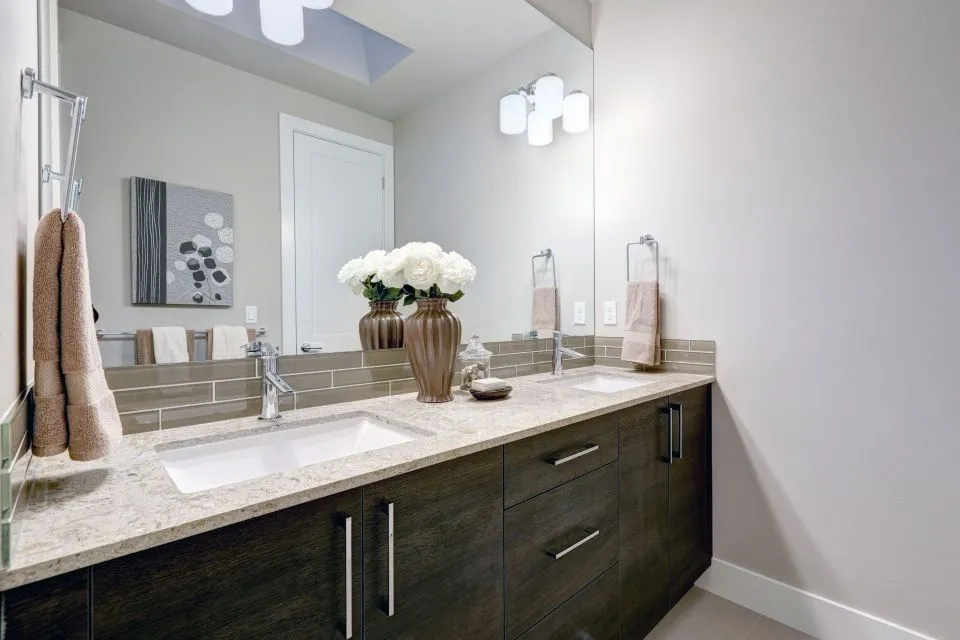
How to Style Open Shelving with New Countertops
Open shelving can make a kitchen or bathroom feel lighter, more spacious, and more personal. When paired with a newly installed countertop, it also creates a strong visual connection between storage and work surfaces. The right combination of materials, colors, and everyday objects can make the room feel thoughtfully designed rather than casually assembled.
The key is to treat shelves as part of the overall remodeling plan. Countertop color, backsplash material, cabinet finish, hardware, lighting, and shelf placement should support one another. A coordinated design allows open storage to display useful items while keeping the room calm and functional.
Whether the project includes quartz, granite, marble, porcelain, Dekton, soapstone, or butcher block, the countertop provides an ideal foundation for styling. With careful planning, open shelves can highlight the craftsmanship of a custom installation and add warmth to a kitchen, bath, laundry room, or entertaining area.
Begin With The Countertop As Your Anchor
A countertop usually covers more visual space than the shelves, so it should guide the styling direction. Identify the dominant colors and patterns in the surface before choosing dishes, containers, artwork, or decorative accessories. A quiet quartz slab may support stronger accents, while richly veined marble or granite may look best with simpler shelf décor.
Consider the countertop’s undertones as well. Warm beige, cream, and brown tones work naturally with wood shelves, woven baskets, brass fixtures, and terracotta pottery. Cool white, gray, and blue undertones pair well with black brackets, stainless steel, clear glass, and crisp white ceramics. Matching undertones prevents the room from feeling visually divided.
The edge profile also contributes to the finished look. A softened edge can create a relaxed transition between the counter and surrounding furnishings, while a more defined edge may suit a modern or formal design. If the shelves sit close to the counter, repeat one detail—such as a wood tone, metal finish, or accent color—to connect both levels.
Choose Shelves That Complement The Surface
Floating wood shelves are a popular choice because they introduce texture beside a smooth countertop. Oak, walnut, maple, and painted wood each create a different mood. Walnut adds depth against light quartz, pale oak brightens darker counters, and painted shelves can blend with cabinetry for a streamlined appearance.
For a contemporary room, consider metal shelving, slim brackets, or shelves with concealed supports. These details work especially well with porcelain, Dekton, or polished quartz surfaces. In a transitional kitchen, substantial wood shelves with visible brackets can soften a clean countertop while preserving a sense of craftsmanship.
Shelf thickness should relate to the scale of the room and the countertop. Very thin shelves may look disconnected above a substantial island or wide vanity. Oversized shelves can overwhelm a small wall. During the design process, discuss shelf depth, support placement, and clearance with the fabrication and installation team so the finished arrangement is safe and proportionate.
In a bathroom, moisture resistance deserves special attention. Sealed wood, porcelain shelves, quartz, and other durable materials can stand up to humidity more effectively than untreated surfaces. For homeowners comparing vanity materials, these quartz vanity benefits can help clarify why a low-maintenance surface may be a practical partner for open bathroom storage.
Build A Balanced Shelf Arrangement
Successful open shelving usually combines useful objects with a few decorative pieces. Begin by grouping items by function: everyday plates, coffee mugs, glasses, serving bowls, folded hand towels, or bath essentials. Place frequently used objects within easy reach and reserve the highest shelf for lighter or less-used pieces.
Vary the height and shape of what you display. A stack of plates, a tall vase, a small framed print, and a low bowl create more interest than several objects of identical size. Leave space around each group so the shelves can breathe. Empty areas are useful because they keep the arrangement from looking crowded.
A simple styling formula is to create small groups of two or three items. For example, pair a ceramic pitcher with a short stack of bowls, or place a candle beside a folded towel and a small plant. Repeat one color across multiple shelves to create continuity without making every object match.
Symmetry can be helpful, particularly in a bathroom or a formal kitchen. However, exact symmetry is not required. A balanced arrangement may use a taller object on one side and several shorter objects on the other, as long as the visual weight feels even. Step back and view the shelves from across the room before making final adjustments.
Coordinate Color, Texture, And Lighting
A restrained color palette makes open shelving feel intentional. Start with the countertop and cabinetry, then select two or three supporting colors. In a neutral kitchen, muted green pottery, natural wood, or dark metal can add contrast. In a bathroom with pale surfaces, blue-gray towels, amber glass, or brushed brass accessories can provide warmth.
Texture is especially important when the countertop has a polished finish. Add woven baskets, handmade ceramics, linen textiles, wood utensils, or ribbed glass to keep the room from appearing too smooth. If the countertop already has dramatic movement, use quiet textures and solid colors so the shelf display does not compete with the slab.
Lighting can change the appearance of both shelves and countertops. Under-shelf LED strips provide practical illumination for a kitchen work area and create a soft evening glow. Small directional fixtures can highlight a backsplash, stone veining, or a custom feature such as a fireplace surround or integrated sink.
Use lighting with a color temperature that suits the materials. Warm light enhances wood, cream, brass, and earthy surfaces, while neutral light keeps white quartz, porcelain, and gray stone looking clean. Concealed wiring and carefully placed fixtures should be considered before fabrication and installation are complete.
Match Shelf Styling To Countertop Materials
Different countertop materials suggest different approaches to open-shelf décor. A natural stone surface may benefit from handmade pieces and organic textures, while a highly uniform engineered material can support bolder color or sculptural accessories. The goal is to reinforce the material’s character without copying its pattern.
The following guide can help establish a starting point:
| Countertop material | Shelf pairing | Styling direction | Useful accents |
|---|---|---|---|
| Quartz | Painted wood, oak, or slim metal | Clean and adaptable | Ceramic vessels, glass, greenery |
| Granite | Walnut, stained wood, or iron | Grounded and substantial | Stoneware, woven baskets, dark hardware |
| Marble | Light wood, brass, or glass | Refined and understated | White pottery, linen, simple artwork |
| Porcelain or Dekton | Metal, lacquered wood, or minimalist floating shelves | Modern and streamlined | Geometric objects, monochrome dishes |
| Soapstone | Reclaimed wood or black metal | Casual and historic | Copper, amber glass, natural fibers |
| Butcher block | Wood, white-painted shelves, or simple brackets | Warm and inviting | Cutting boards, cookbooks, plants |
Quartz is particularly flexible because its consistent pattern can work with many shelf finishes and color schemes. That makes it useful in busy family kitchens where the display may change over time. Granite and marble often have stronger natural movement, so keeping accessories simple allows the stone to remain the focal point.
Butcher block and soapstone bring a more tactile, relaxed quality to the room. Pair them with open shelving that feels equally approachable, such as natural wood, aged metal, or handmade ceramic supports. For a sleek porcelain or Dekton installation, fewer objects and stronger lines usually create a more cohesive result.
Make Open Storage Practical In Daily Use
Open shelves should serve the way the household actually uses the room. In a kitchen, keep plates, mugs, and bowls near the dishwasher or prep area if that makes unloading and meal preparation easier. In a bathroom, place hand towels, soap, and frequently used products on lower shelves while keeping backups in closed cabinets.
Avoid storing every small item in plain sight. A few coordinated containers can conceal clutter while maintaining the open character of the design. Lidded baskets, matching canisters, and ceramic jars are useful for coffee, tea, toiletries, cotton products, and cleaning supplies.
Leave enough clearance between the countertop and the lowest shelf for appliances, faucets, and routine cleaning. Near a cooktop, use extra care with grease, steam, and heat. Shelves placed beside rather than directly above the cooking zone may be easier to maintain. In bathrooms, keep paper goods and moisture-sensitive items away from areas exposed to splashing.
Maintenance should influence the accessories you choose. Frequently handled pieces need to be easy to remove and wash. Decorative objects with complicated surfaces can collect dust, especially on high shelves. A clear styling plan makes routine wiping simple and protects the visual quality of the countertop and backsplash.
Add Personality Without Creating Clutter
Open shelving offers an opportunity to show personality through items that would otherwise remain hidden. Display a favorite serving platter, locally made pottery, a framed recipe, a small collection of glassware, or a plant suited to the available light. These details make a remodeled room feel connected to the people who use it.
Keep collections edited rather than displaying every piece at once. Rotate seasonal items or special serving pieces when you want a fresh look. A small change in towels, ceramics, or greenery can refresh the room without altering the countertop or shelving.
Artwork should be protected from water, cooking grease, and excessive heat. In a kitchen, framed pieces are often safer on shelves away from the range. In a bathroom, use sealed frames or moisture-resistant materials. Lean artwork securely against the wall and avoid placing fragile objects where they could be knocked down during regular use.
Custom fabrication can extend the same design language beyond countertops and shelves. A coordinated mantel, furniture piece, fireplace surround, outdoor kitchen surface, or integrated sink can carry the material palette through adjoining spaces. This is especially effective in open-plan homes where the kitchen, dining area, and living room need to feel connected.
A Practical Styling Checklist
Before installing accessories, view the shelves as a complete composition rather than a series of separate levels. Check the arrangement from the main entry point, the sink, the island, and nearby seating. A display that looks balanced from one angle may feel crowded from another.
It also helps to make decisions before the final installation. Shelf dimensions, backsplash height, outlet locations, lighting, and countertop edges all affect how the finished wall will function. A professional consultation can help coordinate measurements, templating, fabrication, edging, and installation so decorative choices do not interfere with practical requirements.
- Select shelf materials that echo a color, texture, or finish already present in the countertop or cabinetry.
- Keep the most frequently used items on lower shelves and reserve upper levels for lighter decorative pieces.
- Combine varied heights, shapes, and textures while repeating a small number of colors.
- Leave visible negative space so the display feels organized instead of overfilled.
- Choose moisture-resistant and easy-to-clean accessories for bathrooms and busy kitchen areas.
Open shelving should remain flexible as household needs change. Build the initial arrangement around everyday routines, then refine it after living with the space for several weeks. Objects that seem convenient during installation may prove awkward in practice, while overlooked pieces may become natural favorites.
For homes in North Little Rock and surrounding Arkansas communities, a well-coordinated countertop and shelving design can bring durable performance and a distinctly personal look to a remodel. The right surface, edge detail, backsplash, and storage plan work together from the beginning rather than being treated as unrelated selections.
Bring your material samples, room measurements, and styling ideas to The Countertop Store for a personalized consultation. With custom fabrication and professional installation, your new countertops and open shelving can become a practical, polished feature that continues to serve the room beautifully.