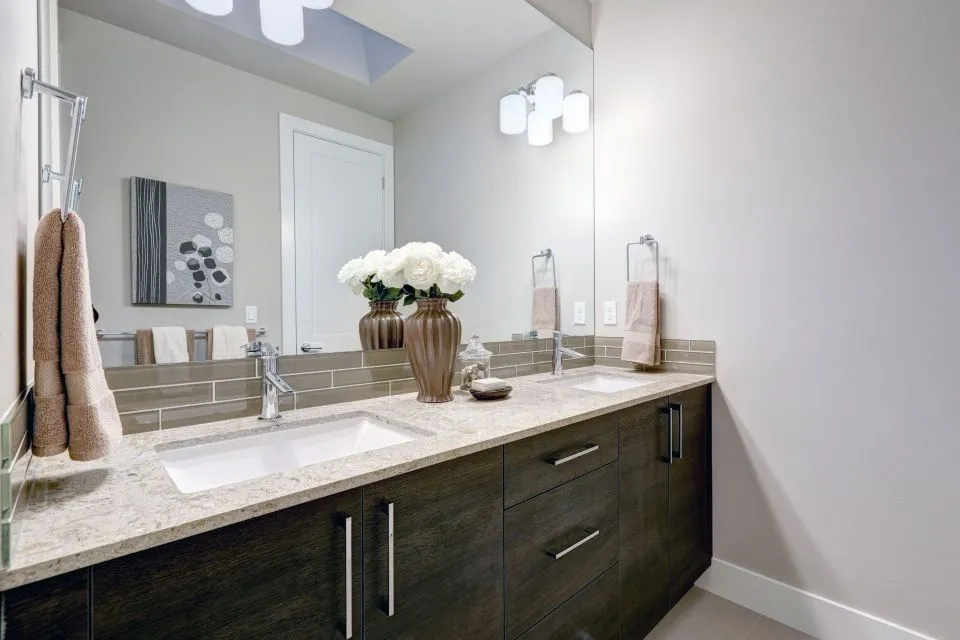
How to use colour samples to pick the right quartz countertop
Picking a quartz countertop is one of the most visual decisions in any kitchen or bathroom renovation. The slab you choose will sit at the centre of the room, framing everything from your morning routine to weekend dinners with friends. Yet most homeowners underestimate how difficult it can be to choose a colour from a photograph or a single showroom visit.
A small chip in a showroom display rarely tells the full story of how a surface will perform in your own home. Natural light, artificial lighting, the colour of your cabinetry, and even the reflections from a nearby window can shift the way a pattern reads. This is why experienced fabricators place so much emphasis on taking home actual colour samples before signing off on a slab.
Working with physical samples gives you a way to test, compare, and stress-test a finish in the actual environment where it will live. It also gives you a tangible reference to share with your installer, your cabinetmaker, and anyone else involved in the build, so the entire team is working toward the same vision.
Why quartz colour variations matter from batch to batch
Quartz is an engineered stone, which means it is manufactured by combining crushed quartz aggregate with resins, pigments, and sometimes recycled glass or metallic flecks. Because the product is made in batches, slight variations between production runs are normal. A sample you took home from a showroom in Sydney could differ subtly from the slab that ultimately arrives at your Brisbane home, especially if the supplier sources from different manufacturing partners.
This batch sensitivity is one reason why reputable suppliers encourage customers to view full slabs before fabrication begins. A small sample shows you the pattern style and overall tone, but it cannot capture the movement, veining direction, or background depth that defines a particular slab. In Australian homes, where open-plan layouts often place the kitchen in direct sightline with living areas, these subtle differences become more noticeable.
Climate also plays a role. A Brisbane home dealing with year-round humidity and strong UV exposure may show colour variation differently than a Melbourne property with cooler winters and softer light. Even the resin content can react to prolonged sun exposure in north-facing kitchens, leading to gradual yellowing in some lower-quality products. Choosing a reputable brand with UV-stable pigments matters more than many buyers realise.
Setting up a realistic sample test in your own space
A sample only becomes useful when you place it in the environment where it will eventually be installed. Start by gathering any fixed elements that will sit near the countertop, such as a piece of cabinetry, a tile offcut, a paint chip, or a sample of your flooring. If you are also considering a new floor, looking at a guide to commercial LVT flooring can help you understand how different finishes interact across large surfaces.
Tape your quartz samples directly onto the cabinet door or place them flat on the bench where the slab will eventually sit. Leave them for at least forty-eight hours, because colour perception shifts throughout the day. What looks creamy at noon may read pinkish under a warm downlight at night, particularly in homes with LED strip lighting under overhead cupboards, which is common in modern Australian builds.
It also helps to involve the people who will use the kitchen most. A partner, a housemate, or even a friend with a good eye can spot things you have grown used to. In many Australian households, the kitchen is the social heart of the home, and the surface gets used for everything from rolling pastry to hosting long Sunday lunches. The more time you spend living with the samples, the more confident you will feel when it comes time to commit.
Reading samples under different lighting conditions
Lighting is the single biggest variable in how a quartz colour appears. Australian homes are famous for their abundant natural light, but the quality of that light changes throughout the year and depending on orientation. A north-facing kitchen in Perth will see harsher, whiter light, while a south-facing space in Hobart will feel cooler and more subdued.
Test your samples in the morning, in the middle of the day, and in the evening under the lighting you actually use. Take a photograph of each sample in the same spot at each time, so you can compare them side by side later. Pay attention to the way the undertones react: a grey quartz with a green undertone may look sophisticated in cool daylight but muddy under warm halogen globes, while a warm cream with peach undertones can glow beautifully at sunset.
If you live near the coast, salt air and bright light can also affect how colours read over time. Quartz is non-porous and resistant to staining, but the way a pattern interacts with glare on a sunny Gold Coast afternoon is something you want to confirm in person. Some homeowners place their sample near the main window for a week to see how the surface handles direct sun.
Matching samples to cabinets, tiles, and splashbacks
A countertop never stands alone. It needs to coexist with the cabinetry, splashback, floor, and wall colour around it. Many Australian renovators working on federation or Californian bungalow homes find themselves balancing modern quartz with classic tiles or timber features, which makes sample coordination even more important.
Hold each sample next to your cabinet door to see whether it warms up the timber, cools it down, or creates a clash. Do the same with your splashback tiles, your tapware, and any feature lighting. If you have chosen a bold patterned splashback, a more restrained quartz often balances the room better. If your splashback is simple, a more dramatic veined quartz can carry the visual weight.
It can also be helpful to think about the long term. White kitchens in particular have a strong track record in Australian real estate, but if you love a moodier, more grounded look, leaning into a darker quartz with warm veining can create a lasting impression. The goal is not to chase trends but to find a finish that feels right in your home for the next fifteen or twenty years. If you are planning a feature island, a custom fireplace surround, or an outdoor kitchen, a fabricator experienced in bespoke stone projects can help you carry the same finish through every space without losing consistency.
Bringing samples to your consultation and final decision
Once you have narrowed your options, bring two or three favourites to your consultation with a fabricator. This is the moment to ask detailed questions about slab availability, lead times, edge profiles, and how the pattern will flow across your specific kitchen layout. If you are unsure what to raise, this countertop consultation guide covers the main points worth covering before you sign anything.
Your fabricator can also advise on whether your chosen pattern will book-match across joins, how visible seams will be, and whether a particular edge profile will suit the thickness of the slab. If your project includes more than just a kitchen, ask about coordinating bathroom vanities, shower walls, or even a fireplace surround, since a single supplier can often fabricate everything from the same batch for a more cohesive result.
A small sample is a starting point, not the final decision. View a full slab if possible, place it in your home, and trust your eyes over time rather than a quick showroom impression. The right quartz countertop should feel like it has always belonged in your space, and that confidence comes from doing the slow, patient work of comparing samples in the real light of your own home.
Practical steps for choosing your final sample
- Request samples that are at least the size of a standard tile, so you can see the pattern movement rather than just the base colour.
- View samples in the same room at three different times of day to catch morning, midday, and evening light shifts.
- Place samples next to your cabinetry, splashback, flooring, and any fixed elements to confirm the whole palette works together.
- Ask your fabricator which batch your slab will come from and whether they can show you the actual slab before cutting begins.
- Keep a photo log on your phone so you can revisit your impressions after a few days rather than relying on memory.
- Consider how the chosen colour will look in resale terms, particularly if you are renovating to sell in a few years.
- Trust your instinct once you have done the homework, since a second-guessed decision rarely improves with more samples.