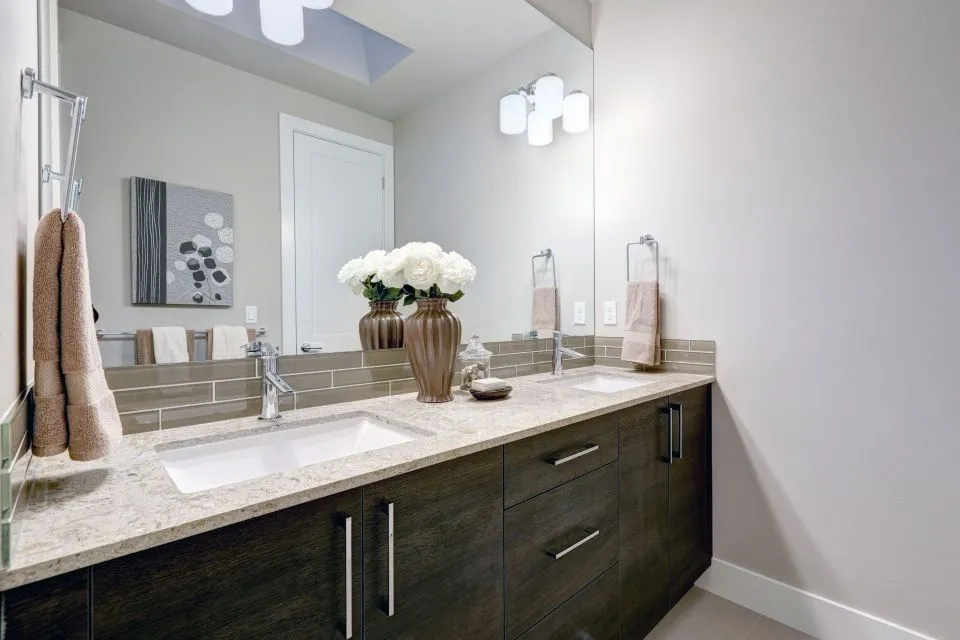
Marble or porcelain for your bathroom countertop
Choosing a bathroom countertop involves more than matching a color to the vanity. The surface must handle water, cosmetics, cleaning products, daily grooming, and the occasional dropped bottle without becoming difficult to maintain. Marble and porcelain are both attractive choices, but they offer very different combinations of natural character, durability, maintenance, and design flexibility.
Marble brings the depth and movement of genuine natural stone. Each slab has veining shaped by geological processes, so no two countertops look exactly alike. Porcelain, meanwhile, is an engineered surface made from refined clays and minerals fired at high temperatures. It can reproduce the appearance of marble while offering a highly resistant finish and a broad range of patterns.
For homeowners in North Little Rock and surrounding Arkansas communities, the right option depends on how the bathroom will be used, how much maintenance feels reasonable, and which visual details matter most. Understanding the differences before fabrication makes it easier to choose a countertop that looks beautiful and performs well for years.
How marble and porcelain are made
Marble is a natural stone formed when limestone undergoes heat and pressure deep within the earth. Its veining, color variation, and mineral deposits are authentic features of the material. White marble may have soft gray lines, while varieties in green, beige, brown, or darker tones can bring stronger movement to a bathroom design. Because the pattern is natural, slab selection is an important part of the process.
Porcelain is manufactured from dense mineral materials that are pressed and fired at extremely high temperatures. The finished surface is nonporous and available in designs that imitate marble, concrete, stone, or solid colors. Large-format porcelain slabs can create a streamlined appearance with fewer visible seams, particularly on spacious vanities or wall applications.
The difference in origin affects fabrication and installation. Marble is generally thicker and more forgiving during certain countertop applications, although it still requires careful handling. Porcelain can be lighter and exceptionally strong across its surface, but its edges and corners require specialized tools and experienced fabrication. Accurate templating is essential for either material, especially around sinks, faucets, walls, and backsplash transitions.
Appearance and design flexibility
Marble is difficult to duplicate perfectly because its veining has natural depth and irregularity. Honed marble creates a soft, understated finish, while polished marble reflects light and emphasizes the contrast between the background and the veins. A dramatic slab can become the central design feature of a primary bathroom, particularly when paired with simple cabinetry and understated hardware.
Porcelain gives homeowners greater control over the overall look. Manufacturers can produce consistent veining across multiple slabs, and some designs are printed through the material to create a convincing stone appearance at the edge. Porcelain is available in large panels that can continue from a vanity onto a backsplash or shower wall, making it useful for coordinated bathroom remodeling.
A custom fabricator can help determine how the pattern should be positioned. Vein direction, cutout placement, edge style, and backsplash height all affect the finished appearance. A carefully selected marble slab may be ideal for a traditional or luxury bathroom, while porcelain often suits contemporary, minimalist, and high-contrast designs.
Comparing everyday performance
Bathroom countertops are exposed to moisture every day, but they do not experience exactly the same conditions as kitchen worktops. Makeup, hair products, toothpaste, soap, and cleaning sprays can still leave marks or cause damage if the surface is unsuitable or neglected. Both marble and porcelain can perform well when they are properly fabricated and cared for.
| Feature | Marble | Porcelain |
|---|---|---|
| Material type | Natural stone | Engineered, fired surface |
| Appearance | Unique natural veining and variation | Consistent designs, including marble patterns |
| Water resistance | Absorptive unless properly sealed | Highly nonporous |
| Stain resistance | Good with sealing and prompt cleanup | Excellent for normal bathroom use |
| Scratch resistance | Moderate; softer than porcelain | Very high across the surface |
| Heat resistance | Strong, though sudden temperature changes should be avoided | Excellent under normal household conditions |
| Maintenance | Requires periodic sealing and gentle cleaners | Usually simple daily cleaning |
| Repairs | Can often be polished or repaired by a professional | Chips may be harder to disguise |
| Best advantage | Natural luxury and individuality | Low maintenance and strong resistance |
Porcelain generally has the advantage for stain and moisture resistance. Its low absorption helps protect the surface from products left near the sink, and routine cleaning usually requires only a soft cloth and a pH-neutral cleaner. It is a practical choice for busy households, rental properties, children’s bathrooms, and spaces where simple upkeep is a priority.
Marble can also be a durable bathroom surface, but it needs more awareness. Acidic substances such as some cleaners, cosmetics, and personal care products can etch the finish. Etching is a dull or cloudy mark caused by a chemical reaction with the stone, not simply a surface stain. Sealing helps reduce absorption, but it does not make marble immune to etching or eliminate the need for prompt cleanup.
Maintenance, sealing, and long-term care
A marble vanity should be cleaned with products designed for natural stone. Harsh bathroom chemicals, abrasive powders, and acidic cleaners may damage the finish. Spills should be wiped up instead of left to dry, especially around the faucet and sink where water and personal care products tend to collect. Depending on the marble variety and use level, professional resealing may be needed periodically.
Porcelain has a simpler maintenance routine. Its nonporous surface does not usually require sealing, and most ordinary bathroom residue can be removed with warm water and a gentle cleaner. This does not mean every product is appropriate; abrasive pads, harsh chemicals, and excessive force can still affect the finish or create problems around caulked joints and edges.
The sink configuration also influences cleaning. A properly fabricated undermount or integrated sink can reduce raised rims where grime collects. Homeowners considering a continuous surface may benefit from exploring a seamless integrated sink, particularly when they want the vanity to feel streamlined and easy to wipe down.
Cost, installation, and bathroom use
Material price is only one part of the countertop budget. The final cost may include slab selection, measurements, templating, cutouts, edge fabrication, backsplash pieces, sink preparation, delivery, and installation. Marble and porcelain prices vary by color, thickness, availability, fabrication complexity, and the amount of material required for the project.
Porcelain can be cost-effective over time because it usually needs less maintenance and has strong resistance to staining. However, its fabrication may require specialized equipment and an installer familiar with porcelain slab handling. A complex faucet layout, narrow sections, exposed corners, or intricate cutouts can affect labor costs.
Marble may have a higher lifetime maintenance requirement, yet its natural appearance can be a deciding factor for a high-end primary suite or guest bathroom. Its value comes from visual character as well as performance. When a homeowner selects a distinctive slab and coordinates the shower walls, backsplash, or vanity top, the result can feel tailored rather than mass-produced.
Bathroom size and layout should guide the decision. A small powder room may be a good place to use a dramatic marble remnant because the surface area is limited. A family bathroom with heavy daily use may benefit from porcelain’s resistance to cosmetics, water marks, and frequent cleaning. For a spa-style space, either material can work when the design and care requirements are understood.
Choosing the right surface for your priorities
The best countertop is the one that fits the room’s visual direction and the household’s habits. Marble is often the better choice for homeowners who value natural variation, authentic stone character, and a surface that develops subtle signs of use over time. It rewards thoughtful care and works especially well in elegant, traditional, transitional, and luxury bathroom designs.
Porcelain is usually the stronger choice for homeowners who want consistent performance with less maintenance. It suits modern bathrooms, high-traffic spaces, and designs that extend the same finish across the vanity, backsplash, shower walls, or other surfaces. Its resistance to stains and moisture makes it particularly appealing where personal care products are used frequently.
Use these priorities to narrow the selection:
- Choose marble when distinctive natural veining and one-of-a-kind character matter most.
- Choose porcelain when low maintenance, stain resistance, and design consistency are the main goals.
- Consider the household’s cleaning habits before selecting a material that needs regular sealing.
- Review full slabs or large samples so the pattern, color, and movement are clear before fabrication.
- Ask about edge details, sink cutouts, backsplash options, and installation requirements for the chosen surface.
Coordinating the vanity with the rest of the room
A bathroom countertop should be considered alongside the shower, walls, flooring, cabinetry, and hardware. Marble can be repeated through a backsplash or shower surround to create a classic, layered appearance. Porcelain can make a stronger continuous statement when the same pattern moves across several vertical and horizontal surfaces.
Edge treatment also changes the personality of the countertop. A simple eased edge supports a clean modern look and is easy to maintain. A beveled, rounded, or more decorative profile can add detail to marble or coordinate with traditional cabinetry. The selected edge must suit the slab thickness and fabrication method, particularly with porcelain, where unsupported corners require careful planning.
Integrated sinks, undermount sinks, quartz shower pans, custom backsplashes, and matching shower walls can all be planned as part of one remodeling project. Coordinating these components early helps avoid mismatched whites, awkward transitions, and pattern changes in highly visible areas. It also allows the fabricator to identify practical issues before materials are cut.
Professional measurement and templating are especially important in older homes, where walls may not be perfectly square and vanity openings may vary. A local countertop team can assess the site, review material samples, explain maintenance expectations, and recommend details that fit the room rather than relying on generic dimensions.
Make a confident material choice
Marble and porcelain can both create an exceptional bathroom countertop, but they serve different priorities. Marble offers genuine natural beauty, variation, and a sense of permanence. Porcelain delivers a durable, low-absorption surface with broad design flexibility and straightforward daily care.
The right decision becomes clearer when you compare actual slabs, discuss how the bathroom will be used, and account for fabrication details instead of judging material by appearance alone. The Countertop Store can help homeowners in North Little Rock and nearby areas review options, measure the space, plan sink and backsplash details, and coordinate fabrication and installation.
Bring your bathroom plans to The Countertop Store for expert guidance on marble, porcelain, and other custom surfaces. Schedule a consultation to select the material, edge, sink configuration, and finish that will make your vanity both beautiful and practical.