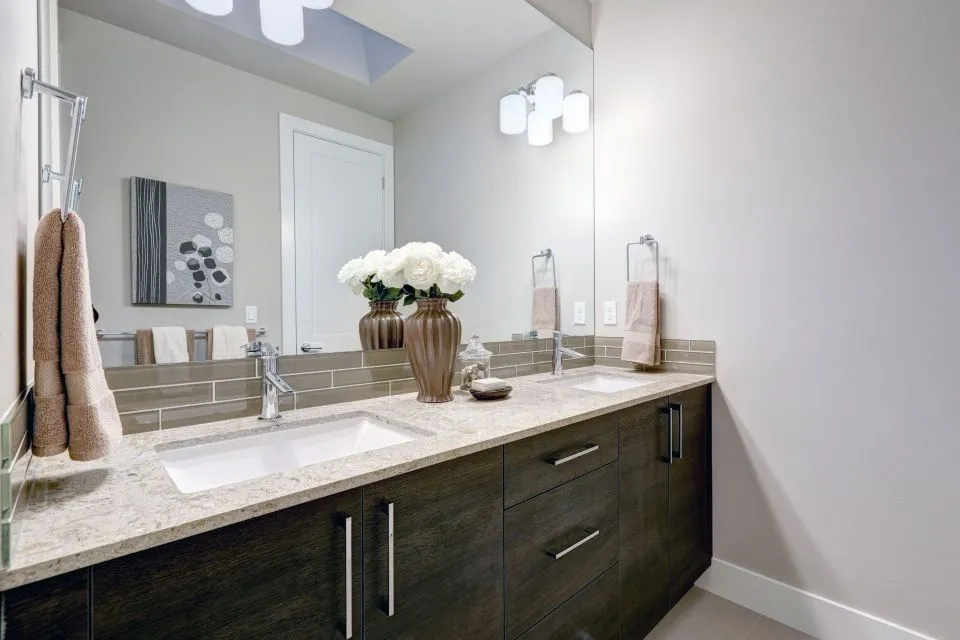
The Advantages of a Matte Finish on a Dark Quartz Countertop
A dark benchtop can give a kitchen a grounded, architectural feel, while a matte surface keeps the room from appearing overly glossy or formal. Instead of reflecting every light source, a low-sheen finish absorbs and softens illumination, allowing the colour, veining and shape of the countertop to carry the design.
This look suits contemporary Australian homes particularly well, from compact Sydney apartments to spacious Brisbane renovations and open-plan houses in Melbourne. It also works across bathrooms, laundry rooms, kitchen islands and entertainment areas, provided the finish is selected with daily cleaning, lighting and local product rules in mind.
| Feature | Matte dark quartz | Polished dark quartz |
|---|---|---|
| Visual effect | Soft, understated and modern | Reflective, bright and formal |
| Shows reflections | Fewer reflections and glare | More visible reflections |
| Fingerprints | Usually less conspicuous | Can be easier to notice |
| Colour character | Rich, muted and tactile | Deeper, sharper and more lustrous |
| Cleaning needs | Regular wiping remains important | Marks are often easier to see |
| Design suitability | Minimalist, industrial and natural schemes | Glamorous, classic and high-contrast schemes |
A Softer Expression Of Dark Stone
A polished black or charcoal benchtop can become the most reflective feature in a kitchen. Pendant lights, windows, splashbacks and glossy cabinetry may all appear on its surface at once. A honed or leathered-style finish reduces those reflections, giving the stone a calmer appearance and making a large island feel less visually dominant.
Matte quartz also brings out subtle undertones. A charcoal slab may reveal warm brown, blue-grey or green notes that are easy to miss under a high-gloss coating. Fine veining tends to look more natural, while concrete-inspired patterns appear closer to their intended architectural character. This makes the surface a useful bridge between crisp modern joinery and tactile materials such as timber, brick or brushed metal.
The finish is especially effective in Australian homes with strong daylight. A north-facing kitchen in Melbourne, bright coastal rooms around Sydney, or a sun-filled home in Perth can produce considerable glare on polished stone. A low-reflective benchtop helps control that brightness without requiring the room to be made darker.
Everyday Benefits In A Busy Kitchen
A matte dark surface generally disguises reflections, smudges and small fingerprints better than a glossy one. That can be useful around a family island where people prepare school lunches, sort groceries or gather after work. Marks have not disappeared, but they are less likely to stand out immediately under overhead lighting.
The visual consistency of a low-sheen finish can also make minor variations less distracting. On a polished black benchtop, a small water spot may catch the light as a distinct pale mark. On a matte surface, the same spot may be less obvious until the area is cleaned. This is helpful in busy homes, although it should not encourage spills or food residue to remain untreated.
Dark colours still require sensible care. Oils, flour, soap film and dried sauces can build up, particularly beside a cooktop or sink. A soft microfibre cloth, warm water and a manufacturer-approved pH-neutral cleaner are usually safer than abrasive powders, harsh scourers or strong solvents. The exact care instructions should come from the fabricator because surface treatments vary.
A Strong Match For Modern Australian Interiors
Dark matte quartz pairs naturally with white, cream and pale timber cabinetry, creating contrast without the sharp glare of a glossy slab. It can also support bolder combinations, such as olive joinery, terracotta flooring or brushed brass hardware. In an apartment where space is limited, using the same dark surface on a small island and bathroom vanity can create a consistent visual thread.
The finish suits several popular design directions in Australia. A coastal home can use charcoal stone with light oak and handmade-look tiles, while an inner-city renovation may combine it with black-framed glazing, concrete textures and slimline cabinetry. In Brisbane and other warm-climate locations, matte surfaces can complement rattan, natural timber and pale walls without adding another reflective element to the room.
Edge details influence the result as much as the slab itself. A square edge looks crisp and contemporary, a pencil edge feels slightly softer, and a waterfall end panel gives an island a substantial furniture-like appearance. Fabricators can also coordinate a dark benchtop with an integrated sink, matching splashback or shower wall. Examples of custom surface ideas show how stonework can extend beyond a standard kitchen worktop into fireplaces, outdoor kitchens and bespoke furniture pieces.
Lighting, Cleaning And Long-Term Appearance
Lighting should be considered before choosing a dark matte countertop. In a dim kitchen, charcoal stone can make the work area feel heavier, especially when paired with dark cabinetry. Under-cabinet LED strips, well-positioned pendants and light-coloured walls can provide balance. Warm-white lighting often brings out brown and taupe undertones, while cooler lighting can emphasise blue or graphite notes.
Samples should be viewed at different times of day and under the actual lights planned for the room. A small showroom sample may appear almost black, while a full slab with veining may read as softer grey. Positioning samples near the splashback, flooring and cabinet door is more reliable than judging each material in isolation.
Although matte finishes hide some marks, they can make certain residues harder to spot. A regular cleaning routine is still important around sinks and food preparation areas. Use chopping boards, trivets and suitable mats rather than placing hot cookware directly on the surface. Quartz is durable, but resin content and manufacturing specifications mean it should not be treated as completely heat-proof or impervious to damage.
Hard water can also affect the appearance of a dark worktop. This is relevant in some Australian properties where mineral deposits may accumulate around taps and sinks. Wiping the area dry after use reduces spotting, while a fabricator-approved cleaner can remove deposits without dulling or scratching the finish.
Choosing The Right Material For Australia
There is an important market consideration for Australian buyers. Since 1 July 2024, engineered stone benchtops, slabs and panels containing crystalline silica have been prohibited from manufacture, supply, processing and installation nationally, with implementation managed through workplace health and safety frameworks. Anyone planning a new project should confirm that the selected product is legal and available in their state or territory rather than assuming that an overseas image represents a current Australian option.
This does not mean the design direction is unavailable. Matte finishes can be found in approved porcelain, sintered stone and other large-format surfaces, while natural granite, soapstone and some marbles can provide dark colours with their own distinctive performance characteristics. Product composition, fabrication methods and maintenance requirements differ, so a local stonemason or retailer should explain the current options before a deposit is paid.
Granite can be a practical alternative for homeowners wanting a dark, hard-wearing surface with natural variation. Porcelain may suit a minimalist scheme where large-format patterns and resistance to heat are priorities, although edge fabrication and installation require specialist handling. Soapstone offers a softer, tactile appearance and develops character over time, but it can scratch more readily than many engineered products.
Measurements, templating and installation deserve equal attention to the slab choice. A precise template allows the fabricator to plan joins, sink cut-outs, cooktop openings and vein placement before cutting begins. This matters particularly on a dark island, where an awkward seam or uneven overhang can be more visible than expected. Discuss edge profiles, support requirements and sealing needs early, especially for an outdoor kitchen or a large waterfall panel.
A matte dark countertop is therefore best understood as a balance of appearance and use. It offers reduced glare, a tactile finish and a sophisticated foundation for timber, tile and metal details. With appropriate lighting, regular care and careful confirmation of Australian product regulations, it can create a calm, durable-looking centrepiece without the high reflection associated with polished stone.