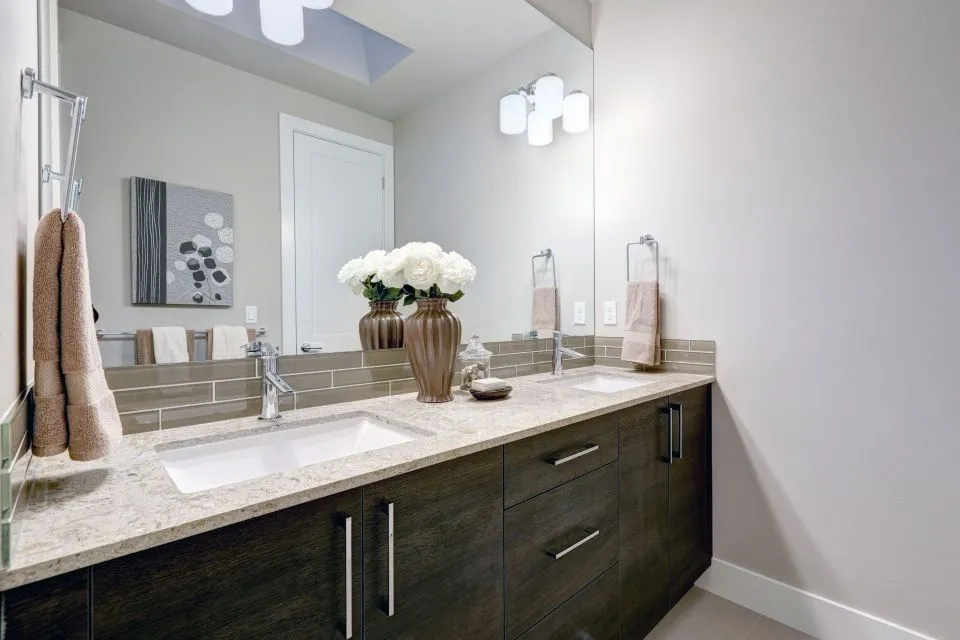
Why Marble Works Beautifully In An Australian Guest Bathroom
A guest bathroom may be compact, but it often carries a surprising amount of design responsibility. It is used by visitors, seen during entertaining, and expected to feel welcoming without demanding the same level of storage or daily practicality as the main ensuite. A marble vanity top gives this space a distinctive surface, combining natural pattern, a cool tactile finish, and a sense of quiet luxury that suits both contemporary and heritage homes.
Marble is also a highly adaptable choice for Australian interiors. It can complement a coastal bathroom in Brisbane, add warmth to a renovated terrace in Sydney, or bring character to a Melbourne powder room with period details. With suitable fabrication, sealing, and regular care, a marble benchtop can become a durable and memorable feature rather than a fragile decorative extra.
A Natural Surface With Individual Character
Every slab of marble has its own veining, tone, and mineral movement. This means a vanity top will not look mass-produced or identical to a neighbour’s bathroom. Soft grey lines, warm beige clouds, or deeper dramatic veins can be selected to suit the room’s palette, giving the surface a visual depth that printed stone patterns cannot fully reproduce.
White and pale marbles are popular in guest bathrooms because they reflect light and make a smaller room feel more open. Varieties with subtle grey veining pair well with brushed nickel, chrome, matte black, and aged brass tapware. Creamier stones can soften stark white tiles, while richly veined slabs create a stronger focal point against restrained cabinetry.
Natural variation is especially useful when a renovation needs to bridge old and new. In a Sydney terrace or Adelaide bungalow, marble can sit comfortably beside original timber, decorative wall mouldings, or encaustic-style tiles. In a newer Perth or Gold Coast home, the same material can be used with flat-panel joinery and frameless shower glass for a cleaner, more architectural result.
A Refined Feature For A Guest Space
Because a guest bathroom usually has a smaller footprint, a modest amount of premium material can make a significant impression. A marble vanity top occupies a visible horizontal plane without overwhelming the room, allowing homeowners to create a high-end finish without covering every wall in expensive stone.
The stone can be paired with a wall-mounted basin, an undermount basin, or a carefully proportioned vessel basin. An undermount installation leaves the marble visually uninterrupted and makes wiping water towards the basin straightforward. A vessel basin places more of the slab on display, which can be effective when the vanity has a thin profile or a custom furniture-style base.
Edge detailing also changes the character of the room. A simple eased edge feels modern and understated, while a bullnose edge offers a softer appearance for traditional interiors. A thicker-looking edge can be fabricated for visual weight without requiring a solid block of stone. Careful templating is important around tap holes, basin cut-outs, splashbacks, and wall irregularities, particularly in older Australian homes where surfaces may not be perfectly square.
The vanity can also be coordinated with other surfaces. A marble splashback, shower niche shelf, or small ledge may carry the veining through the room without making the space feel overdesigned. For a wider renovation, related materials can connect the bathroom to nearby living areas; the principles behind a waterfall edge design can also inspire strong stone continuity in other parts of a home.
Practical Performance With Sensible Care
Marble is a dense natural stone, but it is not completely stain-proof or impervious to acids. Cosmetics, hair products, toothpaste, perfume, and cleaning products can affect an unprotected surface. A quality impregnating sealer reduces absorption and gives occupants more time to wipe up spills, although it does not make the stone immune to etching or staining.
Etching occurs when acidic substances react with the calcium carbonate in many marbles. Lemon-based cleaners, vinegar, some beauty products, and acidic bathroom chemicals can leave dull marks if they remain on the surface. This is a change to the stone’s polish rather than ordinary dirt, so prompt cleaning and suitable products matter. A pH-neutral stone cleaner and a soft cloth are safer choices than abrasive powders or harsh sprays.
A guest bathroom often suits marble particularly well because it generally experiences less constant use than a family bathroom. Even so, visitors may not know the care requirements, so the best design includes practical habits: keep a small tray for toiletries, avoid storing wet bottles directly on the slab, and use a cloth to remove standing water around the tapware.
Sealing schedules depend on the marble’s porosity, finish, colour, and frequency of use. Darker or honed surfaces can disguise minor marks more effectively than highly polished pale stone, while polished marble may be easier to wipe clean. A fabricator or stone specialist can recommend the right sealer and explain when the surface should be assessed again rather than relying on a fixed calendar.
Choosing The Right Finish And Layout
The finish has a major influence on how marble behaves visually. Polished marble reflects light and brings out the depth of the veining, making it an appealing choice for a powder room or dim guest ensuite. Its glossy surface can also show water spots and fingerprints more readily, so it benefits from regular wiping.
Honed marble has a soft, low-sheen appearance that feels relaxed and contemporary. It can be a strong option for busy households because light surface marks are often less noticeable than they would be on a mirror-like finish. Honing does not prevent etching, but it can make an etched area less visually obvious by reducing the contrast between the affected patch and the surrounding surface.
The slab layout should be considered before fabrication begins. Veins may be positioned to frame a basin, run towards a splashback, or create a balanced composition across a wide vanity. A compact vanity may need only one carefully selected section of slab, while a double vanity requires more attention to joins and pattern continuity. Digital templating and accurate site measurements help avoid surprises around walls, skirtings, plumbing points, and existing cabinetry.
Australian bathrooms also need to respond to climate and construction conditions. A humid coastal home in Cairns or Darwin may need especially good ventilation to manage condensation, while a dry inland property may experience different movement in timber cabinetry. Marble itself is not a substitute for waterproofing: wet-area preparation, compliant membranes, falls, and plumbing should be handled as part of the broader bathroom renovation by qualified trades.
Combining Marble With Australian Bathroom Styles
Marble can be tailored to many local design preferences rather than being limited to formal or European-inspired interiors. In a relaxed Queensland bathroom, warm marble, timber-look cabinetry, and woven accessories can create a light resort feel. In a Melbourne renovation, a grey-veined slab with terrazzo flooring and a curved mirror can suit a more restrained, design-conscious palette.
For coastal homes around Newcastle, the Sunshine Coast, or Perth, marble works well with pale oak, sandy porcelain tiles, and brushed metal fittings. The result does not need to look overly nautical. Choosing a restrained stone pattern and simple joinery keeps the room sophisticated while still reflecting the bright, casual character many Australians prefer.
A guest bathroom is also a sensible place to use a more expressive slab. Since the room may not be exposed to the same daily spills as a primary family bathroom, an owner can select pronounced veining or a deeper colour while keeping the rest of the materials quiet. This approach creates a memorable feature without requiring a complete luxury fit-out.
The final result depends on fabrication as much as on the stone itself. Professional measurement, templating, edge finishing, basin cut-outs, sealing, and installation determine whether the vanity looks intentional and performs reliably. The countertop should be properly supported, the plumbing penetrations neatly finished, and the junctions between the wall, splashback, and slab sealed with compatible products.
Marble offers a guest bathroom a combination of visual depth, custom flexibility, and lasting design value. It rewards sensible product choices and regular care, while its natural variation ensures that the finished vanity has genuine character. From a compact powder room in inner-city Sydney to a spacious guest bathroom in regional South Australia, a well-selected and expertly fabricated marble top can make the space feel welcoming, considered, and distinctly your own.