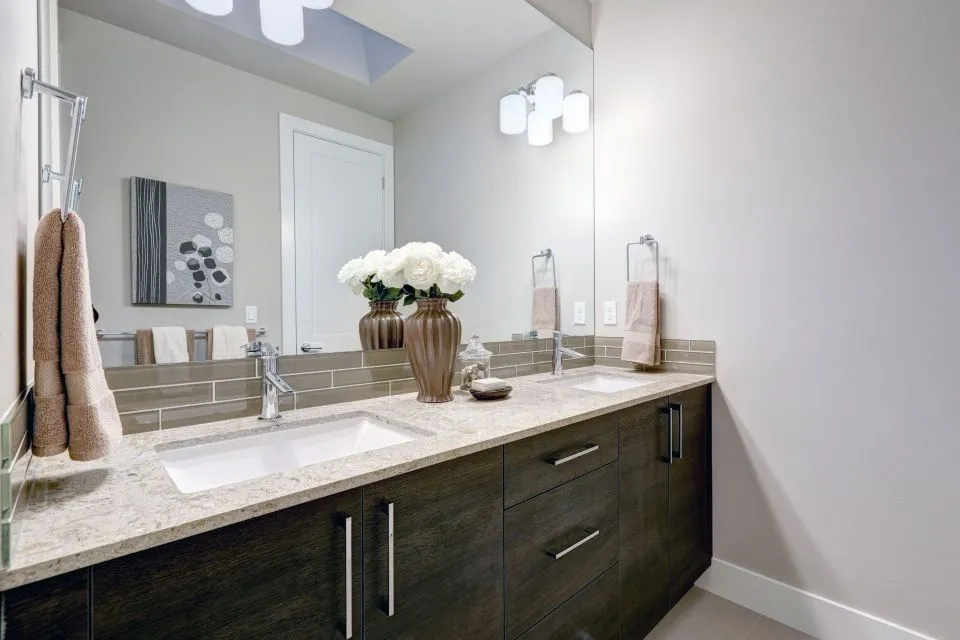
The Benefits of a Single Slab Countertop for a Small Bathroom
A small bathroom has very little room for visual clutter. Every joint, cut-out and change in material can make the vanity area feel busier than it needs to be. A single slab countertop creates a broad, continuous surface that gives the room a calmer appearance while making the most of limited floor space.
For Australian homes, this approach suits compact ensuites in Sydney terraces, tight bathrooms in Melbourne units and narrow guest bathrooms in Brisbane houses. The right slab can combine the vanity top, basin area and short upstand into one coordinated feature, while practical planning helps the surface cope with daily moisture, cleaning products and the occasional rushed morning.
What A Single Slab Surface Means
A single slab countertop is made from one continuous piece of material rather than several joined sections. It may be cut for an undermount, top-mount or integrated basin, with openings prepared for tapware and plumbing. Depending on the design, the slab can include a rear upstand or continue visually into a short splashback.
The absence of a visible join is the main visual benefit. Veining, colour and texture can travel across the vanity without being interrupted by a seam. This is especially effective in a small bathroom, where the countertop may be one of the largest visible elements and where a busy pattern can quickly dominate the room.
The term “single slab” does not always mean that the entire vanity is carved from one enormous piece. A fabricator still needs to account for the slab’s size, thickness, access route and cut-outs. A narrow vanity may use a modest section of a full sheet, while a larger wall-mounted design may require careful planning around the basin and side returns.
Natural stone, porcelain, solid surface, marble, granite and some quartz products can be considered, subject to local availability and fabrication requirements. Australian renovators should also check current rules around engineered stone before specifying it, as the national prohibition on engineered stone benchtops and similar products has changed what can legally be supplied and installed.
A Cleaner Look In A Compact Room
Small bathrooms benefit from visual continuity. When the vanity top has no obvious joins, the eye reads it as one uninterrupted plane, which can make the room appear wider and more deliberate. Pale marble-look porcelain, soft grey stone and warm white surfaces are popular choices when the goal is to reflect light around a compact ensuite.
A continuous slab also works well with floating vanities. The open space beneath the cabinet exposes more of the floor, while the uninterrupted top gives the wall-mounted unit a crisp horizontal line. In a Melbourne apartment or Sydney terrace, where every centimetre matters, a slim vanity with a single top can feel substantially less bulky than a furniture-style unit with multiple visible components.
Pattern selection deserves care. Strong bookmatched veining may look impressive in a showroom but can overwhelm a 900-millimetre vanity. A quiet background with restrained movement often gives a more spacious result. If the design includes a side return, the fabricator can plan the cut so the most attractive part of the pattern remains visible at the front edge.
The countertop can also coordinate with shower walls or a short splashback. Using related tones rather than identical materials helps the room feel cohesive without turning every surface into a matching set. A useful reference for comparing surface characteristics is this countertop material guide, although bathroom conditions and local regulations still need separate consideration.
Fewer Joints And Easier Cleaning
Bathrooms expose surfaces to water, toothpaste, cosmetics, soap and cleaning sprays. Each joint creates another place where residue can collect, particularly around a basin or at the rear edge of the vanity. A one-piece top reduces the number of transitions that need regular attention.
A well-fabricated slab has fewer lines for grime to settle into, so wiping the vanity after shaving, applying makeup or washing hands is simpler. This does not make the surface maintenance-free. The basin junction, tap holes, wall connection and silicone seal still need routine care, and natural stone may require sealing according to the fabricator’s instructions.
The edge detail also affects cleaning. A simple eased or pencil edge is easy to wipe and suits contemporary Australian bathrooms. A heavily decorative profile may add character to a traditional Queenslander or Federation home, but it introduces extra contours where water and product residue can sit. The choice should reflect the room’s style and the amount of daily upkeep the household is prepared to manage.
Waterproofing remains separate from countertop selection. A single slab cannot compensate for poor wall preparation, incorrect falls or failed silicone. Under Australian practice, wet-area work should be completed in line with applicable requirements such as AS 3740 and the rules enforced in the relevant state or territory. A licensed waterproofing professional and experienced tradie should coordinate the vanity installation with the rest of the bathroom.
Practical Choices For Australian Bathrooms
Humidity, ventilation and water exposure vary across Australia. A Brisbane bathroom may need stronger ventilation to manage warm, damp conditions, while a dry Adelaide home may place greater emphasis on dust control during renovation. Coastal properties around Perth, Newcastle or the Gold Coast may also experience salt-laden air, although good-quality bathroom materials are generally selected for their everyday indoor performance rather than extreme exterior exposure.
Australian shoppers should ask how a surface responds to heat, staining, impact and cleaning chemicals. A bathroom vanity usually faces less abuse than a kitchen island, yet hair tools, perfume bottles and metal grooming equipment can still cause damage. Porcelain and dense natural stone can offer useful durability, while marble brings distinctive character but may react to acidic products. The fabricator should explain care requirements in plain language before the order is placed.
Engineered stone deserves particular caution because Australian states and territories have introduced restrictions following the national prohibition. Products marketed under different names can be confused with porcelain, sintered stone or natural stone, so the specification should identify the exact material and confirm that supply, fabrication and installation are lawful in the project’s location. This is especially important when comparing quotes from a local showroom, a renovation marketplace or a large hardware chain.
Details To Confirm Before Ordering
- Finished vanity width, depth and slab thickness
- Basin style, tap-hole positions and plumbing clearance
- Material compliance, care requirements and warranty
- Access through doors, stairs, lifts and narrow hallways
A precise site measure prevents expensive surprises. In an older Sydney terrace, walls may be slightly out of square; in a new apartment, lift dimensions and building delivery rules can be restrictive. A professional template taken after cabinetry is secured allows the fabricator to position the basin and wall edges accurately instead of relying on rough construction measurements.
Design Flexibility Without Excessive Detail
A single slab can support several different bathroom styles. A thin porcelain top may suit a minimalist ensuite, while a thicker natural-stone edge can bring weight to a traditional vanity. A warm-toned surface paired with timber-look cabinetry works in a coastal or relaxed scheme, whereas charcoal stone can create a stronger contrast against white joinery.
Integrated sinks are another option. When the basin and countertop are formed as one coordinated unit, there is no raised rim to interrupt the surface and fewer awkward corners around the bowl. This can be particularly useful for accessible bathrooms or for households that prefer a streamlined, easy-wipe design. The exact feasibility depends on the material, fabrication method, basin size and manufacturer’s recommendations.
A single slab also leaves room for custom details such as a small side shelf, a lowered makeup area or a matching ledge beneath a mirror. These features need careful measurement because small bathrooms have little tolerance for unusable space. The best designs make one surface perform several roles without making the vanity look crowded.
Material selection should begin with the whole room rather than a sample viewed in isolation. Compare the slab beside the floor tile, wall tile, cabinetry, tapware and lighting. Natural daylight in a north-facing Melbourne bathroom can make a colour appear different from the same sample under warm LEDs, while a windowless ensuite may need a surface with enough reflectivity to avoid feeling enclosed.
Features Worth Considering
- An undermount basin for a continuous wipe-down area
- A low-profile edge for a lighter visual effect
- A short upstand where wall protection is needed
- A matching shower shelf or window ledge
Fabrication quality is central to the result. Cut-outs must be positioned around cabinet rails, plumbing and drawer fronts, and the slab needs adequate support at vulnerable areas. A reputable countertop company will discuss templating, edge finishing, seam placement where unavoidable, installation access and the care instructions supplied with the completed work.
The final result should feel calm rather than over-designed. In a compact bathroom, one beautifully selected slab can provide enough texture and interest without adding a patterned splashback, decorative edging and competing feature tile. Feedback from previous customers can offer useful insight into communication, installation accuracy and finish quality, as shown in these customer experiences.
Cost, Installation And Long-Term Value
The price of a single slab countertop depends on more than its material. Slab value, fabrication, cut-outs, edge work, basin preparation, delivery, installation and removal of the old top all contribute to the final quote. A small vanity may use less raw material than a kitchen, but intricate cut-outs or difficult access can still increase labour costs.
A single-piece design can reduce some installation complexity because there are fewer sections to align. It may also reduce the need to disguise a seam at the basin or along a short return. However, the slab must be transported and installed carefully. Narrow staircases, apartment lifts and long distances between a workshop and regional towns can affect scheduling and delivery costs.
For Australian renovations, coordinate the countertop with the cabinetmaker, plumber, tiler and waterproofing contractor. The vanity needs to be fixed and level before templating, while the basin and tapware details should be confirmed early. If tiling is planned behind the vanity, decide whether the slab will sit against finished tile, beneath it or beside a separate splashback system.
Longevity depends on realistic care. Use mats beneath grooming appliances, wipe spills promptly and follow the supplier’s cleaning guidance. Avoid assuming that a product labelled “stone” can tolerate every bathroom chemical. Some surfaces handle staining well but can be affected by abrasive powders, strong acids or sudden impact at a thin edge.
A single slab countertop is most valuable when its simplicity is intentional. It can make a small bathroom feel more open, reduce visual interruptions and simplify everyday wiping, while offering enough material and colour variation to suit a contemporary unit in Melbourne, a character home in Hobart or a family bathroom in Brisbane. Careful measurement, lawful material selection and skilled fabrication turn that straightforward idea into a durable part of the room.