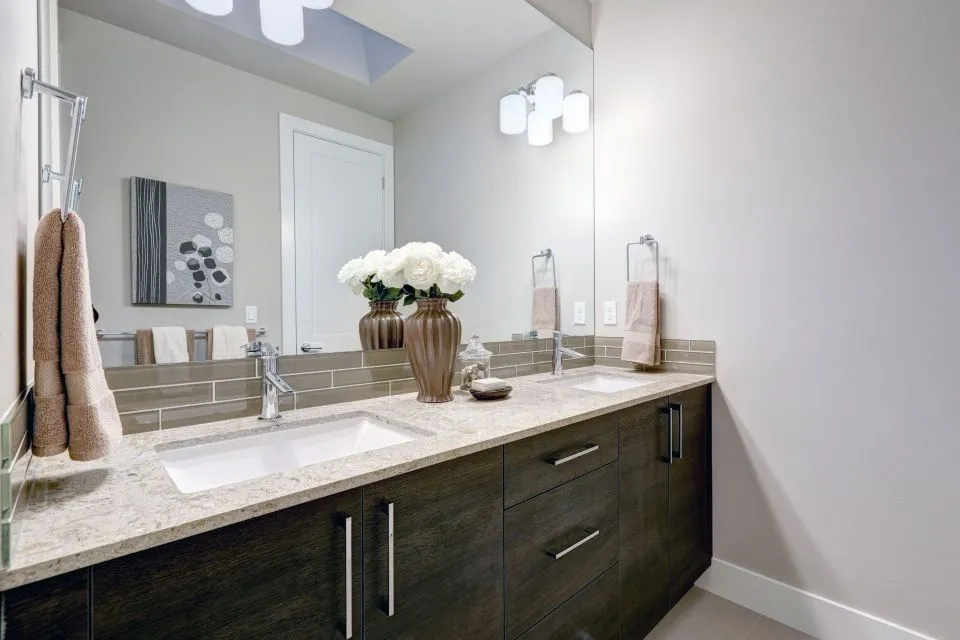
The Benefits of Quartz Countertops for Bathroom Vanities
A bathroom vanity has to handle daily moisture, cosmetics, cleaning products, and frequent use while still looking polished. The countertop is one of the most visible surfaces in the room, so its material affects both the practicality and the overall design of the space.
Quartz has become a popular choice for homeowners who want a durable vanity surface with a consistent appearance. Its engineered construction offers a broad selection of colors and patterns, while its low-maintenance finish makes it well suited to busy bathrooms.
For homeowners in North Little Rock, Arkansas, and nearby communities, The Countertop Store provides custom fabrication and installation for bathroom remodeling projects. From measurements and templating to edge details and sink integration, a professionally planned quartz vanity can be tailored to the room instead of forced into a standard design.
Why quartz works well in bathroom spaces
Quartz countertops are made from a blend of natural quartz minerals and engineered resins. This composition creates a dense, nonporous surface that is less likely to absorb water, makeup, soap residue, or other substances commonly found near a bathroom sink. The result is a vanity top that can maintain a clean appearance with routine care.
The material also provides a solid, substantial feel. Unlike some laminate surfaces, quartz does not have a decorative layer that can peel away from the substrate. Its through-body construction allows the surface to retain its visual character over years of normal use, making it a reliable choice for primary bathrooms, guest baths, and powder rooms.
Moisture resistance is especially valuable around faucet bases, undermount sinks, and backsplash joints. Although proper installation and sealed connections remain important, quartz gives homeowners a dependable foundation for a space where water is present every day.
Easy maintenance for daily routines
A bathroom vanity can collect toothpaste, hair products, shaving cream, cosmetics, and hard-water spots. Quartz simplifies cleanup because its smooth surface does not require regular sealing. In most cases, a soft cloth, warm water, and a mild non-abrasive cleaner are enough for everyday maintenance.
The nonporous finish also leaves fewer places for spills and residue to settle. Natural stone materials such as granite and marble can perform very well, but they generally require more attention to sealing and stain prevention. Homeowners comparing surfaces can review this bathroom material comparison when deciding which care routine best fits their household.
Quartz still benefits from sensible use. Harsh chemicals, abrasive powders, and direct exposure to high heat should be avoided. Wiping up strongly pigmented cosmetics or hair dyes promptly is also a good practice, particularly with very light-colored countertops.
Design flexibility for vanities and surrounds
One of quartz’s strongest advantages is its design range. Slabs are available in clean whites, warm creams, soft grays, charcoal tones, and colors that resemble natural stone. Some patterns have subtle veining, while others create a bold marble-inspired focal point behind a sink or beneath a wall-mounted mirror.
This variety makes it possible to coordinate a vanity top with cabinetry, flooring, tile, hardware, and paint. A quiet solid color can balance a decorative backsplash, while a dramatic veined slab can serve as the primary design feature in an otherwise simple bathroom. Quartz can also provide visual continuity when the same material is used for a vanity backsplash or shower wall.
Custom fabrication expands those options further. The Countertop Store can create specific edge profiles, cutouts, and dimensions for the layout. A narrow powder-room vanity, a double-sink primary bath, or a furniture-style cabinet can each receive a top designed to match its proportions and function.
A strong surface for sinks and water-prone areas
Quartz pairs well with undermount sinks because the countertop can be cut precisely around the basin. With the sink mounted below the surface, water and debris can be swept directly into the bowl without catching on a raised rim. This creates a streamlined appearance and makes cleaning the vanity easier.
Integrated sinks and coordinated backsplash pieces are additional options for homeowners seeking a unified look. A matching backsplash can protect the wall behind the faucet while visually extending the countertop. Quartz shower walls and quartz shower pans can also be considered when a bathroom renovation calls for fewer grout lines and a coordinated material palette.
The material is durable enough for everyday bathroom demands, but it is not indestructible. Strong impacts on corners or narrow sections can cause chips, particularly during installation or when heavy objects are dropped. Professional templating, fabrication, and installation help reduce these risks and ensure that seams, overhangs, and support points are handled correctly.
Comparing quartz with other vanity materials
Every countertop material has a different balance of appearance, maintenance, durability, and cost. Quartz is often selected because it offers a practical middle ground: a refined stone-like look without the routine sealing associated with some natural stones. Granite provides natural variation and excellent durability, while marble offers distinctive veining but can be more vulnerable to etching and staining.
Porcelain is another increasingly popular option, especially for contemporary bathrooms and large-format wall applications. Butcher block brings warmth and texture, though it requires a different maintenance approach in a moisture-heavy environment. The best choice depends on the bathroom’s style, cleaning habits, budget, and expected use.
| Material | Maintenance | Appearance | Water and stain resistance | Design considerations |
|---|---|---|---|---|
| Quartz | Low; no routine sealing | Consistent colors and stone-inspired patterns | Very good because the surface is nonporous | Works well with undermount sinks and coordinated backsplashes |
| Granite | Periodic sealing may be needed | Natural variation and mineral movement | Very good when properly maintained | Each slab has a distinct appearance |
| Marble | Regular care and sealing recommended | Luxurious veining and classic character | More vulnerable to stains and etching | Best for homeowners comfortable with visible patina |
| Porcelain | Low maintenance | Modern colors, patterns, and large-format styles | Excellent when fabricated and installed correctly | Thin slabs and edges require specialized handling |
| Butcher block | Ongoing oiling or refinishing | Warm, natural wood appearance | Requires careful moisture management | Suits traditional or transitional designs |
Quartz is often a practical choice for homeowners who want the look of natural stone with fewer maintenance obligations. However, the slab pattern, edge profile, sink configuration, and installation quality can influence the final result as much as the material itself.
Planning the right vanity countertop
The best quartz vanity begins with accurate measurements. Wall conditions, cabinet dimensions, plumbing locations, faucet placement, sink type, side splashes, and overhangs all affect the final template. Even a small discrepancy can create problems where the countertop meets a wall or where the sink must align with existing plumbing.
Homeowners should also consider how the vanity will be used. A double-sink top may need additional support and carefully placed seams. A compact powder-room surface may benefit from a narrow edge and a simple backsplash. In a primary bathroom, a wider overhang, custom makeup area, or built-in storage feature may make the countertop more functional.
Color selection should take place with the bathroom’s actual lighting in mind. A quartz sample can look different under showroom lights, daylight, and warm vanity fixtures. Reviewing samples alongside cabinet doors, tile, flooring, and paint helps prevent a combination from feeling too cool, too busy, or mismatched once installed.
Details that shape the finished appearance
Edge profiles may seem like a minor decision, but they influence the personality of the vanity. A simple eased edge suits modern and transitional designs, while a more decorative profile can complement traditional cabinetry. Rounded edges may also be useful in family bathrooms where reducing sharp corners is a priority.
The placement of seams and cutouts deserves equal attention. A skilled fabricator can position seams in less noticeable areas and account for the pattern direction of a veined slab. Faucet holes, soap dispenser openings, sink cutouts, and backsplash dimensions should be reviewed before fabrication begins.
Custom quartz work can extend beyond the main vanity surface. Matching shelves, ledges, shower niches, fireplace features, and furniture pieces can create a connected design throughout the home. The same fabrication capabilities used for a bathroom remodel may also support kitchen countertops, outdoor kitchens, mantels, or other custom surfaces.
Practical recommendations for selecting quartz
A successful vanity project depends on choosing a surface that fits the room, the household, and the installation conditions. These decisions can help narrow the options:
- Bring cabinet, tile, and flooring samples when reviewing quartz colors and patterns.
- Select a finish and pattern that suit the bathroom’s lighting rather than relying on showroom appearance alone.
- Confirm sink, faucet, backsplash, side splash, and edge details before approving the fabrication template.
- Ask how the selected slab will be oriented, especially when it includes prominent veining.
- Choose professional installation to ensure accurate seams, secure support, and clean wall transitions.
It is also useful to discuss long-term care before the countertop is installed. A fabricator can explain which cleaners to use, how to protect the surface during future remodeling, and what habits will help preserve the finish. Clear planning reduces surprises and makes it easier to achieve a cohesive result.
For bathrooms with heavy daily use, quartz’s combination of low maintenance and design flexibility can provide lasting value. For less frequently used spaces, its consistent appearance and easy cleaning may be especially attractive because the vanity can remain presentable between visits.
A well-made quartz vanity can give a bathroom a durable centerpiece, a simpler cleaning routine, and a carefully finished appearance. The Countertop Store serves North Little Rock and surrounding areas with consultation, measurement, templating, fabrication, edging, and installation for custom remodeling surfaces.
Contact The Countertop Store to discuss your bathroom layout, review quartz samples, and plan a vanity countertop that fits your cabinets, sink, style, and everyday needs.