Countertop materials that shape a modern farmhouse kitchen
Modern farmhouse design works because it balances familiar details with clean, current lines. Shaker cabinetry, apron-front sinks, natural wood, aged metal, and simple tile create a welcoming foundation, while the countertop determines how those elements relate to one another. The right surface can make a kitchen feel relaxed and handcrafted without looking dated or overly rustic.
The best countertop materials for a modern farmhouse style usually combine visual warmth with dependable everyday performance. Some homeowners prefer the consistency and easy care of engineered quartz, while others are drawn to the movement of granite, the softness of marble, or the honest character of butcher block. The ideal choice depends on how the room is used, how much maintenance suits your routine, and which textures support the overall design.
A successful selection also accounts for fabrication details. Edge profiles, seams, backsplashes, integrated sinks, and countertop thickness can change the appearance as significantly as the material itself. With careful planning, a countertop can connect the kitchen to farmhouse-inspired bathrooms, fireplace surrounds, outdoor kitchens, and other custom features throughout the home.
What gives a farmhouse countertop the right look
Modern farmhouse interiors typically rely on contrast. Bright cabinetry may be paired with a darker island, or warm oak accents may sit beneath a pale stone surface. The goal is a composed combination of materials rather than a perfectly matched room. Countertops should add texture and personality while leaving enough visual space for hardware, lighting, flooring, and decorative pieces.
Finish matters as much as color. Honed stone has a soft, low-sheen appearance that feels less formal than polished stone. Leathered finishes add tactile texture and can make darker granite or soapstone feel approachable. A lightly veined quartz creates movement without the variation of a natural slab. Wood, meanwhile, brings a distinctly crafted quality to an island or breakfast counter.
Farmhouse style also benefits from surfaces that feel substantial. A thicker-looking edge, a waterfall end on an island, or a built-up profile can make cabinetry seem more furniture-like. In a smaller kitchen, a simple eased edge and a restrained pattern may be preferable because they preserve an open, uncluttered appearance.
Quartz for consistent beauty and easy care
Quartz is a strong choice for homeowners who want a dependable surface with a clean, tailored appearance. Its broad range of colors includes warm whites, creamy neutrals, soft gray, charcoal, and patterns that resemble marble or concrete. Subtle veining works especially well with white or natural-tone cabinets, creating a polished farmhouse look without excessive ornament.
Because quartz is nonporous, it resists the absorption of common kitchen spills and is generally simple to clean with mild soap and water. It does not require routine sealing, which can be useful for busy households that want attractive countertops without a detailed maintenance schedule. Quartz also provides consistent coloring from slab to slab, making it easier to coordinate an island, perimeter counters, and a matching backsplash.
Homeowners comparing surfaces can browse countertop materials to see how quartz relates to granite, porcelain, marble, Dekton, soapstone, and butcher block. A sample is helpful, but viewing full slabs is even more valuable because veining, background color, and pattern scale can look very different across a complete installation.
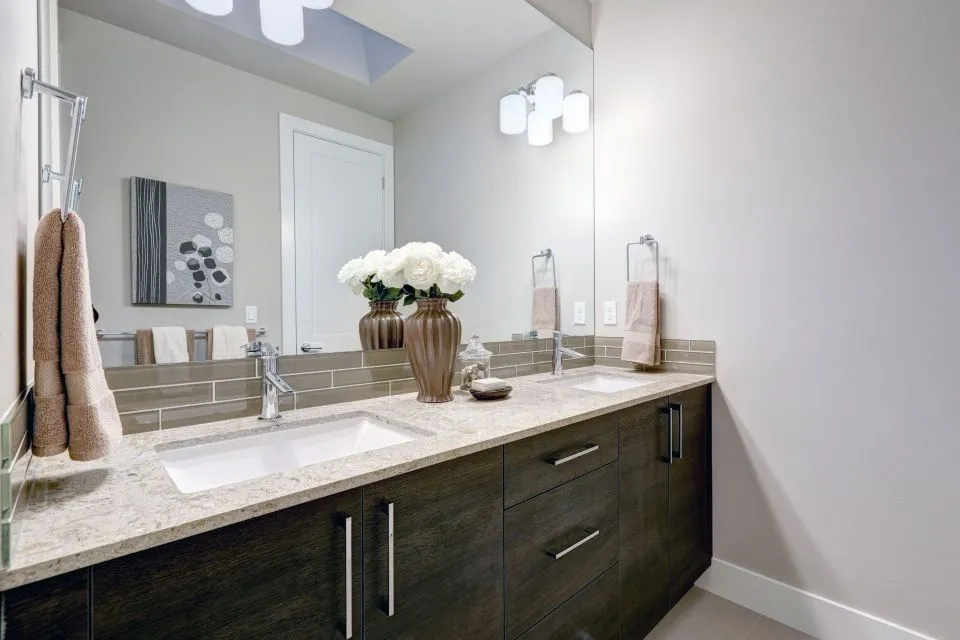
Quartz is especially effective when the design includes several farmhouse details. An apron-front sink, beadboard accents, warm flooring, and aged brass hardware can provide character, while a calm quartz pattern keeps the room from feeling visually crowded. For a bathroom vanity, quartz can carry the same palette into the rest of the home; its practical qualities are explained further in this quartz vanity guide.
| Material | Farmhouse appeal | Maintenance profile | Best applications | Design considerations |
|---|---|---|---|---|
| Quartz | Clean, consistent, lightly veined | Low maintenance; no routine sealing | Perimeter counters, islands, vanities | Choose warm whites or restrained veining for a softer look |
| Granite | Natural movement and distinctive character | Periodic sealing may be needed | Islands, perimeter counters, hardworking kitchens | View the full slab to understand color and pattern |
| Marble | Classic veining and gentle variation | Requires prompt spill care and regular attention | Baking stations, vanities, statement areas | Honed finishes create a relaxed appearance |
| Porcelain | Contemporary, durable visual options | Low maintenance; fabrication requires precision | Counters, walls, backsplashes, outdoor areas | Thin profiles can look modern; edge details add substance |
| Dekton | Sleek, architectural, highly durable | Low maintenance | Large islands, outdoor kitchens, modern farmhouse spaces | Best when the design includes crisp, substantial lines |
| Soapstone | Matte, deep color, aged character | Periodic oiling is optional; scratches can be embraced | Sinks, islands, perimeter counters | Works beautifully with wood and light cabinetry |
| Butcher block | Natural warmth and visible craftsmanship | Requires regular care and protection from moisture | Islands, work areas, accent sections | Use selectively for contrast and a furniture-like feel |
Natural stone brings depth and individuality
Granite remains a versatile option for a farmhouse kitchen because every slab has its own mineral pattern. Neutral granite with cream, taupe, gray, or muted brown movement can complement painted cabinets and wood flooring. More dramatic varieties can create a strong island focal point, especially when the rest of the room uses simple finishes.
The key to choosing granite is to examine the actual slab rather than relying only on a small sample. Pattern scale, veining direction, and areas of darker mineral concentration can affect how the finished counter relates to cabinet doors and backsplash tile. A fabricator can help plan seam placement, overhangs, sink cutouts, and edge details around the natural layout of the stone.
Marble adds a softer, more traditional note. Its flowing veining suits farmhouse kitchens that include paneled cabinetry, vintage-inspired lighting, or a dedicated baking area. Honed marble tends to feel casual and tactile, while polished marble creates a brighter, more formal effect. Marble does require a willingness to respond quickly to acidic spills and accept that its finish may develop character over time.
Soapstone offers a different kind of natural appeal. Its deep gray, charcoal, or nearly black color creates useful contrast against white cabinets and pale walls. The surface has a soft matte quality, and minor scratches can often become part of its lived-in appearance. Periodic oiling may deepen the color, while leaving it untreated creates a lighter, more weathered effect.
Porcelain and Dekton suit a refined farmhouse space
Porcelain countertops can bridge rustic inspiration and contemporary performance. They are available in designs that resemble marble, limestone, concrete, or other natural materials, allowing homeowners to create a layered room without using several different stones. Porcelain can also extend from the counter onto a backsplash or wall, producing a continuous visual plane behind a range or sink.
Large-format porcelain is useful when a design calls for fewer visual interruptions. It can be a strong option for a kitchen island, shower wall, bathroom vanity, or fireplace application, although fabrication and installation require specialized handling. A qualified team must account for slab size, cutouts, support, edge construction, and transportation before the material is selected.
Dekton offers a highly durable, architectural surface for homeowners who want a crisp modern farmhouse interpretation. Its concrete-inspired, stone-inspired, and dark neutral designs work well with oak, black window frames, simple pendant lights, and streamlined cabinetry. It can also transition into outdoor kitchens or other areas where a durable surface is important.
These materials are most successful when their contemporary character is balanced with warmer features. Wood shelving, woven stools, natural textiles, and aged finishes can keep porcelain or Dekton from making the kitchen feel cold. A carefully chosen edge and a substantial island base can further connect a sleek surface to the comfortable proportions associated with farmhouse interiors.
Butcher block adds warmth where it matters most
Butcher block is one of the clearest ways to introduce natural warmth into a modern farmhouse kitchen. Its grain gives an island the appearance of a crafted worktable, particularly when paired with furniture-style legs, paneled ends, or open shelving. It can also create a visual break between a stone perimeter countertop and a painted or stained island.
Wood countertops require more care than nonporous engineered surfaces. Water around sinks should be wiped promptly, cutting directly on the surface may leave marks, and the finish may need periodic maintenance according to the wood species and product used. These considerations make butcher block especially attractive for a secondary prep area or island rather than every counter in the kitchen.
The contrast between wood and stone can be more effective than using either material throughout. A creamy quartz perimeter with a walnut island top feels layered and inviting. A charcoal soapstone island beside light oak cabinetry creates a stronger, moodier statement. Mixing surfaces is most successful when the colors share an undertone or when a repeated finish, such as brass hardware or natural wood, visually connects them.
Custom fabrication can extend this approach beyond standard counters. Matching material may be used for a built-in table, floating shelf, fireplace mantel, bathroom vanity, or furniture piece. These details help a farmhouse-inspired home feel intentionally designed rather than assembled from unrelated finishes.
Details that make the material feel intentional
A countertop choice should be evaluated alongside the sink and backsplash. An integrated sink can create a smooth, tailored appearance with fewer visible transitions, while a farmhouse apron-front sink makes the counter and cabinet layout part of the design statement. The sink material, reveal, drainboard details, and faucet placement should be resolved before final templating.
Edge profiles deserve similar attention. A simple eased edge supports a clean modern look and is easy to live with. A small bevel adds definition without becoming decorative, while a more substantial edge can make a thin slab appear visually heavier. On an island, a waterfall edge can emphasize the stone pattern, though it is usually most effective when the surrounding design remains restrained.
Backsplashes can match the countertop, coordinate with it, or provide contrast. A full-height slab backsplash creates a streamlined appearance, especially with quartz or porcelain. Handmade ceramic tile introduces irregularity and texture, which can make a consistent countertop feel more connected to farmhouse tradition. The right choice depends on whether the room needs calm continuity or an additional layer of pattern.
In North Little Rock and surrounding Arkansas communities, the practical process matters as much as the design direction. Consultation, precise measurements, templating, fabrication, edging, and installation all influence the final result. Discussing cabinet conditions, appliance locations, seam placement, overhang support, and sink requirements early helps prevent attractive material choices from becoming difficult installations.
A practical way to narrow the selection
Begin with the room’s fixed elements instead of choosing a countertop in isolation. Cabinet color, flooring, backsplash plans, natural light, and hardware finish establish the visual boundaries. Collect larger samples or view full slabs in similar lighting, then compare them against cabinet doors and flooring rather than against a white showroom wall.
Next, consider how the surface will be used. A family kitchen with frequent cooking may benefit from quartz or a durable porcelain surface. A homeowner who enjoys natural patina may prefer soapstone or marble. Someone seeking a furniture-like island may find butcher block ideal, provided the required care fits the household’s routine.
Use these priorities when making the final decision:
- Select a surface whose maintenance requirements match daily habits, not just its appearance.
- View a full slab whenever possible, especially for granite, marble, and strongly patterned quartz.
- Coordinate the countertop with cabinet undertones, backsplash texture, flooring, and hardware.
- Confirm sink style, edge profile, overhang support, and seam locations before fabrication.
- Use contrasting materials selectively so the kitchen feels layered rather than visually busy.
A professional consultation can clarify which materials suit the cabinet layout, cooking patterns, and budget. It can also reveal opportunities for coordinated shower walls, quartz shower pans, bathroom vanities, fireplaces, mantels, or outdoor surfaces. These connected applications are valuable when the goal is a consistent material story throughout the home.
The best modern farmhouse countertop is the one that supports the way the room is lived in while adding the right amount of warmth, texture, and contrast. Explore material options with The Countertop Store, review samples and full slabs, and schedule a consultation for accurate measurements and a tailored fabrication plan. A thoughtful surface selection can give your kitchen enduring character from the island edge to the final backsplash seam.