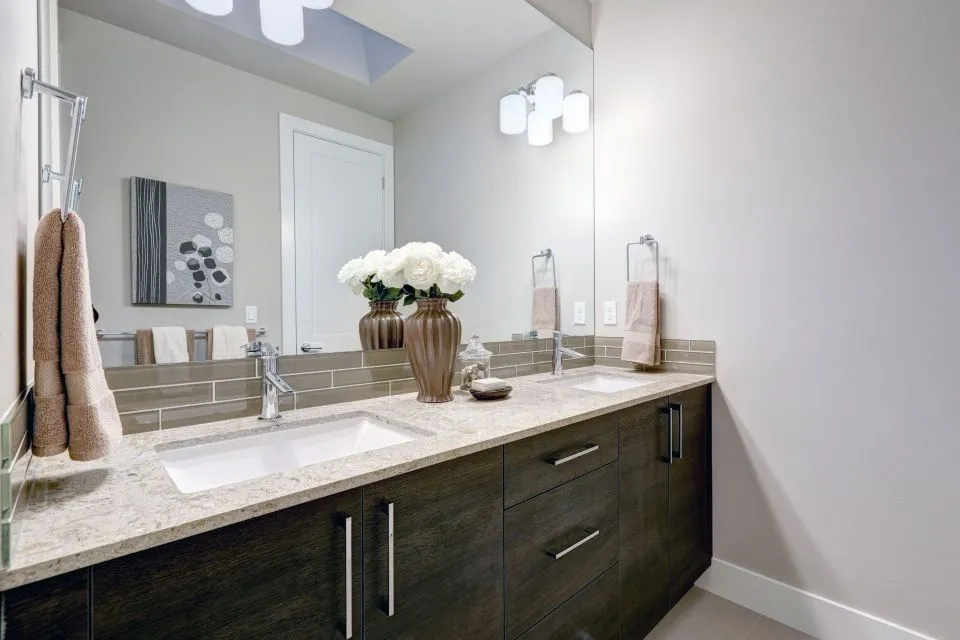
Countertop Materials That Bridge Indoor and Outdoor Kitchens
The Australian home has long celebrated the seamless flow between interior living spaces and the great outdoors. From breezy Queenslander verandahs to Sydney harbourside terraces and Adelaide Hills patios, homeowners treat the boundary between inside and outside as something to dissolve rather than define. Nowhere is this more visible than in the kitchen, where the modern entertainer expects to roll from chopping herbs at the island bench straight to grilling prawns on the barbecue without missing a beat.
That kind of fluid movement places unusual demands on the surfaces that connect the two zones. A benchtop that lives well indoors may bleach, warp, or stain when exposed to six months of harsh Western Australian sun, while a material chosen for outdoor resilience can look brash and industrial next to a soft, contemporary interior. Climate alone varies wildly across the country: humidity and salt-laden breezes punish surfaces in coastal Brisbane and the Sunshine Coast, dry heat bakes outdoor kitchens in Alice Springs and Mildura, and frosts are a genuine concern for elevated entertaining areas in the Blue Mountains or the Adelaide Hills.
Choosing the right material is therefore less about picking a favourite stone and more about engineering a transition that handles Australian conditions while still feeling cohesive. The following sections walk through the strongest contenders, weighing their performance against UV exposure, thermal shock, staining, and the visual language of contemporary Australian architecture.
Quartz That Performs Across Both Zones
Engineered quartz has become a default choice for indoor kitchens across Melbourne, Brisbane, and Perth, and for good reason. It is dense, non-porous, and available in patterns that convincingly mimic marble, concrete, and weathered limestone. Because the resin binders are mixed with the quartz aggregate under factory conditions, the surface arrives with predictable performance characteristics that don't vary from slab to slab the way natural stone can.
For an indoor-outdoor transition, however, standard quartz carries one important caveat. Many engineered products carry UV-resistance ratings that suit north-facing kitchen windows but fall short of full sun exposure for years at a time. In Queensland and northern New South Wales, where outdoor kitchens often sit beneath open pergolas or skillion roofs, prolonged direct sunlight can yellow or fade some quartz brands. Specifying a UV-stabilised formulation, or limiting the outdoor use to a covered alfresco zone, is essential.
Where quartz shines is in the wet areas that connect the two spaces, such as butler's pantries, bar areas, and shower walls that share visual continuity with the outdoor kitchen. Integrated sinks poured from the same slab eliminate the silicone lines that collect grime, and the broad slab sizes available through Australian distributors mean fewer seams across long island runs. If you want the indoor benchtop to mirror the look of an outdoor entertaining counter without duplicating it in a less forgiving material, quartz is often the most reliable indoor partner.
Natural Stones That Earn Their Place Outside
Granite, soapstone, and certain marbles have decorated Australian outdoor kitchens for decades, particularly in established suburbs of Sydney, Melbourne, and Adelaide where heritage homes encourage classic material choices. Granite remains the workhorse of the natural-stone world for outdoor applications. It tolerates thermal shock from hot pans better than almost any other surface, shrugs off UV exposure without colour shift, and resists the salt-air corrosion that troubles metal-clad outdoor benches in beachside suburbs from Coogee to Cottesloe.
Soapstone, long popular in heritage restorations around Hobart and inner Melbourne, is another strong contender. Its talc-rich composition gives it a soft, almost warm-to-the-touch feel that suits rustic outdoor settings, and the patina it develops over time is considered part of its appeal rather than a flaw. Regular oiling deepens the colour, but the surface will never flake, delaminate, or be destroyed by a hailstorm or an unexpected cold snap in a Ballarat winter.
Marble deserves a more cautious conversation outdoors. Australian homeowners drawn to its veining should understand that acid exposure from lemon juice, wine drips, and tomato-based marinades will etch the surface in ways that polishing alone cannot reverse. If marble is used in an outdoor kitchen, it works best as a serving surface or a baking station rather than the primary prep area. Homeowners weighing the maintenance commitment can review a detailed marble cleaning guide before committing, since outdoor conditions accelerate the wear that already demands vigilance indoors.
Porcelain and Dekton for Harsh Climates
Ultra-compact surfaces have reshaped the conversation about indoor-outdoor material continuity. Porcelain slabs and the closely related Dekton family of sintered stone are manufactured at temperatures that fuse mineral particles into something closer to glass than to traditional stone. The result is a surface that resists UV, scratching, staining, heat, and even the freeze-thaw cycles that can crack lesser materials in elevated parts of Canberra or the NSW Southern Highlands.
For Australian homeowners, the appeal is partly practical and partly aesthetic. Porcelain can be printed with remarkably faithful reproductions of Calacatta marble, oxidised copper, weathered steel, and even timber grain, allowing a single visual language to wrap continuously from the indoor island out to the barbecue bench and pizza-top preparation area. Because the slabs are large, fabricators can mitre edges and fold the material around corners without visible joins, an effect that reads as a single sculptural form rather than a tiled assembly.
The main trade-off is fabrication complexity. Ultra-compact surfaces demand specialist cutting equipment, and not every stonemason in regional Australia has invested in the tooling. For homeowners in Cairns, Broome, or other remote centres, this can mean longer lead times or higher freight costs. Those who can access an experienced fabricator, however, often find that the material's longevity offsets the upfront investment, particularly in bushfire-prone zones where non-combustible surfaces are mandated under AS 3959 construction standards.
Stainless Steel, Concrete, and Industrial Choices
Contemporary Australian architecture has rediscovered industrial materials, and they translate particularly well to outdoor kitchens where a tougher aesthetic feels appropriate. Stainless steel, the professional kitchen's default, shrugs off every form of weather exposure, tolerates boiling oil and sizzling pans, and cleans up with little more than a wipe. Coastal homeowners in particular appreciate that salt air doesn't corrode food-grade stainless the way it can attack lesser alloys.
Polished concrete has also moved well beyond flooring. Cast-in-place or precast concrete benchtops allow completely custom shapes, integrated drainboards, and pigmented colours that anchor the visual identity of an outdoor kitchen. The catch is that concrete is porous unless sealed meticulously, and Australian conditions are unforgiving. Sloppy sealing leads to wine stains, oil marks, and the gradual dulling that frustrates homeowners in humid Brisbane summers. A high-quality penetrating sealer, reapplied on a schedule suited to local UV exposure, is non-negotiable.
Both materials work best when the indoor kitchen adopts at least some of the same visual cues, so the eye reads the transition as deliberate. A concrete island inside paired with a concrete barbecue bench outside, both tinted to the same warm grey, feels like a coherent design decision. A glossy white polyurethane indoor kitchen next to a raw stainless outdoor setup reads as two unrelated spaces sharing a wall.
Timber, Composite, and Living Materials
There is something deeply Australian about cooking on timber. Blackbutt and spotted gum benchtops evoke the bush setting and age beautifully under cover, while recycled hardwoods from old wharves and woolstores carry a patina no factory finish can replicate. Timber outdoors demands more maintenance than almost any other option, but for homeowners willing to oil it twice a year and accept that the surface will silver and check, the trade is often worthwhile.
Composite alternatives have grown more convincing. Mineral-resin boards, dense bamboo panels, and recycled timber-plastic composites offer the warm look of timber with markedly better weather resistance. They suit covered alfresco areas well, though few will survive prolonged full-sun exposure in places like Rockhampton or Dubbo where summer UV indices regularly push above twelve. For these harsher climates, composite materials belong under a solid roof, with full stone or porcelain handling any fully exposed surfaces.
When planning the indoor-outdoor transition, homeowners benefit from learning about how a fabricator's process works early in the design phase, since the choice of benchtop material influences cabinetry spans, support structures, and even the placement of plumbing and gas lines. Bringing a specialist into the conversation before finalising the floor plan prevents costly rework when an island needs to be resized to accommodate a particular slab dimension, or when an outdoor bench requires deeper footings than the original landscape design allowed.
Practical Recommendations for a Cohesive Transition
- Match the indoor and outdoor palette around veining direction, undertone, and finish rather than trying to use identical materials in both zones.
- Verify UV-stability ratings for any engineered surface that will see direct or near-direct sunlight, especially in northern Australia.
- Reserve marble and softer limestones for protected or low-traffic roles, treating them as feature surfaces rather than workhorses.
- Confirm that any fully exposed outdoor surface meets local bushfire construction standards and, where relevant, BAL-29 or BAL-40 requirements.
- Plan the transition zone, including cover, screening, and drainage, before finalising material selection so the benchtop suits its setting rather than the reverse.