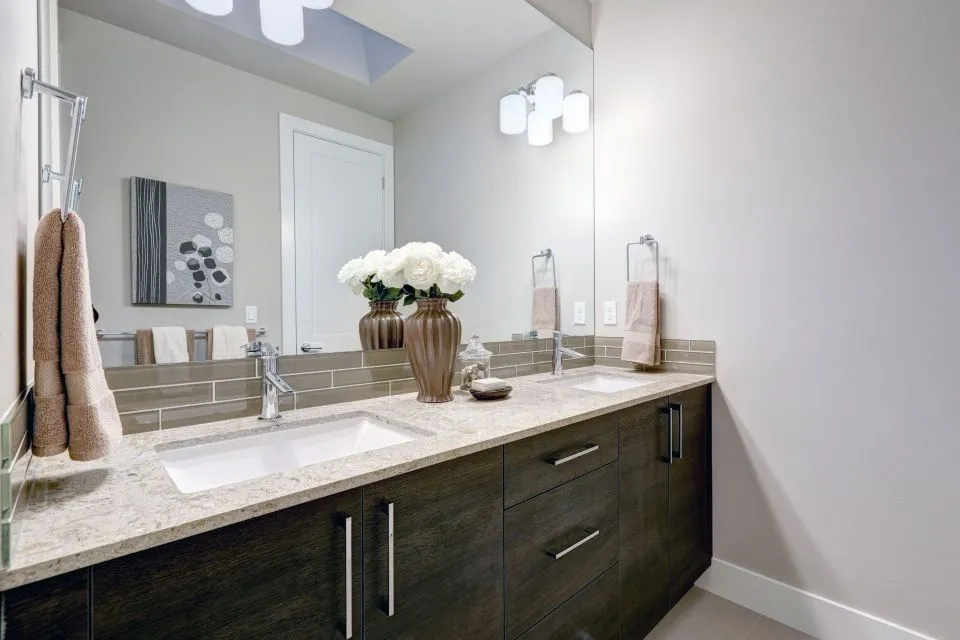
Best Countertop Materials for Coastal and Humid Climates
Choosing the best countertop materials for coastal or humid climates requires more than comparing colors and patterns. High moisture, salt-laden air, intense sunlight, temperature changes, and frequent cleaning can all affect a surface over time. The right material should resist water absorption, tolerate daily wear, and suit the room where it will be installed.
Kitchens, bathrooms, laundry rooms, outdoor kitchens, and covered patios each create different demands. A surface that performs beautifully beside an indoor sink may need extra protection when exposed to direct sun, rain, or outdoor humidity. Porosity, sealing requirements, heat resistance, edge design, and installation quality all influence long-term results.
Homeowners in North Little Rock and surrounding Arkansas communities face significant humidity even without living directly on the coast. Warm, damp summers can affect cabinetry, flooring, walls, and countertops. Selecting a low-maintenance surface and pairing it with accurate templating and professional installation helps prevent moisture-related problems before they begin.
What Moisture And Salt Air Do To Countertops
Humidity itself does not damage every countertop in the same way. The greater concern is repeated exposure to standing water, steam, spills, damp cloths, and poorly ventilated areas. Porous materials can absorb moisture, oils, and staining agents, while seams and cutouts may become vulnerable if they are not properly supported and sealed.
Coastal homes add salt air and stronger ultraviolet exposure to the equation. Salt can leave residue on surfaces and hardware, while sunlight may gradually fade some finishes or cause discoloration. Outdoor installations experience even wider temperature swings, making material movement and edge durability especially important.
Good ventilation remains valuable, particularly in bathrooms and kitchens. Backsplashes, shower walls, and properly sealed sink cutouts direct water away from vulnerable areas. A carefully fabricated countertop should have smooth, finished edges and seams positioned where they are less likely to collect moisture.
Quartz For Low-Maintenance Indoor Spaces
Quartz is one of the most practical choices for humid indoor kitchens and bathrooms. Its engineered composition is highly nonporous, so it does not require routine sealing like many natural stones. Spills, condensation, soap residue, and cooking oils are generally easy to remove with mild soap and water.
Because quartz is available in a broad range of colors and patterns, it can reproduce the appearance of marble, limestone, or concrete while offering more predictable maintenance. It works well for vanity tops, kitchen islands, shower wall accents, and backsplash installations. Integrated sinks and carefully finished seams can further reduce areas where water may collect.
Color selection still matters. Dark, polished surfaces may show water spots more readily, while textured or honed finishes can require different cleaning habits. Quartz should also be protected from direct contact with very hot cookware. For a useful look at pattern, color, and design considerations, review this quartz selection guide before choosing a slab.
Quartz is generally best suited to indoor applications rather than fully exposed outdoor spaces. Prolonged sunlight can affect some resins and colors, so a porcelain or sintered surface may be a better choice for an uncovered patio, outdoor bar, or sun-drenched coastal kitchen.
Porcelain And Dekton For Sun And Water Exposure
Porcelain countertops are especially well suited to environments where moisture, sunlight, and staining are regular concerns. The material has very low water absorption and strong resistance to many household chemicals. It can be used for kitchen counters, bathroom vanities, shower walls, fireplace surrounds, and selected outdoor features.
Large-format porcelain slabs can create a clean appearance with fewer visible seams. They are also available in designs that resemble natural stone, wood, cement, or dramatic marble. Since the surface is resistant to ultraviolet exposure, porcelain is a strong candidate for covered outdoor kitchens and coastal areas with intense sunlight.
Fabrication requires specialized tools and experienced handling because porcelain slabs can be more demanding around sink openings, corners, and narrow edges. A reliable installer will account for support, transportation, cutout placement, and edge treatment during the templating process. These details have a direct effect on the finished surface’s durability.
Dekton is another engineered surface designed for demanding conditions. It is made from a highly compacted blend of minerals and is resistant to moisture, ultraviolet rays, stains, and heat. That makes it attractive for outdoor countertops, fireplaces, walls, islands, and modern indoor kitchens.
Dekton is not indestructible. A sharp impact on an unsupported corner can still cause damage, especially with thinner profiles. Proper substrate support, reinforced cutouts, and an edge profile suited to the installation are essential. When those details are handled correctly, Dekton offers impressive performance in wet, sunny, and high-use spaces.
Granite Marble And Soapstone In Humid Homes
Granite remains a dependable natural-stone option for humid climates. Many granite varieties have low to moderate absorption and provide excellent resistance to scratching and everyday kitchen wear. Sealing helps reduce staining and moisture penetration, although the need for resealing varies according to the stone’s density, finish, and use.
Granite brings natural variation that engineered materials cannot fully duplicate. Each slab has its own movement, mineral pattern, and color balance. For a coastal-inspired kitchen, pale granite can create an airy feel, while darker slabs can add contrast to light cabinetry. A professional fabricator can help position the most attractive sections around islands, sinks, and seams.
Marble can perform well in a bathroom or kitchen when the homeowner accepts its maintenance needs. It is naturally cool, elegant, and available in distinctive veining. However, marble is more susceptible to etching from acids such as lemon juice, vinegar, and some cleaning products. It can also stain if spills remain on the surface.
In a humid room, marble should be sealed appropriately and wiped dry when practical. Honed finishes may disguise small scratches and etching better than high-polish finishes, though they have a softer, more understated appearance. Marble is often a design-led choice rather than the lowest-maintenance option.
Soapstone has a valuable advantage in wet spaces: it is naturally nonporous and does not require sealing. It resists staining and handles moisture well, making it useful for farmhouse kitchens, utility areas, and certain bathroom applications. Its deep gray to charcoal color can develop a distinctive patina as the surface ages.
Soapstone is softer than granite and quartz, so it can scratch or show marks from heavy use. Many homeowners appreciate that character, while others prefer regular mineral oil treatment to deepen the color and create a more uniform appearance. The material’s performance depends on whether its evolving look suits the overall design.
| Material | Moisture Resistance | Sun And Heat Performance | Maintenance | Suitable Applications |
|---|---|---|---|---|
| Quartz | Excellent indoors | Good indoors; avoid prolonged direct sun for some colors | Low; no routine sealing | Kitchens, vanities, backsplashes |
| Porcelain | Excellent | Excellent, including many outdoor uses | Low; clean with mild products | Showers, walls, kitchens, outdoor areas |
| Dekton | Excellent | Excellent | Very low | Indoor and outdoor counters, fireplaces |
| Granite | Very good when sealed | Very good | Periodic sealing and routine cleaning | Kitchens, islands, bathrooms |
| Marble | Good with careful sealing | Good, but sensitive to etching | Frequent care and prompt spill cleanup | Vanities, accent counters, feature areas |
| Soapstone | Excellent; naturally nonporous | Good | Optional oiling and scratch management | Kitchens, utility rooms, select bathrooms |
| Butcher block | Moderate to low without maintenance | Limited outdoors | Regular oiling and moisture control | Islands, prep counters, warm interior designs |
The Warmth Of Butcher Block
Butcher block adds natural warmth to a humid home, especially when paired with painted cabinets or stone perimeter counters. It can serve as an island work surface, breakfast counter, furniture top, or decorative accent. Its tactile feel and ability to be refinished make it appealing for homeowners who enjoy a material that changes with use.
Wood is more responsive to moisture than stone or porcelain. Water left near a sink can cause swelling, darkening, or finish deterioration, especially at seams and end grain. A butcher block installation should receive the appropriate food-safe oil or protective finish, and wet areas should be wiped promptly.
Butcher block is generally better for controlled indoor environments than exposed coastal applications. It can work near a sink when maintained carefully, but it is not the first choice for shower surrounds, outdoor kitchens, or locations with persistent standing water. Combining wood with a more water-resistant surface can provide visual warmth without placing the entire countertop at risk.
Details That Make A Surface Last
Material selection is only one part of performance. A countertop’s longevity also depends on the quality of the measurement, cabinet preparation, seam placement, sink installation, backsplash connection, and edge fabrication. Even a highly water-resistant slab can develop problems when it lacks proper support or has an exposed, poorly finished cutout.
Showers require especially careful planning. Porcelain, quartz, and other low-absorption surfaces can create attractive shower walls, but the surrounding waterproofing system must be correctly installed beneath and behind the finish. Quartz shower pans and custom wall panels should be measured precisely so water flows toward the drain instead of lingering at transitions.
Edge profiles have practical as well as decorative value. A rounded edge can reduce the chance of chipping, while a substantial profile may provide visual weight on an island. In high-moisture areas, seams should be minimized where possible and placed away from constant splashing. Backsplashes can protect drywall and cabinetry while creating a finished transition between the counter and wall.
Professional fabrication also helps match the slab layout to the room. Veining can be aligned across an island or carried through a backsplash, while sink and cooktop openings can be positioned for both appearance and structural support. The Countertop Store serves North Little Rock and nearby areas with consultation, templating, fabrication, edging, and installation for residential remodeling projects. Homeowners can also review these customer testimonials to see how finished projects have performed for other clients.
A Practical Material Selection Checklist
The best surface depends on the room, the amount of maintenance you are comfortable with, and the design effect you want to create. A busy kitchen near a sink may call for quartz or porcelain, while a statement bathroom vanity may justify marble’s care requirements. An outdoor entertaining area typically benefits from porcelain, Dekton, or a suitably selected granite.
Before ordering a slab, consider how the material will interact with cabinetry, flooring, appliances, ventilation, and natural light. It is also helpful to view full slabs rather than relying only on small samples, since veining and color movement can change dramatically across a large installation.
- Match the material to the exposure level, including indoor humidity, direct sunlight, salt air, and outdoor weather.
- Confirm whether the surface needs routine sealing, oiling, special cleaners, or prompt spill removal.
- Plan sink cutouts, seams, backsplash returns, shower transitions, and edge profiles before fabrication.
- Choose a finish and color that will make water spots, fingerprints, scratches, and natural variation manageable.
- Work with a fabricator who provides accurate measurements, suitable support, and installation-specific guidance.
A consultation can turn these considerations into a practical material plan. The Countertop Store can help compare quartz, granite, porcelain, marble, Dekton, soapstone, butcher block, and related surfaces for kitchens, bathrooms, shower walls, fireplaces, outdoor kitchens, and custom furniture pieces. Schedule a design and measurement consultation to select a countertop that fits your climate, lifestyle, and remodeling vision.