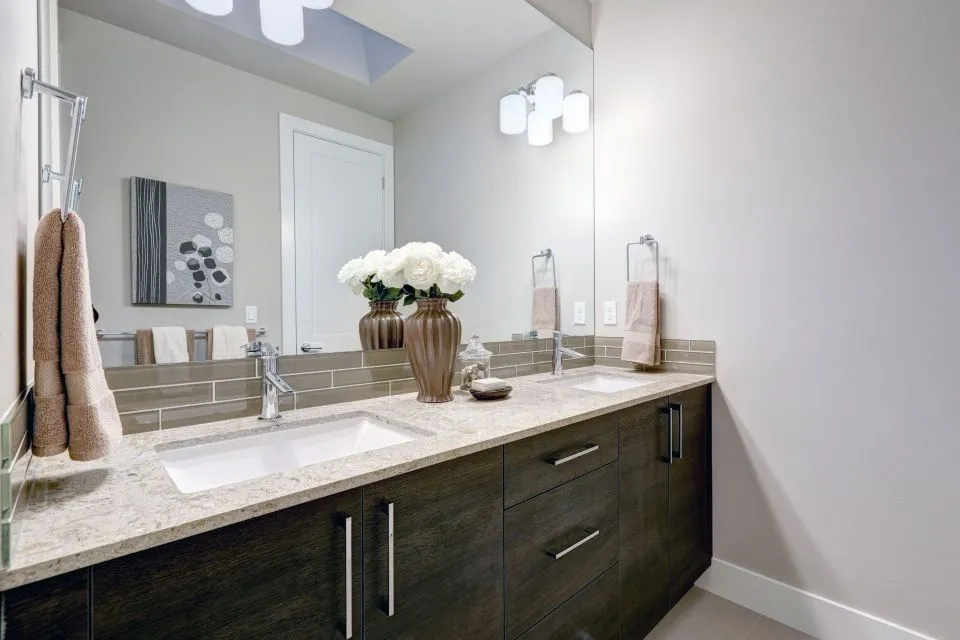
Best Countertops for Kitchens with a Window Above the Sink
A window positioned directly above the kitchen sink is one of the most sought-after features in Australian home renovations, prized for the way it frames an outlook over the garden, brings in soft northern light, and makes dishwashing feel a little less like a chore. In suburbs from Mosman to Brighton, designers are regularly asked to centre the sink beneath a feature window, often with a servery opening onto an alfresco deck or a view of the pool. The benchtop framing that window becomes a focal surface, visible from the living zones and often catching the afternoon sun for hours each day.
That daily dose of sunlight, combined with constant exposure to splashes, soap, and the occasional splash of red wine or beetroot juice, makes this particular stretch of benchtop one of the most demanding in the entire home. A material that looks beautiful in the showroom can fade, yellow, etch, or warp after a single Australian summer if it is not well matched to the spot. Choosing wisely means thinking about UV stability, water resistance, maintenance routines, and how the benchtop will look when the late arvo sun streams straight through the glass.
The good news is that the current generation of engineered and natural surfaces gives renovators more freedom than ever before. Whether the home is a weatherboard Queenslander in Brisbane, a Hamptons-inspired build in Perth, or a contemporary townhouse in inner Melbourne, there is a benchtop material that will handle the window-above-sink position without constant babying.
Why Natural Light Changes Your Material Decision
Benchtop materials that sit directly beneath a window absorb a surprising amount of ultraviolet radiation, especially on the western or northern side of the home. In Brisbane or the Gold Coast, where the UV index regularly climbs above eleven in summer, that exposure can be punishing. Some engineered quartz slabs made with older resin formulations have been known to yellow or discolour after years of direct sun, and certain darker granites can fade slightly in tone. Even solid surface acrylics can develop a chalky appearance when they are not UV-stabilised.
Heat is the second factor. A window with poor glazing or a western aspect can radiate enough warmth to soften marginal adhesives or cause differential expansion between the slab and the substrate. That is why fabrication teams often recommend full-substrate support and flexible silicone at the window interface, rather than rigid glue lines that can crack as the slab moves throughout the day.
Water behaviour matters too. Splash zones around the sink see hundreds of wet-dry cycles every week, and minerals in tap water can leave visible spots on polished stone. In parts of Adelaide and regional Western Australia, where hard water is the norm, those spots build up quickly and can be mistaken for etching in the stone itself.
Quartz Performs Reliably in Sun-Drenched Spots
Engineered quartz has earned its place as the default choice for busy family kitchens across Sydney, Melbourne, and the greater surrounds. Modern quartz blends are made with UV-resistant binders and pigment systems that hold their colour for decades, even when the slab is catching direct sun for half the day. Brands like Caesarstone, Quantum Quartz, and Silestone are widely stocked by Australian distributors, which means shorter lead times and easier warranty support than some imported naturals.
Quartz is non-porous, so wine, coffee, and pasta sauce wipe away without leaving a stain. It does not require sealing, which removes one of the most common reasons homeowners end up disappointed with their benchtops a few years down the track. The consistent patterning also photographs beautifully from the living room, since there are no large mineral veins or fissures to interrupt the clean line where the benchtop meets the window reveal.
The main caveat is heat. Trivets are essential near any window that gets strong afternoon sun, because sudden temperature changes from a hot pot can cause thermal shock on the surface. With that single habit in place, quartz will outlast most other materials in the splash zone.
Granite and Natural Stone Bring Organic Beauty
For homeowners who want the benchtop beneath their window to feel like a one-off artwork, natural granite remains hard to beat. Each slab carries a geological fingerprint, with veining and crystal structure that no two pieces share, and the way the stone catches the morning light through a kitchen window is genuinely striking. In Federation-era homes across the eastern suburbs, granite has been used for generations because it handles the climate well and ages gracefully.
Granite does need a little more care than quartz, particularly in a wet splash zone. The stone is porous in varying degrees, and without a proper penetrating sealer it will absorb oils, wine, and coffee, eventually leaving dark marks around the sink. Acidic substances like lemon juice or vinegar can also cause dull spots known as etching on certain minerals within the granite. Learning the right routine for protecting granite countertops will keep the surface looking sharp for years and is well worth the small annual effort. A simple pH-neutral cleaner, a microfibre cloth, and a fresh coat of sealer every year or two are usually all that is required.
One of granite's underrated strengths is its thermal mass. The slab will absorb the heat radiating through a western window without softening or discolouring, and it cools the surface temperature noticeably when the sun moves on. For homes in sun-belt suburbs like those around Parramatta or the Adelaide Hills, that thermal stability is a quiet but real benefit.
Porcelain and Dekton for the Modern Australian Home
Porcelain slabs and ultra-compact surfaces such as Dekton have grown rapidly in popularity over the past few years, particularly in new builds around the coastal fringes of Sydney and the Mornington Peninsula. These materials are manufactured under extreme heat and pressure, producing a slab that is virtually non-porous, UV-stable, and resistant to scratching, staining, and thermal shock. A hot tray straight from the oven can sit on the surface without damage, which is a genuine advantage in a window-side splash zone that doubles as a prep area.
The colour range has expanded dramatically. Manufacturers now offer marble-look porcelains with convincing veining, concrete-look greys that suit contemporary builds, and timber-look finishes that work well in coastal or farmhouse kitchens. Because the pattern is printed through the slab rather than just on the surface, edge profiles stay consistent and small chips are less obvious than they would be on a natural stone.
The trade-off is fabrication complexity. Porcelain and Dekton require specialised cutting tools, and not every fabricator is equipped to handle them. They are also unforgiving during installation, because the slabs are rigid and can crack if the substrate is not perfectly level. Choosing an experienced team for the templating and fit-out is essential, particularly when the benchtop wraps under a window sill where tolerances are tight.
Marble, Soapstone, and Timber Bring Warmth with Work
Marble remains the material that designers and homeowners keep coming back to, even when they know it requires more maintenance. The soft, translucent quality of Carrara or Calacatta marble under window light is genuinely difficult to replicate, and it suits both Hamptons-style builds in Brisbane's inner west and the more relaxed coastal homes of Noosa or Byron. For households that treat the kitchen gently and enjoy the patina that develops over time, marble can be a rewarding choice.
It does etch. Lemon juice, tomato sauce, and a splash of vinegar will leave dull marks on the surface, and these marks are most visible in the polished areas right beside the sink. Some homeowners embrace the soft, worn look as part of the stone's character, while others prefer a honed finish that hides etching more readily. Regular sealing helps, but it does not prevent etching entirely, so marble is best suited to households that cook more gently or are happy to live with a surface that tells the story of its use.
Soapstone and butcher block bring a warmer, more tactile feel to a window-side benchtop. Soapstone is non-porous, heat-resistant, and develops a rich charcoal patina that many find appealing, though it does require occasional oiling to keep the colour even. Timber benchtops need the most attention of all, with regular oiling and drying habits to prevent water marks around the sink, but they bring a softness under the window that stone simply cannot match.
Edge Profiles, Splashbacks, and the Window Reveal
The way the benchtop meets the window reveal is often overlooked, and it has a big impact on both the look and the long-term durability of the installation. A square or eased edge keeps the sightline clean and modern, while a bullnose or pencil round edge softens the transition and works better in traditional homes. For ultra-thin porcelain slabs, a mitred edge can create the appearance of a thicker slab without the weight, which is worth considering when the benchtop wraps a window sill.
Splashbacks deserve attention as well. Running a continuous slab of the same material up the wall beneath the window creates a seamless look and removes grout lines that can discolour in the splash zone. If the budget does not stretch to a full-height slab splashback, a tiled splashback in a complementary colour or a mirrored glass panel can bounce extra light back into the room and highlight the view outside.
Finally, consider the sill. A stone or porcelain sill that matches the benchtop ties the whole window together and gives the space a finished, custom feel. It also protects the plaster around the window from moisture and provides a practical spot for a small plant or a row of herbs.
Practical Recommendations for a Window-Above-Sink Benchtop
- Choose quartz, porcelain, or Dekton if the window faces north or west and receives strong direct sun for more than two hours a day.
- Pick granite or marble when the priority is a one-off natural appearance and the household is willing to follow a simple sealing routine.
- Specify a UV-stable quartz blend or a through-body porcelain slab for renovations in high-UV suburbs such as those around Brisbane, the Gold Coast, or inland Perth.
- Keep the edge profile simple and let the material do the talking, particularly on contemporary builds where a 20mm mitred edge reads cleaner than a heavy bullnose.
- Plan the splashback as part of the benchtop selection so the reveal under the window reads as a single, intentional composition rather than three separate surfaces.