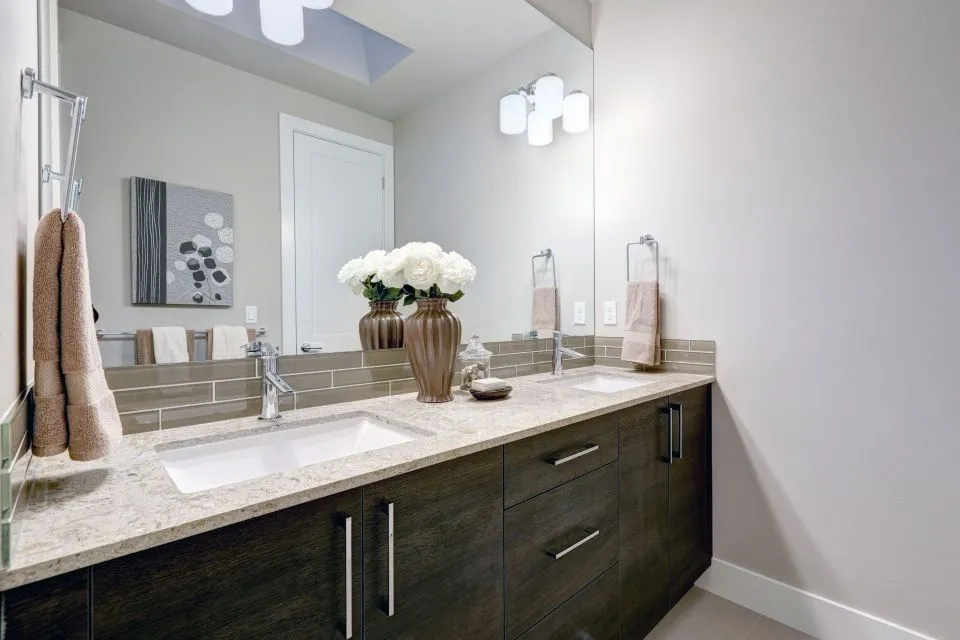
The Best Countertop Options for a Small Bathroom Remodel
A small bathroom has limited floor area, but the countertop still influences nearly every visual and practical decision in the room. The vanity surface determines how spacious the room feels, how easily the sink area can be cleaned, and how well the design handles daily moisture. Choosing the right material can make a compact bathroom feel polished rather than crowded.
The best countertop options for a small bathroom remodel balance appearance, durability, maintenance, and scale. A bright quartz vanity top may visually open the room, while a porcelain surface can continue up the wall as a coordinated backsplash or shower surround. Natural stone brings variation and character, although its care requirements deserve attention before installation.
Measurements are especially important in a small space. A few inches can affect door clearance, drawer operation, sink placement, and the usable area beside the faucet. Professional templating and fabrication help ensure the finished countertop fits the room precisely instead of forcing compromises during installation.
Choose A Surface That Supports The Room
Color is one of the simplest ways to influence the apparent size of a bathroom. White, cream, pale gray, and softly veined surfaces reflect light and reduce visual interruption. A countertop that coordinates with the wall tile or flooring can create a continuous appearance, making the vanity feel less bulky.
That does not mean every compact bathroom needs a plain white surface. Subtle movement in quartz, marble, granite, or porcelain can add interest without overwhelming the room. Large, dramatic veining may work well as a focal point on a narrow vanity, but busy patterns can make a small room feel visually fragmented when combined with patterned tile and decorative hardware.
A slim vanity may also benefit from a surface with a simple edge profile. A standard eased edge or small bevel provides a finished appearance without adding visual weight. Thick built-up edges and ornate profiles can look attractive in larger rooms, yet they may make a petite vanity appear heavier than it is.
Why Quartz Is A Reliable Vanity Choice
Quartz is one of the most practical materials for a small bathroom vanity. It is engineered from mineral material and resins, creating a consistent, nonporous surface that resists everyday staining and does not require routine sealing. Toothpaste, cosmetics, soap, and water spots are easier to manage when the surface has minimal porosity.
The broad color range makes quartz useful in many bathroom styles. A pale solid color can brighten a room with limited natural light, while a marble-look pattern can provide the elegance of stone with more predictable variation from slab to slab. Homeowners can also coordinate quartz with a backsplash, shower wall, or quartz shower pan for a unified design.
Quartz is especially helpful when a compact bathroom needs a custom vanity top. Fabricators can cut precise openings for undermount, drop-in, or vessel sinks and create matching backsplash pieces. The material is durable for normal bathroom use, but hot styling tools should not be placed directly on the surface, and abrasive cleaners should be avoided.
Before selecting a color, review full-size samples or slab images rather than relying only on a small showroom chip. Veining, background tone, and finish can appear different under bathroom lighting. Exploring available material selections can help narrow the choices to surfaces suited to the desired style and maintenance routine.
When Granite Or Marble Makes Sense
Granite remains a strong option for a bathroom remodel when the design calls for natural variation and substantial durability. Each slab has its own mineral pattern, so the vanity can become a distinctive feature even when the room has a simple layout. Dark granite can create contrast against light cabinetry, while lighter granite may help maintain an airy feel.
Most granite bathroom countertops should be sealed as recommended by the fabricator and cleaned with products made for natural stone. Sealing does not make the material maintenance-free, but it helps protect against moisture and cosmetic spills. A small vanity often uses a limited amount of material, making a carefully chosen remnant a cost-effective way to bring natural stone into the project.
Marble offers a softer, more luxurious appearance, especially in classic, transitional, and spa-inspired bathrooms. Its veining can give a narrow countertop depth and movement. Marble is more vulnerable to etching and scratching than quartz or granite, however, so it is best for homeowners who appreciate natural patina and are prepared to wipe spills promptly.
Soapstone is another natural option with a smooth, matte appearance. Its deep gray or charcoal color can add drama to a white bathroom, and minor scratches can often be treated or blended over time. Because it is softer than granite, soapstone requires a realistic understanding of how the surface will age in daily use.
Porcelain And Dekton For Seamless Design
Porcelain slabs are well suited to compact bathrooms because they are durable, moisture resistant, and available in designs that resemble marble, limestone, concrete, and other materials. A porcelain vanity top can coordinate with large-format wall panels, reducing the number of grout lines in the room. Fewer joints can create a cleaner appearance and simplify routine cleaning.
Dekton, an ultra-compact surface, provides another high-performance choice for bathroom countertops and wall applications. It resists scratching, stains, and moisture, making it useful for busy households and contemporary designs. Its finish and pattern can be carried from the vanity to shower walls or other architectural details for a strongly connected look.
Both porcelain and Dekton require experienced handling and fabrication. Their hardness and slab characteristics call for suitable cutting equipment, careful edge work, and proper support. A professional installer should also account for corners, faucet holes, sink cutouts, and transitions to adjacent materials before the slab is ordered.
For a small bathroom, the most valuable benefit may be visual continuity. Using one surface on the vanity and selected wall areas can make the room feel intentionally designed instead of assembled from unrelated finishes. A coordinated surface does not have to cover every wall; even a narrow backsplash or a feature panel can establish that connection.
Compare Materials For A Compact Bathroom
The right material depends on how the bathroom is used, the desired appearance, and the amount of maintenance the household accepts. The following comparison provides a starting point, but exact performance also depends on the selected finish, installation quality, and care products.
| Material | Appearance | Maintenance | Best Use In A Small Bathroom | Key Consideration |
|---|---|---|---|---|
| Quartz | Consistent colors and marble-inspired patterns | Low; no routine sealing | Vanity tops, backsplashes, integrated design schemes | Protect from direct heat |
| Granite | Distinctive natural movement | Low to moderate; periodic sealing | Statement vanities and remnant projects | Pattern varies by slab |
| Marble | Soft, elegant veining | Moderate to high | Spa-style or classic vanity tops | Can etch and scratch |
| Porcelain | Stone, concrete, and solid-color looks | Low; highly moisture resistant | Vanity tops, wall panels, shower surfaces | Requires skilled fabrication |
| Dekton | Contemporary, refined, high-performance finishes | Low | Modern vanities and coordinated wall applications | Precise installation is important |
| Soapstone | Matte charcoal to deep gray tones | Moderate; may need conditioning | Dramatic traditional or modern vanities | Softer and more prone to scratches |
| Butcher Block | Warm natural wood character | Moderate to high | Powder rooms or carefully maintained vanities | Must be protected from standing water |
A compact bathroom also needs a practical decision about the sink. An undermount sink creates a smooth countertop transition and leaves more visual area around the basin. An integrated sink offers a particularly clean appearance and can eliminate a separate rim where grime may collect. Vessel sinks can become a design feature, although they require careful attention to faucet height and countertop depth.
Use Details To Create More Usable Space
The countertop depth should match the vanity and the room’s circulation. Standard depths may work in many bathrooms, but a shallow custom top can preserve door clearance or create more walking space. Before reducing depth, confirm that the selected sink, faucet, plumbing, and cabinet can fit comfortably.
Corner conditions deserve close attention. A custom countertop can accommodate angled walls, narrow returns, wall irregularities, or an offset sink more effectively than a prefabricated top. In a very small bathroom, locating the basin slightly off-center may provide better drawer storage or more usable counter area beside the wall.
A backsplash protects painted drywall and cabinetry from splashes while giving the vanity a finished edge. A low backsplash in the same material is a practical choice, while a full-height slab backsplash can make the wall feel taller and reduce grout maintenance. Matching the countertop and backsplash usually creates a calmer visual field than adding another competing tile pattern.
Edge treatment should support safety and proportion. A softened edge is comfortable in a narrow passage, especially where a vanity sits near the entrance or shower. Rounded corners can also reduce sharp projections without changing the overall footprint. These small fabrication choices matter more when every surface is close to the user.
Lighting should be considered alongside countertop color. Cool white lighting can make some gray surfaces appear blue, while warm bulbs may emphasize beige or cream tones. Samples should be viewed near the vanity, backsplash, cabinet finish, and mirror so the complete combination can be judged in realistic conditions.
Plan Measurement And Installation Carefully
A successful small bathroom countertop begins with accurate field measurements. The fabricator needs the finished wall dimensions, cabinet location, sink model, faucet configuration, backsplash requirements, and any irregularities that could affect the fit. Templating confirms these details before cutting the selected slab.
Installation timing also matters. Cabinets should be securely installed and leveled before the countertop is templated. Plumbing, mirrors, trim, and wall finishes may need to be coordinated so the new surface can be set without damaging completed work. Clear communication between the homeowner, remodeler, plumber, and countertop installer helps prevent delays.
Ask how the installation team handles seams, sink support, edge finishing, and protection of nearby walls and floors. A small bathroom may require fewer seams, but the location of any joint still affects appearance. The seam should be placed where it is least noticeable and where the substrate provides stable support.
A fabricator’s reputation can provide useful insight into the overall experience. Reviewing customer testimonials may reveal how previous clients viewed communication, craftsmanship, scheduling, and cleanup. These service details are part of the value of a custom countertop because an attractive slab cannot compensate for poor measurement or careless installation.
Prioritize The Features That Matter Most
A focused selection process keeps a small bathroom remodel from becoming overloaded with competing finishes. Start with the room’s functional needs, then choose a material, color, and edge that reinforce the layout. These recommendations can help establish priorities:
- Choose a light or moderately patterned surface when the bathroom has limited daylight or several dark finishes.
- Select quartz for a low-maintenance vanity top with predictable color and strong resistance to everyday bathroom messes.
- Consider porcelain or Dekton when the countertop should coordinate with shower walls, backsplash panels, or other large-format surfaces.
- Use granite, marble, or soapstone when natural variation is central to the design and the household accepts the required care.
- Confirm sink dimensions, faucet placement, backsplash height, and vanity clearance before approving fabrication.
Budget should include more than the slab itself. Account for sink cutouts, faucet holes, edge details, backsplash pieces, delivery, old countertop removal, plumbing adjustments, and installation. A remnant may reduce material cost, but the available size and pattern direction must still work for the vanity.
It is also wise to distinguish between visual priorities and practical priorities. A dramatic marble-look surface may be the centerpiece, while an integrated sink may provide the greatest cleaning benefit. Identifying which features will affect daily use allows the budget to support improvements that have lasting value.
Create A Bathroom That Feels Deliberate
A small bathroom does not need an oversized design statement to feel finished. A carefully selected vanity countertop, coordinated backsplash, appropriately scaled edge, and accurate installation can give the entire room a more spacious and cohesive character. Quartz, porcelain, Dekton, granite, marble, soapstone, and butcher block each offer a different balance of warmth, performance, and maintenance.
The Countertop Store can help turn those choices into a surface designed for the room’s exact dimensions. Schedule a consultation for material guidance, professional measurement, templating, fabrication, and installation in North Little Rock and surrounding Arkansas communities, and begin shaping a bathroom countertop that looks beautiful while working hard every day.