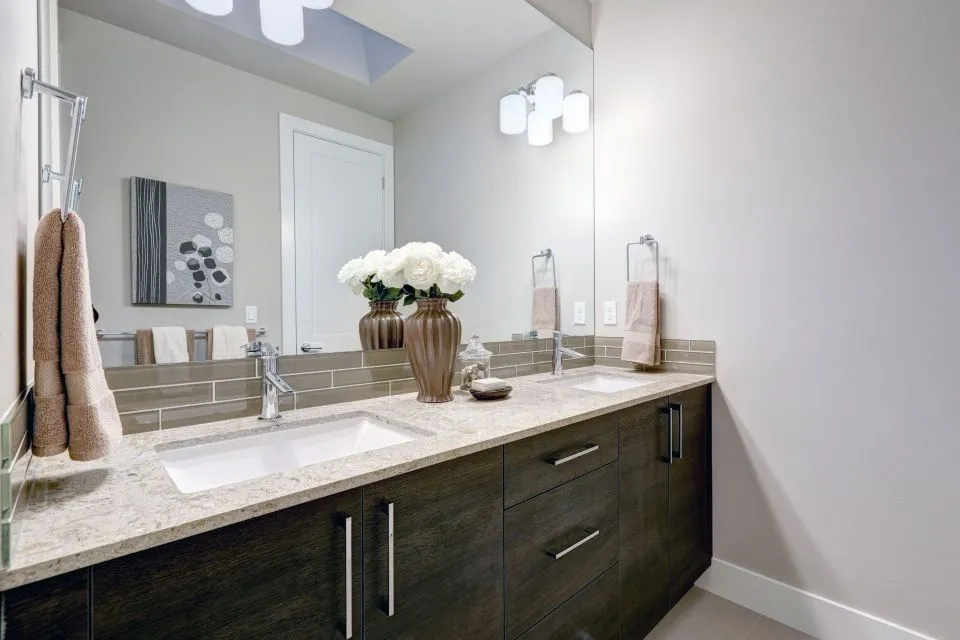
The Cost of Custom Countertops by Material
Custom countertops are priced by more than the slab alone. Material selection, countertop dimensions, edge treatments, sink cutouts, backsplash details, transportation, fabrication, and installation all influence the final invoice. A small bathroom vanity and a large kitchen with an island can use similar materials while producing very different project totals.
For homeowners in North Little Rock and surrounding Arkansas communities, a realistic budget begins with understanding installed cost per square foot. That figure provides a useful starting point, although the final estimate depends on the layout and the level of customization. Quartz, granite, porcelain, marble, Dekton, soapstone, and butcher block each offer a different balance of appearance, performance, maintenance, and price.
The most reliable estimate comes after a fabricator measures the space and reviews the project details. Cabinet dimensions, wall irregularities, seams, overhangs, plumbing fixtures, and appliance openings can all affect how much material is needed and how much labor is involved.
What determines the total countertop price
Countertop pricing usually combines the cost of the material with fabrication and installation. Material is often quoted by the square foot, while fabrication may include cutting, polishing, edging, sink openings, cooktop cutouts, and custom shaping. Installation covers transporting the finished pieces, setting them on the cabinets, leveling, securing, and sealing when required.
The countertop’s shape can have a major effect on the budget. A straight run is simpler to fabricate than an L-shaped layout with multiple seams. Islands with waterfall ends, thickened edges, curved corners, or seating overhangs require additional labor. A project with several separate bathroom surfaces may also need more templates and installation time than its total square footage suggests.
Removal and disposal of existing countertops may be separate charges. The same can apply to cabinet modifications, plumbing disconnection, backsplash removal, wall repair, electrical adjustments, and reinforcement for heavy materials. Asking for an itemized estimate helps clarify which services are included before fabrication begins.
Typical installed costs by material
The following ranges are broad planning figures for custom residential work. Prices vary by region, slab selection, thickness, availability, layout, edge profile, and installation complexity. Premium colors and specialty finishes can push a material toward the upper end of its range.
| Material | Typical installed range per sq. ft. | Strengths | Budget considerations |
|---|---|---|---|
| Laminate | $25–$60 | Affordable, many patterns, low maintenance | Less resistant to heat, impact, and moisture at exposed seams |
| Butcher block | $50–$100 | Warm appearance, repairable, suitable for accent areas | Requires regular oiling and careful moisture management |
| Granite | $60–$140 | Durable, heat resistant, natural variation | Slab grade, rarity, sealing, and pattern matching affect price |
| Quartz | $65–$150 | Consistent style, low routine maintenance, stain resistance | Premium designs and complex fabrication can increase the total |
| Soapstone | $70–$150 | Soft matte appearance, heat resistant, naturally nonporous | Limited color range and periodic oiling may be preferred |
| Marble | $75–$180 | Distinctive veining and classic appearance | Etching, staining, slab quality, and detailed layout require planning |
| Porcelain | $70–$160 | Lightweight, heat resistant, durable surface | Specialized fabrication and edge work may cost more |
| Dekton | $80–$180 | High resistance to heat, scratches, and ultraviolet exposure | Premium slab cost and skilled handling raise the installation price |
These figures are best used for early budgeting rather than as a quote. A 60-square-foot kitchen countertop could fall within a broad range even before extras are added. Two kitchens with identical measurements may have different prices if one uses a basic quartz color with a standard eased edge and the other uses a book-matched porcelain design with mitered edges and an integrated sink.
A local fabricator can also explain current inventory and remnant opportunities. Remnants may reduce costs for small bathroom counters, laundry rooms, furniture tops, or secondary surfaces. They are less practical for large kitchens because the available piece may not provide enough material for the full layout.
Quartz, granite, and natural stone pricing
Quartz is a popular choice for kitchens and bathrooms because it offers predictable color, low routine maintenance, and strong resistance to everyday staining. Since it is engineered from mineral content and binders, patterns range from subtle solids to designs that resemble marble or concrete. Basic options often sit in the middle of the installed price range, while dramatic veining, polished finishes, and premium brands can move the project higher.
Granite prices are shaped by the stone’s origin, color, movement, thickness, and availability. Common patterns may be relatively economical, while rare colors and heavily patterned slabs require more careful layout and seam planning. Granite is well suited to active kitchens and outdoor applications, although many installations benefit from periodic sealing according to the stone’s porosity and the manufacturer’s guidance.
Marble brings a distinctive look that is difficult to replicate. Its veining can make a vanity, fireplace surround, or kitchen island a focal point, but it also requires realistic expectations about care. Acidic foods, wine, cosmetics, and harsh cleaners can etch or discolor some marble surfaces. The value of marble depends on whether the homeowner is comfortable with developing patina and following a consistent cleaning routine.
Soapstone occupies a smaller but appealing category. It has a soft, tactile appearance, naturally resists heat, and is generally nonporous. Its darker palette and tendency to develop a lived-in finish suit traditional, farmhouse, and transitional spaces. Some owners apply mineral oil to deepen the color, while others allow the material to age naturally.
Homeowners comparing these options can review the available materials to see how appearance, durability, and maintenance differ before selecting a slab.
Porcelain, Dekton, and other engineered surfaces
Porcelain countertops are made from highly compacted mineral materials and can provide strong resistance to heat, ultraviolet exposure, and scratching. They are available in patterns that imitate natural stone, wood, concrete, and other finishes. Porcelain can work especially well for contemporary kitchens, outdoor kitchens, shower walls, and fireplace applications.
The price of porcelain is influenced by fabrication expertise. The slabs are relatively thin compared with some traditional stone options, so cutting, transporting, and installing them requires specialized equipment and careful handling. Edge profiles may also be more limited or require a mitered build-up to create a thicker appearance. These details explain why a lower raw material price does not always result in a lower installed price.
Dekton is an ultra-compact surface engineered for demanding applications. It offers excellent resistance to heat, scratches, stains, and sunlight, making it suitable for high-use kitchens and selected exterior projects. Its premium position reflects the slab cost, weight, handling requirements, and fabrication process. It may deliver long-term value when performance in a busy or exposed setting matters more than the initial purchase price.
Butcher block is priced differently because it brings warmth and can sometimes be refinished or repaired. It may be used across an entire island or as a contrasting prep area beside stone countertops. Wood countertops require attention around sinks and faucets, where standing water can cause swelling or finish damage. Regular conditioning and prompt cleanup help preserve the surface.
How fabrication details affect your estimate
Edges are among the most visible fabrication choices. A simple eased or pencil edge is generally less expensive than a bullnose, ogee, bevel, laminated edge, or custom profile. A built-up edge uses additional material and labor to create a thicker visual appearance around an island or peninsula. The right edge should suit the design, but it should also be included in the estimate from the beginning.
Cutouts add labor because each opening must be measured and finished accurately. Common examples include undermount sinks, drop-in sinks, farmhouse sinks, cooktops, outlets, soap dispensers, and faucets. An integrated sink can create a seamless appearance, but the fabrication process and material compatibility may raise the cost compared with a standard sink cutout.
Seams depend on slab size, layout, color, and the pattern’s movement. A highly veined surface may require additional planning to align the design across a seam. Long islands, narrow doorways, elevators, stairways, and difficult access points can also affect installation time. In some homes, a slab must be carried through a limited route or lifted through an opening, adding logistical expense.
Backsplashes and shower surfaces should be priced as part of the overall surface plan. A short countertop backsplash may use the same material as the counter, while a full-height backsplash requires more square footage, outlets, corners, and finishing. Shower walls and quartz shower pans demand accurate measurements because waterproofing, slopes, valves, niches, and plumbing penetrations must coordinate with the finished panels.
Ways to control the project budget
A lower price does not always mean a better value, and the least expensive material may not suit the room’s daily use. A kitchen that receives heavy cooking activity may justify spending more on stain resistance and heat performance. A guest bathroom, basement bar, or laundry room could be a good place for a remnant or a simpler edge profile.
The following choices can help keep a custom surface project within a defined budget:
- Compare several colors within the same material category, since premium patterns can carry a substantial price increase.
- Use remnants for small vanities, shelves, hearths, accent areas, or compact laundry-room counters.
- Choose a standard edge profile unless a decorative or built-up edge is central to the design.
- Finalize sink, faucet, cooktop, backsplash, and overhang details before templating to reduce changes and extra fabrication.
- Ask for separate pricing for demolition, plumbing, cabinet work, backsplash installation, sealing, and disposal.
Layout efficiency is another useful cost-control tool. A fabricator may be able to rotate or reposition pieces to reduce waste, but visual priorities still matter. Matching a bold stone pattern across an island or selecting a particular vein direction may use more slab material. Discussing these preferences early allows the estimate to reflect the desired appearance accurately.
Remodeling in stages can also help manage cash flow. For example, a homeowner might install durable kitchen countertops first and complete a bathroom vanity, fireplace surround, or outdoor kitchen later. However, coordinating material availability across phases is important because colors and product lines can change.
Planning for long-term value
The best countertop investment matches the surface to the room, household habits, and maintenance expectations. Quartz may appeal to homeowners who want a consistent, low-maintenance kitchen. Granite can provide natural variation and strong performance. Marble may be worth the care for someone who values its unique character. Porcelain and Dekton can make sense where heat, sunlight, or heavy use is a primary concern.
Maintenance should be considered alongside the purchase price. Quartz generally needs routine cleaning with mild products. Granite may require sealing depending on its porosity and the product guidance. Marble can need more careful treatment because it is vulnerable to etching. Butcher block needs periodic conditioning, while soapstone may be oiled for a more uniform appearance. Following the fabricator’s care instructions protects the surface and helps preserve its finish.
A professional measurement and template process reduces the chance of ordering too little or designing around inaccurate dimensions. It also identifies cabinet issues, wall deviations, appliance conflicts, and access problems before the slabs are cut. Custom fabrication is most cost-effective when the design, material, and installation requirements are evaluated together.
A detailed estimate should show the selected material, thickness, square footage, edge profile, cutouts, backsplash or shower work, installation, delivery, demolition, and any expected site preparation. With those details in writing, homeowners can compare proposals based on equivalent scope instead of comparing a low material price with a more complete installation package.
For a clear path from material selection to finished installation, schedule a consultation with The Countertop Store in North Little Rock. Bring cabinet plans, inspiration images, appliance specifications, and your preferred budget range so the team can help develop a practical countertop design and a project estimate grounded in the actual space.