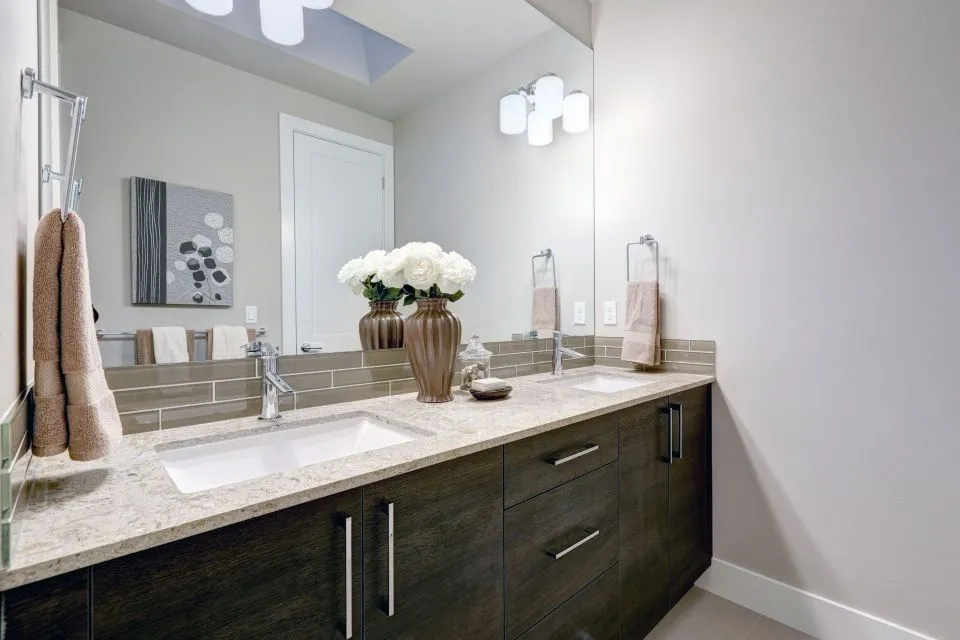
Choosing between custom stone fabrication and prefab countertops
Renovators across Australia are weighing a choice that was once fairly simple. When the local kitchen scene mostly meant laminate laid on chipboard, prefab benchtops answered most needs and custom stonework sat in the high end of the market. Today, with slab libraries in every state capital and a steady flow of imported quartz and porcelain reaching importers from Tullamarine to Eagle Farm, the line between a custom stone top and a prefab one has blurred for everyday buyers.
The benchtop sits at the visual and functional centre of any kitchen or bathroom. It anchors cabinetry, takes the heaviest daily use, and sets the resale tone of the room. A custom-cut slab from a fabricator draws on weeks of measurement, templating, and skilled installation. A prefab benchtop arrives in a crate, often within a few working days, ready for a competent handyperson to drop into place and silicone along the rear edge.
Sorting through those two paths is more than watching the dollar signs. It comes down to reading the room — splashback choices, sink integration, edge profiles, the way morning light falls across an island — and matching the build method to how the household actually uses the surface.
What custom stone fabrication actually involves
A custom stone top begins with a slab rather than a finished piece. The homeowner chooses quartz, granite, marble, porcelain, Dekton, soapstone, or butcher block, often at a slab yard or supplier showroom. Suppliers such as YDL Stone, Smartstone, Caesarstone, and WK Marble & Granite hold slab stock in warehouses around Sydney, Melbourne, Brisbane, and Perth, which lets the buyer inspect veining and base tone in daylight rather than from a small sample chip glued to a showroom wall.
From that slab, a fabricator cuts the benchtop to a digital template of the room. Sink and cooktop cutouts, waterfall ends, mitred edges, integrated drainer grooves, and splashback returns are produced in a workshop before the piece is transported and installed on site. For homeowners in regional areas, the template can sometimes be scheduled during a brief visit from a mobile trade team that flies in for a day of measuring and returns weeks later to fit.
Fabricators who run well-organised workshops keep dust, slurry, and waste under control, since a slab cut without proper floor sealing creates a hazard that spreads through the rest of the property. Many Australian workshops pair CNC bridge saws and water-fed polishers with sealed concrete slabs, as detailed in tips on sealing workshop floors, because stone slurry eats into untreated cement within months. The fabricator also handles heavy lifting with a crew that uses A-frames and suction lifters, and the install often requires site access for a ute-and-trailer rig during the morning window before the family is up.
How a prefab countertop reaches the showroom floor
A prefabricated benchtop is cut and finished at the factory to a fixed set of dimensions. Most pieces arrive in standard lengths of around 2.4 metres and a handful of common widths, with limited edge profiles, drop-in sink cutouts, and basic corner solutions. Colourways tend to mirror the top sellers from each material brand, so the same six or seven patterns turn up on every display rack in every store.
Big-box retailers in Australia stock prefabricated stone and laminate benchtops alongside cabinets and sinks. Warehouse chains such as Bunnings list prefab stone pieces online and in-store, IKEA sells its own range of customisable modular benchtop sections, and kitchen showrooms in suburban strip malls rely heavily on the format for display homes and investment properties. The homeowner usually measures the run, compares against a sizing chart, and either collects the piece or schedules a delivery slot for a weekday.
The factory in question sits well outside Australia in most cases, with prefab pieces often shipped fully finished from Asia or Europe. That long lead supply chain means small batch variations, occasional delays at port, and limited ability to swap one batch for another mid-project. It also explains why the price per linear metre stays low — the benchtop arrives already sealed and polished, with the heavy cutting work completed long before it ever reaches a Brisbane or Adelaide warehouse.
Seams, edges, and sink cutouts side by side
The differences between a custom stone top and a prefab one show up most clearly at the joints, edges, and where the benchtop meets a sink or cooktop. A fabricated slab can carry a near-invisible joint across a long island, with mitred edges that hide the substrate, full-height waterfall panels that turn a structural beam into a sculptural element, and integrated sinks poured or carved from the same slab. Drainer grooves are routed by hand or CNC, and matching shower walls or shower pans fall exactly toward the waste because the measurements are taken from the actual room rather than a generic sizing chart.
Prefab benches impose hard limits on those details. Visible joins are common, edge profiles are limited to pencil round, bevelled, or a flat arris, and integrated sinks are rare because the factory tooling does not extend to that level of finish. Drop-in sinks, undermounts held with clips, and cooktops with a simple rebate cutout work fine on either surface, but the custom path handles odd-shaped islands, L-shape returns, and full-height splashbacks with far less compromise. Anyone who has walked into a renovation with a poorly matched seam in an open-plan living area will know how much that one detail shapes the perceived quality of the finished room.
Lead times, cost, and lifespan compared
Prefab pricing in Australia typically runs from a few hundred dollars per linear metre for laminate through to roughly four hundred to nine hundred dollars per linear metre for basic stone and quartz pieces, depending on colour and thickness. Custom fabrication usually starts higher and climbs quickly once mitred edges, integrated sinks, waterfall panels, and a full slab of premium quartz or porcelain enter the quote. A large kitchen in Sydney or Melbourne can reach five figures for the benchtop alone once every feature is added.
Lead times follow the opposite pattern. A prefab piece can leave the warehouse the same day or within a week, fitting neatly into a quick renovation or a rental turnaround. A custom order requires at least one site measure, sometimes a digital laser template, two to four weeks of fabrication, and a scheduled install window that often books out during the spring renovation rush between September and November in the southern states. Fabricators in Queensland tend to stay busier through the dry winter months, when homeowners gear up for the warm-weather entertaining season and outdoor kitchens, while in Victoria the spring backlog can stretch into the new year.
Lifespan leans toward the custom side, although both options can last decades if handled with care. A fabricated slab is built around a single, structurally sound piece of stone, while a prefab benchtop often sits on a particleboard or MDF substrate that swells if water penetrates a joint around the sink or dishwasher. Properly sealed and maintained, a prefab quartz benchtop can serve a busy household for fifteen to twenty years, while a custom porcelain or granite benchtop installed by an experienced team routinely crosses the twenty-five-year mark and still looks fresh after a polish.
Picking the benchtop that fits the room and the budget
The right call depends on the room, the household, and how long the benchtop is expected to last before the next refresh. Quick turnarounds on investment properties, small laundries, and modest kitchens often suit a prefab approach. Bespoke family homes, large islands, and renovations where stonework is the centrepiece of the design tend to reward a custom path. Many homeowners end up ordering a prefab benchtop for the laundry or secondary bathroom and reserving the main kitchen for a fabricated slab, splitting duties across materials to keep cost and design in balance.
Signs that a fabricated slab is the right fit:
- Room has unusual angles, an L-shape return, a waterfall end, or an oversized island that exceeds prefab sheet lengths.
- Sink or cooktop is integrated rather than drop-in, or the splashback runs full height behind a gas cooktop.
- Property is a long-term family home, and the benchtop is expected to outlast at least two sets of cabinet doors.
- The build includes matching elements such as a quartz shower pan, integrated hearth, or stone mantel.
Pitfalls worth steering around at quote time:
- Quoting on a per-linear-metre basis only, without checking whether edges, cutouts, and install are included in the rate.
- Assuming a prefab piece can be trimmed on site the same way a timber bench can, when stone requires diamond tooling and a clean workshop.
- Choosing colour from a small sample chip when the slab yard stocks the full slab, because veining and base tone vary dramatically across the same pattern name.
- Skipping a site measure on long runs, since out-of-square walls add up across three or four metres of benchtop.
For homeowners weighing the same decision in another market, fabricators such as The Countertop Store offer a single point of contact through consultation, measurement, templating, fabrication, edging, and installation across quartz, granite, porcelain, marble, Dekton, soapstone, and butcher block, with custom features such as fireplaces, mantels, outdoor kitchens, and shower walls handled in the same workflow.