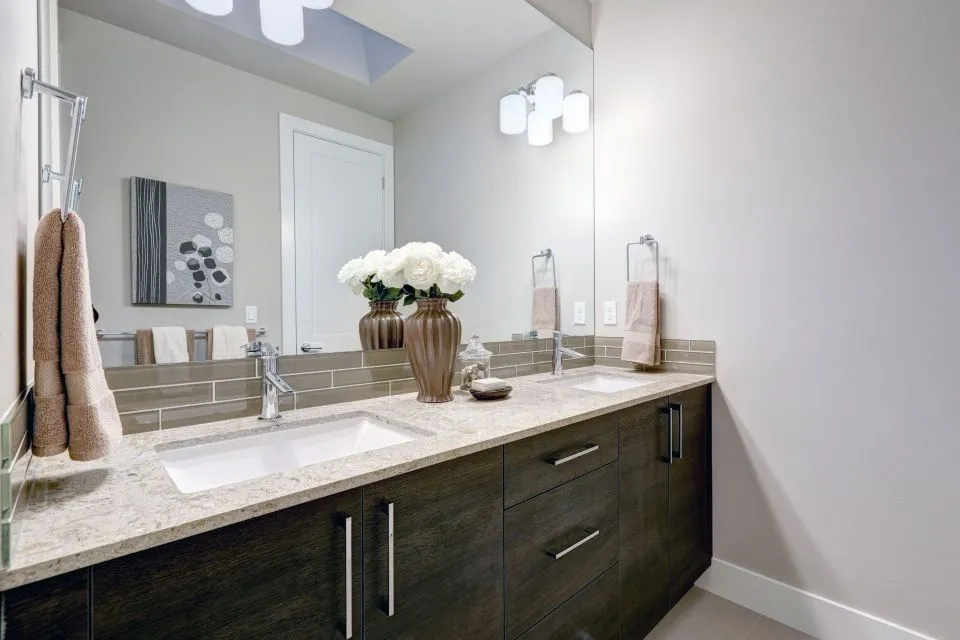
Engineered quartz and natural stone benchtops compared
Choosing a benchtop involves more than selecting a colour sample. The surface must suit the way a household cooks, cleans, entertains and lives, while also working with the room’s cabinetry, splashback, flooring and lighting. Engineered quartz and natural stone can both produce a high-end result, yet they differ in composition, appearance, maintenance, fabrication and long-term performance.
Australian conditions add a few important considerations. A sunny Brisbane kitchen, a compact Melbourne renovation and an outdoor entertaining area in Perth may place very different demands on a surface. Local supply, installation practices, silica regulations and the availability of suitable slabs should all be considered before a design is finalised.
How the two materials are made
Engineered quartz is a manufactured composite formed from crushed quartz minerals, pigments, binders and resins. The ingredients are mixed, pressed into slabs and cured under controlled conditions. This process creates a relatively consistent material, so a showroom sample will usually provide a reliable indication of the finished colour and pattern.
Natural stone is quarried as large blocks and cut into slabs. Granite, marble, soapstone, quartzite and limestone each develop through geological processes that create individual veining, crystals, movement and colour variation. Even two slabs from the same quarry may look noticeably different, which is part of the appeal for homeowners who want a one-off surface rather than a uniform manufactured finish.
It is useful to distinguish engineered quartz from quartzite. Quartzite is a natural metamorphic stone, while engineered quartz is a factory-made composite. The names sound similar, but their care requirements, heat resistance and visual character can be quite different.
Appearance and design character
Engineered quartz is well suited to a controlled design scheme. It can reproduce subtle concrete effects, marble-inspired veining, crisp whites and even bold colours without the variation found in a quarried slab. Consistent patterning can make it easier to coordinate a long island, multiple bathroom vanities or a series of surfaces across an open-plan home.
Natural stone offers a more organic result. Granite may contain flecks, crystalline movement and deep mineral tones, while marble is valued for soft veining and a sense of depth. Soapstone tends to have a smooth, muted appearance that suits traditional, farmhouse and minimalist interiors. Because each slab is different, fabricators usually need to lay out the pieces carefully to position veins and colour changes where they will have the greatest visual effect.
The choice often comes down to the atmosphere a homeowner wants. Engineered quartz can look polished and architectural in a new Sydney apartment, while a boldly veined marble or richly patterned granite may become the defining feature of a larger Adelaide kitchen. Viewing the actual slab is preferable to relying only on a small sample, particularly for an island with a waterfall edge.
Performance in Australian homes
Engineered quartz is non-porous, so it generally resists everyday spills from coffee, wine, cooking oils and sauces without sealing. Its dense surface is convenient in busy kitchens and bathrooms. It is still vulnerable to direct, intense heat, and a hot saucepan or baking tray should be placed on a trivet rather than directly on the benchtop.
Natural stone performance varies by species. Granite and many quartzites are highly durable and cope well with demanding kitchen use. Marble is harder than many people expect, but it can scratch more readily than granite and may etch when exposed to acidic substances such as lemon juice, vinegar or some cleaning products. Sealers can reduce staining risk, although they do not make stone completely stain-proof or eliminate the need for prompt cleaning.
Sun exposure deserves particular attention in Australia. A quartz composite installed beside large north-facing windows in Melbourne or in a bright Gold Coast kitchen may experience colour change over time if the product is not rated for sustained ultraviolet exposure. Many engineered quartz surfaces are intended for indoor use, not alfresco areas. Natural stone can also weather or change in strong sunlight, but the exact response depends on the stone, finish and installation environment.
Cleaning, sealing and everyday care
Routine cleaning is straightforward for both options when the correct products are used. Warm water, a soft cloth and a mild pH-neutral cleaner are usually suitable. Abrasive powders, harsh scourers and unapproved chemicals can dull polished finishes, damage sealers or leave a difficult-to-remove film.
Engineered quartz generally does not need periodic sealing because its surface is manufactured to be non-porous. That does not mean it is maintenance-free: spills should still be wiped up, especially around joins, cooktops and sinks. Knives should be used on a chopping board, since cutting directly on the surface can mark the finish and blunt blades.
Some natural stones benefit from resealing at intervals determined by the stone and its use. A dark granite may need less frequent attention than a porous limestone, while a marble vanity may require a different care routine from a kitchen island. Before installation, ask the fabricator which sealer is being used, how long it is expected to last and which household cleaners are compatible with it.
Integrated sinks and shaped drainboards can make cleaning easier by removing raised rims and awkward joints. These details need precise templating and fabrication, so they should be discussed during the design stage rather than added after the slab has been ordered.
Safety and the changing Australian market
A major Australian consideration is the national prohibition on engineered stone benchtops, panels and slabs that began on 1 July 2024. The ban was introduced because workers who cut, grind or polish silica-containing engineered stone can be exposed to respirable crystalline silica dust. State and territory rules govern how the prohibition is applied, so renovators should check current requirements with the relevant authority and use a properly qualified local fabricator.
This change means an Australian customer may hear “quartz” used in several different ways. Existing terminology, imported products, porcelain, sintered stone and newer low-silica or silica-free mineral surfaces can be confused in sales conversations. Ask for the exact product composition, the manufacturer’s documentation and confirmation that the material can legally be supplied and fabricated for the intended project.
Safe fabrication practices matter for natural stone as well. Cutting and polishing should be carried out with suitable dust controls, wet methods and protective equipment by trained tradespeople. Homeowners should never assume that an attractive slab is safe to cut on site simply because it is marketed as a premium surface.
For a renovation in Canberra, Hobart or regional New South Wales, lead times may be affected by transport, local stock and the availability of specialist installers. Confirm the slab source, fabrication location, installation schedule and compliance paperwork before demolition begins.
Cost, installation and long-term value
The price of a benchtop includes more than the slab itself. Measurements, digital templating, cut-outs, edge profiles, joins, sink installation, delivery and fitting can all affect the final quote. A large island with a waterfall end, thickened edge or complex vein match may require more material and additional fabrication time than a simple straight run.
Engineered quartz can make budgeting easier because its pattern and thickness are relatively predictable. Natural stone pricing varies widely: an accessible granite may be competitive with premium quartz, while rare marble, quartzite or a heavily selected slab can cost considerably more. Waste from cut-outs and the need to book a particular slab may also influence the total.
Installation conditions are especially important in older Australian homes. Walls may be out of square, floors may not be level and cabinetry may have shifted over time. A professional measure and template help identify these issues before fabrication. In a narrow terrace in inner Melbourne or a Queenslander in Brisbane, access through stairwells, hallways and tight gates can also affect delivery planning.
A durable surface can represent good value even when its initial price is higher. Consider how long the kitchen is expected to serve the household, whether the design may date quickly and how much maintenance is realistic. The cheapest quote may not include the same edge treatment, support, warranty or installation standard as a more detailed proposal.
Matching surfaces with the wider home
A benchtop should relate to the room around it rather than being chosen in isolation. Cabinet colour, natural and artificial light, flooring, tapware and splashback material can all change how a slab appears. A cool white quartz may look stark beside blue-grey cabinetry but balanced against warm timber, while a busy granite may need quieter tiles and door fronts.
Natural stone can also be used beyond the kitchen. Coordinated material on a bathroom vanity, fireplace surround or outdoor entertaining feature can create a visual connection between spaces. For ideas about extending a stone palette into a feature element, explore these custom fireplace mantels, particularly when the exterior brick, rendered walls or landscaping already establish a strong colour scheme.
Outdoor use requires careful product selection. Engineered quartz is commonly unsuitable for exposed alfresco areas because ultraviolet light and weather can affect resins and pigments. Granite, porcelain and some other sintered surfaces may be better options, though each still needs to be checked for heat, moisture, staining and installation requirements.
In coastal areas such as Newcastle, Wollongong or Perth, salt air and outdoor moisture make correct sealing, edge finishing and substrate preparation especially important. A surface chosen for an indoor kitchen should not automatically be specified for a barbecue bench or poolside bar.
Making a practical material choice
There is no universal winner between engineered quartz and natural stone. The right choice depends on appearance, use, exposure, maintenance tolerance, local regulations and the skill of the fabricator. A carefully selected granite may outperform a resin-based surface in an exposed area, while a compliant indoor mineral surface may provide the clean lines and predictable pattern wanted for a bathroom renovation.
Use these checks when comparing samples and quotations:
- Confirm whether the product is natural stone, engineered quartz, porcelain, sintered stone or another mineral surface.
- Ask how the material performs around heat, sunlight, moisture, stains and household chemicals.
- View the full slab where possible, and discuss vein direction, joins, cut-outs and edge profiles before approval.
- Check Australian supply and safety requirements, along with the fabricator’s dust-control and installation practices.
- Compare the complete installed price, including templating, transport, sink work, support, sealing and warranty terms.
A professional consultation can help match the surface to the room’s structure and the household’s habits. Bring cabinet samples, flooring details, appliance specifications and photographs of the space to the appointment. With accurate measurements and a clear understanding of the material’s limitations, the finished benchtop is more likely to look right, perform well and remain practical for years.