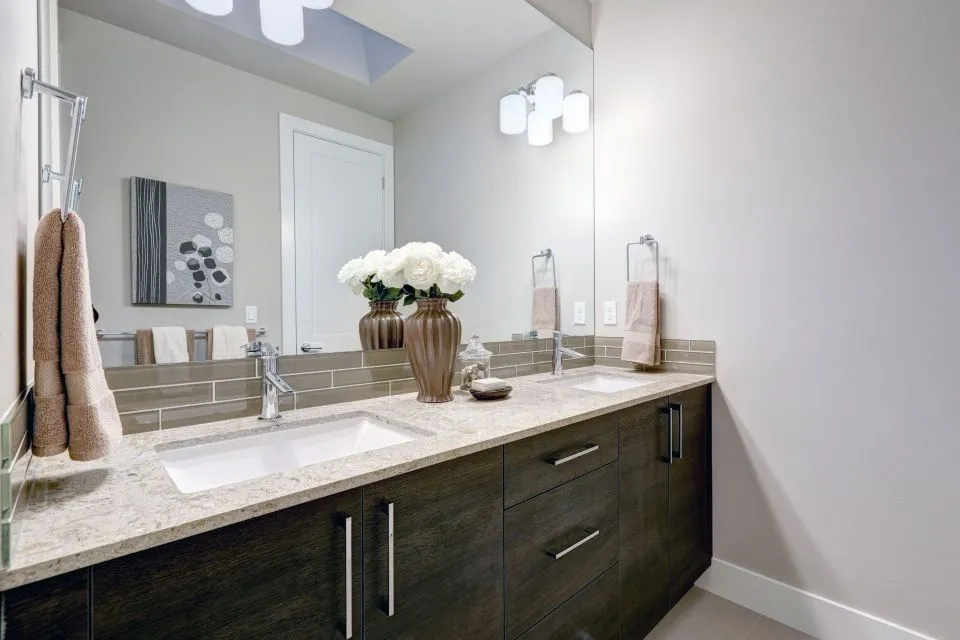
How Natural Light Changes the Look of Countertop Finishes
Natural light can transform the appearance of a benchtop from morning to evening. A surface that looks soft and creamy under warm indoor bulbs may appear crisp and cool beside a bright window, while a dark stone can shift from charcoal to dramatic black as the sun moves across the room. The finish, colour, texture and surrounding cabinetry all influence that change.
For Australian homes, this relationship is especially important. Strong ultraviolet light, large glazed doors, outdoor entertaining areas and open-plan kitchens can expose a countertop to several distinct lighting conditions every day. Understanding how daylight interacts with polished, honed, leathered, matte and textured surfaces makes it easier to select a benchtop that remains attractive in real life, rather than only under showroom lights.
Why Australian Daylight Reveals So Much
Australia receives intense sunlight, although its character varies considerably from Hobart to Darwin. A kitchen in Perth may receive sharp afternoon light through west-facing glazing, while a home in Melbourne can have cooler, changeable illumination throughout the day. In Brisbane and the Gold Coast, bright sunshine and humid conditions often encourage wide windows and indoor-outdoor layouts, making benchtop glare and colour variation especially noticeable.
Orientation has a direct effect on the appearance of a surface. North-facing rooms generally receive steadier daylight in southern states, whereas east-facing kitchens are animated by lower morning sun and west-facing spaces can be flooded with warmer, more dramatic light late in the day. A pale polished benchtop may bounce that light around the room, while a dark honed surface absorbs more of it and creates a calmer visual effect.
Window treatments also alter the finish you see. Sheer curtains soften highlights, plantation shutters create bands of shade, and external awnings can reduce the harshest rays without making a room gloomy. In an Australian renovation, it is sensible to view large samples near the actual windows at breakfast, lunchtime and late afternoon before committing to a slab.
Polished Surfaces Multiply Brightness
Polished quartz, granite and marble have a smooth, reflective face that catches both daylight and nearby fittings. This can make a compact kitchen feel larger and brighter, particularly when paired with white joinery, pale timber or stainless-steel appliances. A polished white surface may create a clean coastal look in a Sydney or Adelaide apartment, while a dark polished granite can provide depth in a spacious Queensland kitchen.
Reflection is not the same as colour accuracy. A polished benchtop may mirror the blue of the sky, green garden planting or warm timber flooring, subtly changing its apparent tone. Strong sun can also produce bright points that draw attention to crumbs, water spots and fingerprints. These marks are usually easy to remove, but they may be more visible on a glossy finish when light travels across the surface at a low angle.
The veining of natural stone becomes particularly expressive under directional light. Marble with long grey movement can look quiet beneath diffuse daylight and much more sculptural when sunlight strikes from the side. Granite crystals may sparkle in a polished finish, giving the slab a lively quality that suits statement islands and entertaining zones. For ongoing care, this guide to polished granite maintenance explains why suitable cleaning methods help preserve that reflective character.
Honed And Matte Finishes Create Softer Interiors
Honed stone is ground to a smooth, low-sheen surface rather than polished until it becomes reflective. Matte quartz, porcelain and Dekton can create a similar subdued effect, depending on the product and texture. These finishes reduce glare, which is useful in kitchens with skylights, extensive glazing or strong afternoon sun. They also suit the relaxed, tactile style often associated with contemporary Australian coastal and mid-century homes.
Because a honed surface reflects less light, its colour can look denser and more natural. A grey benchtop may appear warmer beside spotted gum cabinetry and cooler beside bright white cupboards. A matte black island can look sophisticated in a sunlit room, although sufficient task lighting is still needed around preparation areas. Dark surfaces absorb daylight and may make a small galley kitchen feel more enclosed if the walls and splashback are also dark.
Low-sheen finishes have their own practical considerations. Honed marble can show etching and marks more readily than a polished equivalent, while some matte manufactured surfaces display greasy fingerprints in raking light. This does not make them unsuitable; it simply means the selected material, colour and maintenance routine should match the household. A busy family kitchen may benefit from a forgiving mid-tone finish rather than an extremely dark or very pale one.
Textured and leathered surfaces add another layer to the interaction. Their shallow dimples or natural grain break up reflections and bring out tactile variation as the sun moves. Leathered granite can work beautifully in a country-style home near Ballarat or the Adelaide Hills, while textured porcelain may suit an alfresco kitchen exposed to bright, open skies.
Material, Colour And Surface Texture Work Together
Quartz, granite, marble, porcelain, soapstone, butcher block and Dekton respond differently to daylight because their composition and surface structure are different. Natural granite often contains mineral flecks that glitter in direct sun, whereas soapstone tends to offer a quieter, velvety depth. Butcher block reflects very little light and gains visual warmth from its timber grain, making it a strong companion for kitchens that already receive abundant sun.
Porcelain and Dekton can deliver stone-inspired patterns with a range of matte and satin options. Large-format slabs are useful for islands, splashbacks and wall applications because fewer joins interrupt the visual flow. In brightly lit rooms, however, a broad uninterrupted pattern can appear stronger than expected. A dramatic marble-look design should be inspected at full scale whenever possible, rather than judged from a small showroom chip.
Australia’s stone market has also changed because of workplace safety regulations. The national prohibition on the manufacture, supply, processing and installation of engineered stone benchtops took effect on 1 July 2024, so homeowners and renovators should confirm what a proposed product actually is and how it is fabricated. Natural stone, porcelain, Dekton, solid surfaces and timber may all be considered, but availability, fabrication requirements and suitability vary between states and suppliers.
Finish selection can matter in commercial interiors as well as homes. In a printing shop, electronics workspace or other environment where static discharge is a concern, the countertop decision may sit alongside broader flooring and safety specifications; this discussion of antistatic flooring systems provides useful context. The point is not that a benchtop controls a room’s electrical performance, but that surface materials should be assessed as part of the complete environment.
Planning Countertops Around Windows And Lighting
A window-adjacent benchtop should be considered in relation to the direction and height of incoming light. A glossy island opposite a large west-facing window may create uncomfortable reflections during afternoon food preparation, especially if the surface is white or very dark. A honed, satin or leathered option can reduce this visual distraction while retaining a refined appearance.
Splashbacks and vertical surfaces influence the result as much as the benchtop itself. A polished stone splashback can reflect daylight deeper into a narrow kitchen, while a matte porcelain wall absorbs some brightness and gives the room a more grounded feel. Matching the benchtop and splashback can make an open-plan space feel seamless, but contrasting finishes can define the cooking zone without adding another colour.
Artificial lighting should be assessed at the same time. Warm pendant lights may make a cool white quartz appear creamier at night, while high-colour-temperature LED strips can emphasise blue or grey undertones. Under-cabinet lighting placed too close to the wall can reveal texture, unevenness and splash marks. A well-planned layered scheme combines ambient daylight, task lighting and decorative fittings so the finish remains attractive after sunset.
Renovators in Australia often need to balance design with heat, glare and outdoor connection. A kitchen opening onto a deck in Newcastle or a verandah in regional Queensland may receive reflected light from pale paving and outdoor furniture. In such settings, a soft sheen can be more comfortable than a mirror-like polish. For homes with bush-facing views, screening vegetation or external blinds can help protect furnishings and moderate the constantly shifting light without sacrificing the outlook.
Choosing A Finish With Confidence
Samples are essential, but they should be used intelligently. Place them horizontally, as a benchtop will be, and vertically beside the splashback or cabinetry. Observe them in direct sun, indirect daylight and artificial light. If the project includes a waterfall edge, fireplace, bathroom vanity or outdoor kitchen, inspect the material in each intended application because the angle and surrounding surfaces will change its appearance.
The fabrication process also affects the final result. Edge profiles catch highlights and can make a slab appear thicker or more substantial. A bevelled edge may create a bright line in direct light, while a simple pencil edge gives a quieter transition. Integrated sinks, cut-outs and joins should be discussed with the fabricator early, particularly for patterned slabs where veining needs to flow across adjoining pieces. The Countertop Store describes a wider process covering custom countertop services, including consultation, templating, fabrication and installation.
A practical choice takes cleaning, use and lifestyle into account rather than treating appearance as the only priority. Families who cook frequently may prefer a mid-tone granite, durable porcelain or a forgiving textured finish. A formal entertaining space may justify polished marble or richly veined stone, provided the owners accept its maintenance requirements. In an outdoor kitchen, the selected surface must be assessed for weather exposure, heat, staining and the effect of intense sunlight over time.
Check the sample in these conditions:
- Morning light from the actual window direction
- Strong afternoon sun and reflected outdoor light
- Warm and cool artificial lighting after dark
- Beside cabinetry, flooring and splashback samples
Match the finish to these priorities:
- Low glare in bright, open-plan rooms
- Easy visibility of spills and cleaning marks
- Tactile texture for a relaxed, natural aesthetic
- Long-term care requirements and daily cooking habits
The best result is a benchtop that responds gracefully throughout the day. Natural light should reveal the material’s character without making the room uncomfortable or turning ordinary maintenance into a constant visual concern. By considering orientation, glazing, colour, texture, edge details and the realities of Australian sunlight together, homeowners can choose a finish that feels intentional in every season.