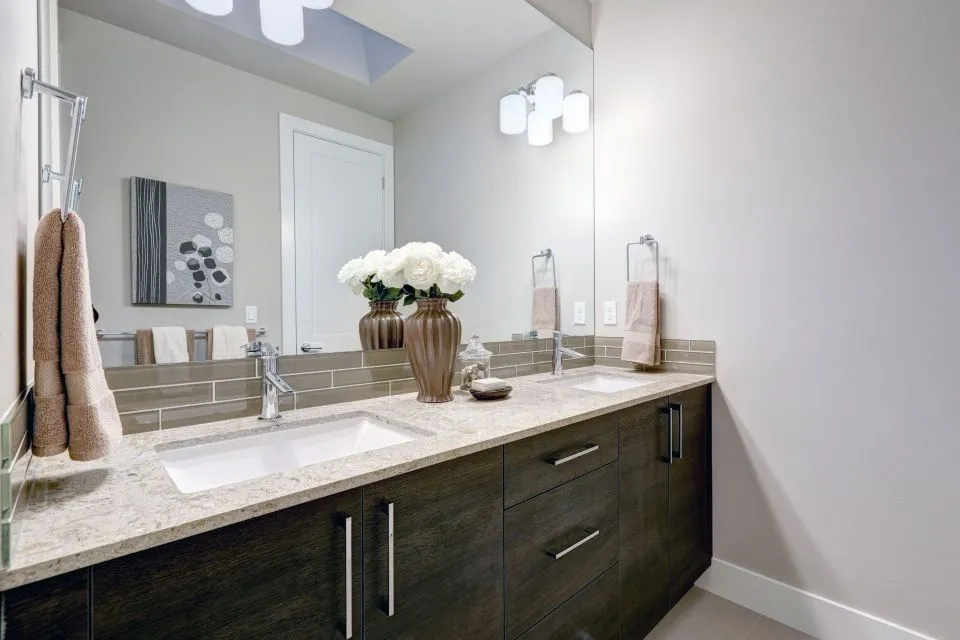
Choosing between high-gloss and satin finishes on quartz
Quartz has quietly become the workhorse surface of Australian renovations, holding up against salty coastal air, intense sun, and the regular spills of family life. From sandstone-clad Federation semis in Sydney to sprawling Queenslanders in Brisbane being jacked up on stumps and rebuilt, the stone you choose ends up being one of the longer-lasting decisions in your home. The finish on that quartz shapes how the room reads as much as the slab itself.
Walk into any stone yard from Osborne Park to Campbelltown and the same pattern will be offered in a handful of surface treatments. Two of those — high-gloss and satin — dominate customer orders, and they look so different in photographs that choosing between them feels straightforward until samples land on your actual benchtop. The right pick depends on light, lifestyle, and how the kitchen is genuinely used morning to night. The notes below walk through what each finish does well, where it falls short, and how it fits Australian homes.
The polished look: how high-gloss behaves
A high-gloss quartz surface is buffed through successive fine-grit heads in the factory until the slab achieves a near-mirror sheen. Pigment patterns in the stone are revealed with extra clarity, and the slab reflects light back into the room in a way that feels intentional and a little decadent. Many of the engineered quartz patterns sold through Australian showrooms — soft marble looks, warm concrete tones, lightly veined creams — were designed to be shown off this way, and gloss is what most designers picture when they specify them.
The reflective quality doubles the visual presence of a small space, which suits the compact inner-suburban units and renovated terraces popping up across Marrickville, Brunswick, and Newstead. Under-cabinet downlights catch on the surface like little stars, and a feature pendant becomes a soft halo above an island bench. The trade-off is dust, smudges, and fingerprints, which read clearly on a polished surface under bright lighting. That visibility matters in a busy household — but it is no deal-breaker if you're willing to keep a microfibre cloth handy.
The satin effect: soft, muted, and forgiving
Satin — sometimes called honed or brushed depending on the fabricator — leaves the slab with a low-lustre sheen rather than a mirror. Light is scattered across the surface instead of bounced back, which gives the stone a chalky depth closer to natural marble or limestone than engineered stone. Designers reaching for a softer, considered look often specify satin as a way to take the gloss off a heavily veined slab and let the pattern settle into the bench rather than shout from it.
This finish has become a quiet favourite in renovated Adelaide bungalows, heritage Hobart terraces, and inner-Brisbane workers' cottages reimagined for modern living. It pairs comfortably with raw brass tapware, timber floors with a bit of life left in them, and the unpolished stone splashbacks common in Hamptons-style renovations. Because satin scatters light across its surface, it hides the smudges, kettle drips, and small oily prints that polished quartz announces under even moderate use. For households with school-age kids, that alone can be the deciding factor.
Australian kitchens and the role of light
Australian floor plans lean heavily on natural light — double-height ceilings in newer estates around Craigieburn or Pakenham, clerestory windows aimed at capturing winter sun, and full-height bi-fold doors that disappear onto a deck. A high-gloss slab interacts with all that light almost theatrically, lifting the cabinetry colour and sending reflections deeper into the room. Some architects take that idea a step further and coordinate overhead surfaces, with glossy stretch ceilings in open-plan living zones creating a continuous, polished feel from benchtop to soffit.
Satin absorbs some of that interaction and reads through texture instead. For homes near the coast, where glare off the ocean can wash out a room at certain times of day, satin tends to feel calmer. Inland, where winters are short and sunlight is intense, polished quartz can rescue an otherwise flat-light kitchen. The geography of your block, the orientation of the room, and the size of your windows all tilt the balance. A sample laid on the actual benchtop at the time of day you cook most will tell you more than a hundred specification sheets.
Daily cleaning and care realities
Both finishes are non-porous and don't require sealing, which is a major reason quartz has displaced granite in many newer renovations. What sets them apart is how forgiving they are between proper cleans. On a polished slab, a quick wipe with a damp cloth is rarely enough under bright downlights — you'll see halos where the cloth trailed off. Satin forgives those streaks and looks presentable to guests after a single once-over with water and a soft cloth.
Day-to-day products sit on most benchtops: dishwashing liquid, a spray bottle, maybe whatever was on special at Bunnings last weekend. Both finishes respond well to a mild pH-neutral spray and a microfibre pad; both dislike acidic cleaners, bleach, and abrasive scourers. Satin is more lenient about mist and smudges on display, but it can pick up temporary marks from beetroot or turmeric that polished quartz would also show — neither finish is fully stain-proof against strong pigments sitting for hours. The difference comes down to tolerance for imperfection between full cleans.
Wear, scratches, and how each ages
The structural quartz slab beneath both finishes is identical in density and hardness, so the way each surface wears is more about visibility than durability. A satin surface can develop subtle sheen patches in high-traffic zones — around the sink, in front of the cooktop, near where you chop daily — and over a decade or two those patches can read as inconsistent texture. A polished surface doesn't change texture in the same way, but it can micro-scratch along the most-used edges and gradually lose its peak reflectiveness.
Longevity is rarely dictated by the finish itself. What matters more is edge profile, sink undermount geometry, seam placement, and — often overlooked — what's happening under the bench. Your fabricator's advice on proper subfloor support for heavy stone countertops directly affects how either finish performs over time. A slab that flexes or settles will telegraph stress at seams and unsupported overhangs long before surface wear becomes the issue. Picking the right fabricator matters as much as picking the right finish.
Resale, buyer preferences, and value
Property markets across Sydney, Melbourne, and Brisbane still reward clean, light kitchens with crisp stone. A polished quartz bench reads as contemporary and well-kept to the broadest cross-section of buyers — useful if you're renovating to sell where buyer profiles skew broad or where knockdown-rebuild projects are common. A satin bench reads as more boutique, more specifically styled, and tends to appeal to a narrower segment: buyers who appreciate the heritage, Scandi-leaning, or Japandi look that has spread through suburbs like Fitzroy, Fremantle, and parts of Adelaide's inner east.
Either finish will outlast the cabinetry under it, so neither choice is going to undercut a sale on its own. What does matter is whether the finish lines up with the rest of the renovation's design direction. A heritage build with custom joinery, plaster pendants, and limewashed walls feels coherent in satin; a sleek contemporary build with handleless cabinetry and integrated appliances looks complete in polish. Buyers can sense when a finish was an afterthought, and matching it to the rest of the room reads as a considered home.
Practical guidance for your finish decision
The notes below are drawn from what fabricators across Australian yards see working in real homes — sample-tested on benchtops, walked through at handover, and revisited when a reno comes up for resale. They are not strict rules, but they cover the bases that catch most renovators out when they commit to a finish in the showroom and live with a different one in their kitchen.
For most households the call comes down to four things: how much natural light the room holds, how visible you tolerate smudges being, what look the rest of your home is going for, and what your fabricator recommends for the specific slab you have chosen. Run through the list below before signing off on a final finish.
- Order an actual off-cut of each finish and lay them on your cabinetry under real lighting before committing to either.
- Choose satin if your kitchen opens onto a bright deck or sits under west-facing glass, where glare is harder to manage on gloss.
- Choose high-gloss for compact or low-light kitchens that benefit from the reflected light and sense of depth.
- Match the finish to your renovation's broader design direction — heritage and natural materials suit satin, contemporary cabinetry suits polish.
- Be honest about how often you'll wipe the bench, since polished surfaces demand more frequent attention than satin.
- Confirm with your fabricator that your preferred slab colour is stocked or readily available in the finish you want.
- Think long-term about the feel of your home: polished reads timeless, satin reads specific and considered.