The Pros and Cons of a Textured Granite Finish for Everyday Use
A textured granite finish can give a kitchen or bathroom a more tactile, natural character than a highly polished surface. Its lightly rugged face catches the light, softens the appearance of large benchtops and helps a new renovation feel connected to Australian stone and outdoor living. It is available in several treatments, including leathered, honed, flamed and brushed finishes, each with a different level of texture and sheen.
For everyday use, the important question is how that surface behaves around cooking, cleaning, children, pets and entertaining. Granite remains a hard, durable natural stone, yet its performance depends on the particular slab, the depth of the texture, the quality of fabrication and the sealing schedule. A finish that looks impressive in a showroom may require more considered care in a busy Brisbane family kitchen or a compact Melbourne apartment.
What A Textured Granite Finish Involves
Textured granite is altered after the slab has been cut and calibrated. A leathered finish, for example, retains some of the stone’s natural pits and movement while creating a low-sheen surface with a soft, rippled feel. Honed granite is smoother but matte, while flamed granite has a more pronounced, uneven texture created through heat treatment. Brushed finishes sit somewhere between a visibly rough surface and a refined low-gloss appearance.
The stone itself still provides granite’s familiar strengths: high resistance to scratching, good heat tolerance and substantial structural stability. However, the finish changes how the benchtop looks, feels and cleans. A deep texture can make a slab appear more rustic and disguise small marks, while a shallow leathered treatment may offer a practical balance for food preparation and daily wiping.
Granite is also a natural material, so samples cannot show every variation in the finished installation. Mineral flecks, veins, pores and colour shifts can be more apparent across a full island or splashback. Viewing the actual slab before fabrication is especially valuable when selecting a strongly textured surface for a prominent kitchen feature.
The Practical Benefits For Busy Homes
A textured surface is effective at concealing fingerprints, light smudges and minor water marks. This can be useful in homes where the benchtop is wiped frequently but rarely polished to perfection. Dark polished stone may show every droplet under a pendant light, whereas a leathered or honed finish tends to create a more forgiving visual effect.
The tactile quality also adds interest without relying on a bold pattern. In a coastal home near Adelaide or a contemporary house in Perth, a muted grey or sandy granite can complement timber cabinetry, brushed metal and natural fabrics. The surface often feels less formal than mirror-polished stone, which suits open-plan rooms used for cooking, homework and entertaining.
Granite handles hot cookware better than many synthetic surfaces, although trivets are still sensible. A pot taken directly from the oven can create thermal shock in any stone, particularly near cut-outs, joins or areas with natural fissures. With sensible use, a quality granite benchtop can serve for many years with limited signs of everyday wear.
Its durability also suits Australian entertaining habits. Large islands are frequently used for meal preparation, serving platters and casual dining, while outdoor kitchens in Sydney, Brisbane and regional areas need materials that can cope with strong sunlight and temperature changes. Granite is generally a reliable option for these applications when the selected slab and installation details are appropriate for the location.
The Cleaning And Maintenance Trade-Offs
The principal disadvantage is that texture can hold onto crumbs, flour, cooking oil and fine dust more readily than a smooth polished finish. A quick pass with a damp cloth may not reach the shallow valleys in the stone. In a busy kitchen, regular wiping with a soft microfibre cloth and a pH-neutral stone cleaner is more effective than occasional aggressive scrubbing.
A textured edge or surface can also make spills less obvious. Coffee, red wine, turmeric and greasy sauces should be cleaned promptly, particularly on pale or porous granite. Abrasive powders, scouring pads, oven cleaner, bleach and acidic products such as vinegar or lemon juice can dull the surface, weaken the sealer or leave uneven marks.
Sealing does not make granite completely stain-proof. It slows absorption and gives householders more time to remove spills, but the protection gradually wears away. The correct interval depends on the stone’s porosity, the finish, the amount of use and the product applied. A fabricator or stone specialist can carry out a water-drop assessment and recommend resealing rather than relying on a fixed calendar.
Australian conditions may add another maintenance consideration. Dust, sunscreen, barbecue grease and fine grit can reach an alfresco benchtop more quickly than an indoor surface. Outdoor granite should be selected for its suitability to ultraviolet exposure and weather, with exposed joins and edges designed to shed water. A textured finish can work well outside, but deep grooves may require a soft brush during periodic cleaning.
How It Compares With Other Surface Choices
The main appeal of textured granite is its combination of natural variation and physical toughness. It offers a more organic appearance than many uniform manufactured surfaces, and a leathered treatment can hide everyday marks better than a glossy finish. It also avoids the engineered-stone fabrication concerns that have reshaped the Australian market. Since 1 July 2024, engineered stone benchtops have been prohibited across Australia because of silica-related health risks, while natural stone remains available subject to safe fabrication and workplace controls.
This legislation does not mean natural stone is risk-free during cutting or installation. Granite can contain crystalline silica, so fabricators must use appropriate wet-cutting, dust extraction, respiratory protection and other work health and safety measures. Homeowners should use an established business that can explain its fabrication practices rather than attempting to cut, grind or modify a slab on site.
Compared with marble, granite is usually less prone to scratching and etching, making it better suited to rough daily use. Compared with porcelain, granite offers warmer natural variation but may need more regular sealing. Compared with laminate, it costs more and weighs considerably more, yet it provides a longer-lasting architectural finish. Butcher block brings warmth and can be repaired or refinished, though it needs a different maintenance routine around water and heat; this guide to pairing butcher block shows how timber can be balanced with stainless-steel appliances.
Cost varies widely according to the quarry, colour, slab availability, thickness, edge profile, cut-outs and installation access. A textured finish may carry an additional fabrication charge, particularly when the treatment is specialised or the slab requires careful handling. Narrow staircases, apartment lifts and remote delivery can also affect the final price in Australian projects.
Selecting A Finish That Fits Daily Life
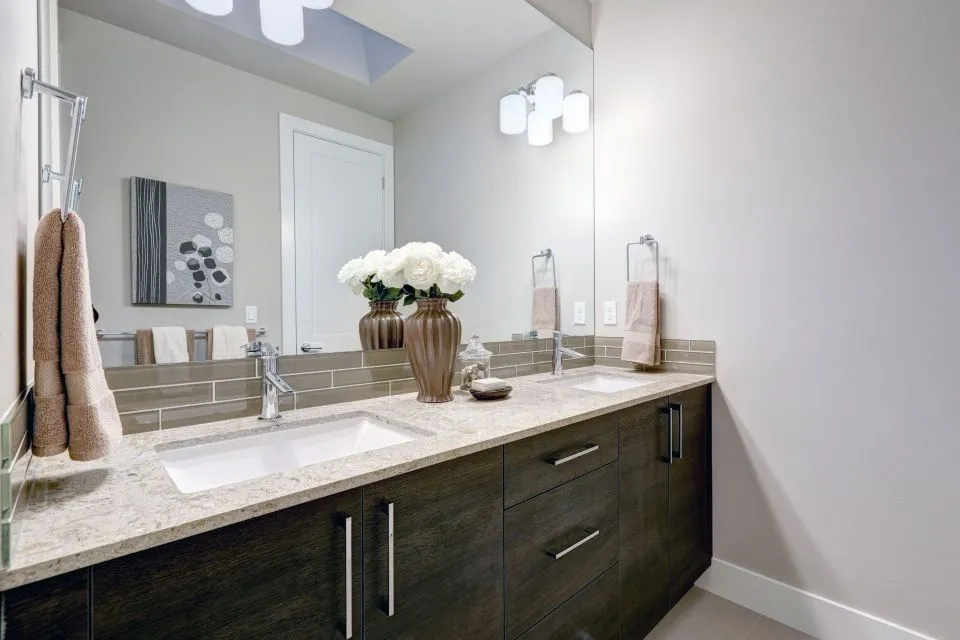
The best choice begins with the room’s workload rather than a sample’s appearance. A family kitchen with frequent baking may benefit from a relatively shallow leathered finish that retains texture without making pastry flour difficult to remove. A bathroom vanity can accept a more tactile treatment because it sees less food residue, while a fireplace surround or outdoor bar may prioritise visual depth over effortless wiping.
Ask to see a large sample or the full slab, and run your hand across it. Check whether the texture feels comfortable against bare skin, whether a cloth catches on the surface and whether the proposed edge profile is easy to clean. Confirm which sealant will be used, how long it is expected to last and which products are safe for routine care. The fabricator should also discuss joins, sink cut-outs, drainage, splashbacks and support requirements.
| Surface option | Everyday strengths | Main drawbacks | Suitable Australian uses |
|---|---|---|---|
| Textured or leathered granite | Durable, heat tolerant, hides fingerprints and minor marks | Can trap crumbs, needs sealing and careful cleaning | Busy kitchens, vanities, fireplaces and outdoor kitchens |
| Polished granite | Smooth to wipe, strong natural pattern, reflective appearance | Shows smears, water spots and scratches more visibly | Formal kitchens and low-maintenance indoor areas |
| Honed marble | Soft matte appearance, cool and elegant feel | More vulnerable to etching, staining and scratching | Carefully used bathrooms and statement surfaces |
| Porcelain | Low absorption, broad colours and patterns, light visual effect | Edges can chip, repairs and cut-outs require specialist skill | Contemporary kitchens, splashbacks and outdoor areas |
| Butcher block | Warm, tactile and repairable by sanding | Requires oiling and protection from prolonged moisture | Islands, utility areas and kitchens seeking timber character |
Practical Selection Recommendations
- Choose a shallow leathered or brushed finish when the benchtop will be used heavily for cooking and baking.
- View the actual granite slab, rather than relying solely on a small showroom sample.
- Request a written care guide covering cleaning products, sealing and stain removal.
- Confirm that fabrication follows Australian work health and safety requirements for silica-containing stone.
- Use trivets, chopping boards and prompt spill removal even when the granite is highly durable.
A textured granite finish rewards households that value natural variation and do not expect a surface to remain perfectly uniform. It is particularly convincing when the cabinetry, flooring and hardware use restrained materials that allow the stone’s depth to become part of the room. The finish is less suitable for anyone wanting the fastest possible wipe-down or a completely maintenance-free benchtop.
When the texture, sealant and slab are selected with the room’s use in mind, granite can provide a resilient and distinctive surface for many years. The decision is less about choosing the toughest material in isolation and more about matching the tactile finish to cleaning habits, design expectations, installation conditions and the demands of Australian living.