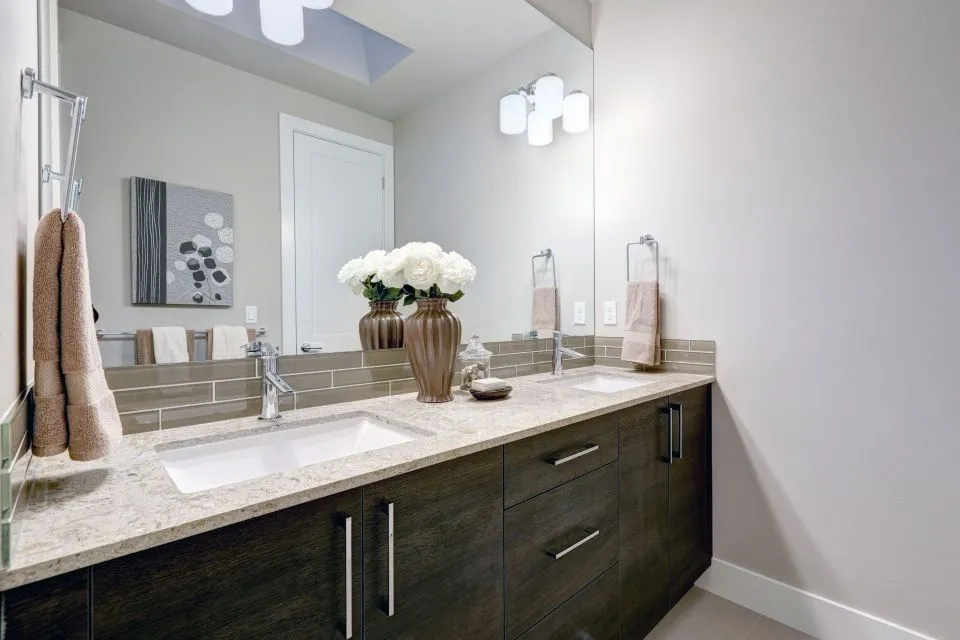
Lighting that brings out every countertop detail
A countertop can look completely different under a clear morning sky, a row of warm pendant lights or cool LED downlights. Lighting affects how you read the colour, movement, gloss and texture of a surface, so it deserves attention alongside stone selection, cabinetry and splashback design. The right combination can make a modest kitchen feel spacious and help a premium material show its best qualities.
This matters especially in Australian homes, where bright sunlight often enters through large windows, sliding doors and open-plan living areas. A benchtop in Brisbane may receive strong, high-angle daylight, while a kitchen in Melbourne can shift dramatically between grey winter light and bright afternoon sun. Planning for these conditions helps prevent surprises after installation.
Good lighting should support everyday jobs as well as visual appeal. You need even illumination for chopping and cleaning, softer light for entertaining, and enough colour accuracy to see the countertop as it truly is. With thoughtful positioning and suitable lamps, the finish becomes part of the room’s character rather than a surface that disappears into shadow.
Read the surface in natural daylight
Begin by assessing samples near the actual windows and doors in your home. Daylight reveals the underlying tone of quartz, marble, granite, porcelain and other materials more reliably than a showroom fitting. Hold samples horizontally, because a benchtop reflects light differently from an upright tile or splashback sample.
The direction of the room also changes the result. A north-facing space in Australia generally receives stronger sunlight for much of the day, while a south-facing room may rely more heavily on artificial lighting. East-facing kitchens can appear bright and crisp in the morning, whereas west-facing rooms may develop a golden cast late in the day. These shifts can alter how white, grey and beige surfaces relate to surrounding cabinetry.
Window treatments are part of the lighting plan. Sheer curtains, roller blinds and external awnings can soften glare without making the kitchen gloomy. In coastal areas such as Perth or the Gold Coast, strong sun may create reflective hotspots on polished stone. A translucent blind or adjustable screen can make the work area easier to use while preserving natural brightness.
Match colour temperature to the material
Colour temperature is measured in kelvins and has a direct effect on countertop appearance. Warm white light, often around 2700K to 3000K, brings out cream, tan, brown and golden veining. It can make timber cabinetry and butcher block feel inviting, although it may make a cool white benchtop look slightly yellow.
Neutral white lighting around 3500K to 4000K is often a useful middle ground for kitchens and bathrooms. It keeps white quartz, porcelain and marble relatively clear while retaining a comfortable atmosphere. Cooler light can emphasise blue or grey undertones, but very high colour temperatures may feel stark in a residential room.
Use the same colour family throughout connected zones where possible. A warm pendant over the island beside cool white ceiling downlights can make the benchtop appear to have two different colours. This is particularly noticeable in open-plan Australian homes where the kitchen flows directly into the dining and living areas. Consistent lamps create a smoother transition from one space to another.
Use layered lighting across the work zones
Ambient lighting fills the room, task lighting illuminates preparation areas, and accent lighting draws attention to architectural or decorative details. A successful kitchen usually combines all three rather than depending on a single ceiling fitting. Recessed downlights can provide general brightness, while under-cabinet strips place light directly across the benchtop.
Under-cabinet lighting is valuable for more than convenience. It skims across the rear portion of a countertop and makes subtle texture, veining and edge profiles easier to see. Positioning matters: a strip set too far back can leave the front of the benchtop dim, while a fitting placed too close to the cabinet edge may create harsh reflections. Diffusers help produce a continuous glow instead of visible points.
Pendant lights above an island contribute visual focus and can highlight a waterfall edge or integrated sink. Their size and spacing should suit the length of the island, with the bottom of each fitting high enough to preserve sightlines. In homes with standard Australian ceiling heights, pendants that hang too low can obstruct conversation and exaggerate glare on polished surfaces.
Highlight gloss, texture and edge profiles
Polished finishes reflect a larger, sharper image of their light source. This can make a quartz or granite surface appear luminous, but it can also produce glare if downlights are placed directly above the main viewing angle. Moving fittings slightly forward or using broader beam spreads can reduce bright spots.
Honed, leathered and satin finishes respond differently. Their low-sheen surfaces absorb and scatter light, revealing tactile variation rather than mirror-like reflection. Side lighting can emphasise a leathered granite finish or a textured porcelain panel, while soft overhead illumination may be better for a honed marble benchtop. The aim is to reveal character without making every mark or uneven reflection prominent.
Edge details deserve attention during the design stage. A mitred waterfall edge, bullnose profile or thickened island end can catch light and become a strong feature. Linear LED lighting beneath an overhang can create a floating effect, but it should be carefully concealed so the glow is visible without exposing the diode points. A fabricator can coordinate the edge treatment with cabinetry, power locations and the final lighting position.
Consider outdoor exposure and bathroom conditions
Outdoor kitchens, alfresco bars and barbecue benches need a lighting strategy that accounts for weather, glare and changing daylight. A countertop may look attractive under midday sun but lose definition after sunset if the only light comes from a distant wall fitting. Low-glare task lights under an overhead structure can make food preparation safer and keep the surface visually connected to the entertaining area.
Material selection and lighting should be considered together outdoors. Quartz, porcelain, Dekton and natural stone each respond differently to prolonged sunlight, heat and moisture, and a highly reflective surface may intensify glare beside pale paving or pool surrounds. Before specifying quartz in an exposed location, review this quartz UV guidance and discuss the site conditions with a qualified supplier.
Bathrooms benefit from balanced light at the vanity as well. A ceiling downlight alone can cast shadows beneath the eyes and make a countertop appear darker near the basin. Vertical wall lights or a mirror with suitable integrated illumination can provide a clearer view of the surface, while a dimmable fitting helps shift from bright morning routines to a calmer evening setting. Electrical work in wet areas should be planned and installed by an appropriately licensed professional.
Plan lighting with colour and maintenance in mind
Colour rendering is just as important as colour temperature. Lamps with a high colour rendering index, commonly described as high-CRI lighting, show stone veining, food colour and subtle undertones more accurately. This is useful when choosing between slabs with fine warm and cool details, especially in a showroom where artificial light can disguise the final result.
A lighting layout should also anticipate cleaning and daily wear. Strong grazing light can make crumbs, fingerprints and water marks obvious on dark polished stone. That is not necessarily a reason to avoid the finish, but it does mean the lighting should be adjustable. Dimmers, separate switching circuits and smart controls allow task, entertaining and cleaning modes without changing the countertop itself.
Australian renovation projects often involve several trades, so lighting decisions should be settled before templating and installation. The electrician needs to know where under-cabinet channels, pendant supplies and pop-up power points will sit; the cabinetmaker needs clearance for concealed drivers; and the countertop installer needs accurate information about sinks, cooktops and overhangs. Early coordination prevents a late change from cutting across a carefully planned stone pattern.
For a renovation in North Little Rock, Arkansas, or an Australian-style project elsewhere, the same principle applies: select the surface and lighting as a single visual system. A local fabricator or designer can review samples at different times of day, explain how polished and textured finishes behave, and coordinate practical details with the installation team. The result should be a benchtop that looks appealing in photographs, performs well during weekday cooking and still feels right when the lights are lowered for an evening gathering.