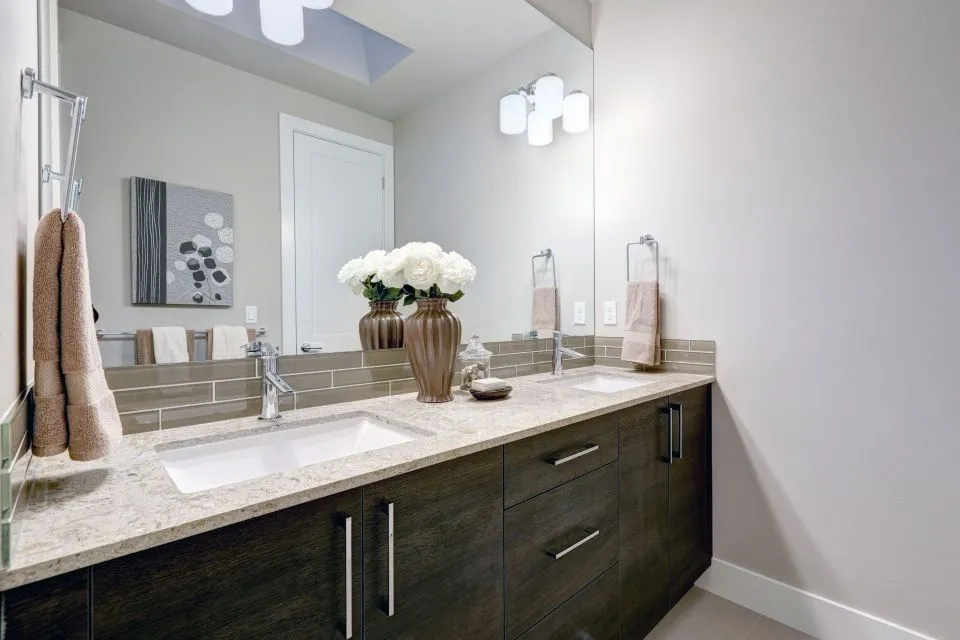
Quartzite Countertops Compared With Quartz
Quartzite and quartz can look remarkably similar, especially when both are selected in bright white, soft gray, or marble-inspired patterns. Their names are close, yet they are different countertop materials with distinct origins, maintenance needs, and performance characteristics. Understanding that difference makes it easier to choose a surface that suits the way your kitchen or bathroom is used.
Quartzite is a natural stone created when sandstone is transformed by heat and pressure deep within the earth. Quartz is an engineered surface made from ground quartz minerals, resins, pigments, and other binding materials. Both can deliver a durable, attractive countertop, but they respond differently to heat, stains, scratching, cleaning products, and everyday wear.
A well-made countertop depends on more than the slab itself. Color selection, edge treatment, seams, sink style, templating, and professional installation all affect the finished result. For homeowners planning a remodel in North Little Rock or nearby Arkansas communities, the right material should balance appearance, maintenance, budget, and long-term use.
How Quartzite Is Formed
Quartzite begins as quartz-rich sandstone. Over time, geological pressure and intense heat fuse the sandstone grains together and create a dense metamorphic stone. The finished slab is quarried from the earth, cut into sheets, polished or honed, and fabricated to fit a specific room. Because it is natural stone, every slab has its own mineral movement, veining, and color variation.
Many quartzite slabs resemble marble, with flowing veins, translucent areas, or layered gray and cream patterns. Popular varieties include Taj Mahal, Super White, Sea Pearl, and soft green or blue-toned stones. The name “Super White” can be confusing because some slabs sold under that label may be quartzite, marble, dolomite, or another stone. A professional fabricator can help verify the material before purchase.
The density of quartzite gives it impressive resistance to scratching and everyday wear. It is generally harder than many common countertop stones, although hardness does not make it indestructible. Strong impacts at corners, narrow areas, and sink cutouts can still cause chips or cracks, especially if the slab is poorly supported or handled incorrectly.
What Makes Quartz Different
Quartz countertops are manufactured rather than quarried as finished slabs. Natural quartz crystals are combined with resins and colorants under controlled conditions, producing a consistent material with a broad range of colors and patterns. Some designs imitate marble or quartzite, while others offer solid colors, concrete effects, terrazzo details, or dramatic veining.
Because the pattern is engineered, homeowners can often find greater consistency between samples and full slabs. This can be helpful when several surfaces need to coordinate, such as a kitchen island, perimeter counters, bathroom vanity, and backsplash. The production process also makes it possible to create styles that are difficult to find in natural stone.
Quartz is dense and nonporous, so spills generally remain on the surface instead of soaking into the material. It does not usually require routine sealing. Regular cleaning with a soft cloth, warm water, and a mild soap is typically sufficient. Even so, quartz contains resin, which means it should be protected from direct, prolonged heat and harsh chemicals.
Durability, Heat, And Maintenance
Both surfaces are suitable for busy kitchens, but their care instructions are different. Quartzite has strong heat resistance because it is natural stone, although sudden temperature changes can still stress a slab. A trivet is wise for cast-iron cookware, slow cookers, toaster ovens, and other very hot items. Quartz is more vulnerable to heat because the resin component can discolor, scorch, or weaken near high temperatures.
Quartzite requires sealing because natural stone can contain microscopic pores. A quality sealer reduces absorption and gives homeowners more time to wipe up coffee, wine, oil, tomato sauce, and other staining substances. Sealing does not make the surface stain-proof, and the schedule depends on the stone’s porosity, the sealer used, and the amount of use. Many quartzite countertops need resealing periodically.
Neither material should be treated as a cutting board. Knives may leave marks on the surface, dull the blade, or damage the finish. Abrasive powders, steel wool, oven cleaner, paint remover, and highly acidic or alkaline products can create problems. For everyday care, use a pH-neutral stone cleaner or mild dish soap and avoid leaving spills unattended for long periods.
| Feature | Quartzite | Quartz |
|---|---|---|
| Material type | Natural metamorphic stone | Engineered surface with natural quartz and resin |
| Appearance | Unique veining and slab-to-slab variation | Consistent colors and repeatable design options |
| Sealing | Usually required and periodically renewed | Generally does not require sealing |
| Heat resistance | High, though trivets are still recommended | More sensitive to direct and prolonged heat |
| Stain resistance | Strong when properly sealed and maintained | Very strong because the surface is nonporous |
| Scratch resistance | Excellent, with variation by stone | Excellent for normal household use |
| Repair considerations | Chips and cracks may be difficult to disguise | Damage can be difficult to repair, especially from heat |
| Design flexibility | Natural patterns and limited slab availability | Broad selection of colors, patterns, and finishes |
| Typical cost factors | Stone rarity, thickness, finish, and fabrication | Brand, design, thickness, edge work, and installation |
Appearance And Design Flexibility
Quartzite is often chosen for its natural character. A slab may contain fine lines, bold movement, mineral flecks, cloudy areas, or gentle shifts in tone that cannot be reproduced exactly. This variation gives a kitchen or bath a one-of-a-kind focal point. It also means that a small sample may not represent the full slab, so viewing the actual stone is important when the pattern is dramatic.
Quartz offers a more predictable design process. If a homeowner wants a calm white surface across multiple rooms, an engineered slab can provide a closer match from piece to piece. It is also useful for coordinated waterfall edges, full-height backsplashes, shower walls, and bathroom surfaces where visual continuity matters. Some quartz designs are highly realistic, but they may have repeating patterns that are easier to identify across large installations.
Finish affects both materials. Polished surfaces reflect light and emphasize color, while honed or leathered finishes create a softer, more textured appearance. A matte finish may show fingerprints or dark marks differently than a polished finish, so samples should be viewed in the intended room’s lighting. Edge profiles, sink choices, and backsplash height can change the visual balance as much as the slab pattern.
Cost And Installation Considerations
The final price of a countertop includes much more than the material per square foot. Slab selection, thickness, cutouts, edge details, backsplashes, seams, demolition, plumbing adjustments, delivery, and installation all contribute to the project cost. Rare quartzite with dramatic veining may carry a premium, while a standard quartz design may offer more predictable pricing.
Quartzite fabrication can require careful planning because the installer must work around natural veining, fissures, and variations in the slab. A layout may be adjusted to center a focal pattern on an island or align veins at a seam. Quartz is also fabricated with specialized equipment, but its consistent composition can make planning more straightforward. In both cases, experienced handling is essential because slabs are heavy and vulnerable around cutouts.
Homeowners comparing materials can review options through countertop material selections and discuss how each slab will work with the room’s cabinets, flooring, lighting, and plumbing. A professional consultation can identify practical concerns early, including support requirements, seam placement, overhang limits, and whether a selected design is suitable for a shower or backsplash application.
Choosing The Right Surface For Your Home
Quartzite may be the better fit for someone who values natural stone movement, high heat resistance, and a distinctive slab. It works especially well as a statement island or as part of a design inspired by marble. The homeowner should be comfortable with sealing and with the possibility that two slabs will not look identical.
Quartz may be preferable for households seeking low routine maintenance, reliable color consistency, and a wide selection of engineered patterns. It is a practical option for busy kitchens, family bathrooms, and projects where the same appearance needs to continue across several surfaces. The main care rule is to keep hot cookware and harsh chemicals away from the countertop.
The room itself also matters. In a kitchen with frequent baking, cooking, and entertaining, both materials can perform well when used correctly. In a bathroom, quartz may simplify maintenance around a vanity or shower wall, while quartzite can add natural depth to a custom design. Outdoor applications require additional caution because some quartz products are not intended for extended sunlight and weather exposure.
Before committing, compare full slabs rather than relying on small showroom chips. Check the surface in natural and artificial light, look closely at the veining, and ask how the material should be cleaned and sealed. A qualified installer can also explain whether a particular slab has visible fissures, requires special reinforcement, or needs a specific edge profile.
Practical Selection Priorities
The best material is the one that matches the household’s habits as well as its preferred style. A homeowner who frequently places hot pans on the counter may appreciate quartzite’s natural heat tolerance, while someone who wants simple cleaning may favor quartz. Neither choice eliminates the need for sensible care, cutting boards, trivets, and prompt spill cleanup.
Professional measuring and templating are equally important. Walls are rarely perfectly straight, cabinets can vary slightly in depth, and appliances may need precise clearances. Accurate templates help create clean seams, properly positioned sink cutouts, and balanced overhangs. Skilled fabrication also reduces the risk of damage during transportation and installation.
Use these priorities when comparing slabs and project estimates:
- Decide whether natural variation or predictable pattern matching matters more.
- Ask whether the selected surface requires sealing and how often it should be renewed.
- Confirm heat, chemical, sunlight, and outdoor-use limitations before ordering.
- Review the full installation scope, including edges, cutouts, backsplashes, seams, delivery, and removal.
- View the actual slab and approve the layout before fabrication begins.
A showroom consultation can also clarify whether a material is suitable for more than countertops. Quartzite and quartz may be considered for backsplashes, shower walls, fireplace surrounds, mantels, and furniture-style features, but thickness, support, moisture exposure, and heat conditions must be evaluated for each application.
For local remodeling support, The Countertop Store provides consultation, measurement, templating, fabrication, and installation for kitchens, bathrooms, and custom surface projects in North Little Rock and surrounding areas. The team can help compare quartzite, quartz, granite, porcelain, marble, Dekton, soapstone, and butcher block based on the design and demands of the space.
A quartzite countertop brings the individuality of natural stone, while quartz delivers engineered consistency and straightforward everyday care. The right decision comes from comparing the actual slab, understanding maintenance requirements, and planning the installation details before fabrication. Schedule a consultation with The Countertop Store to review samples, discuss your room, and select a surface that will perform beautifully for years.