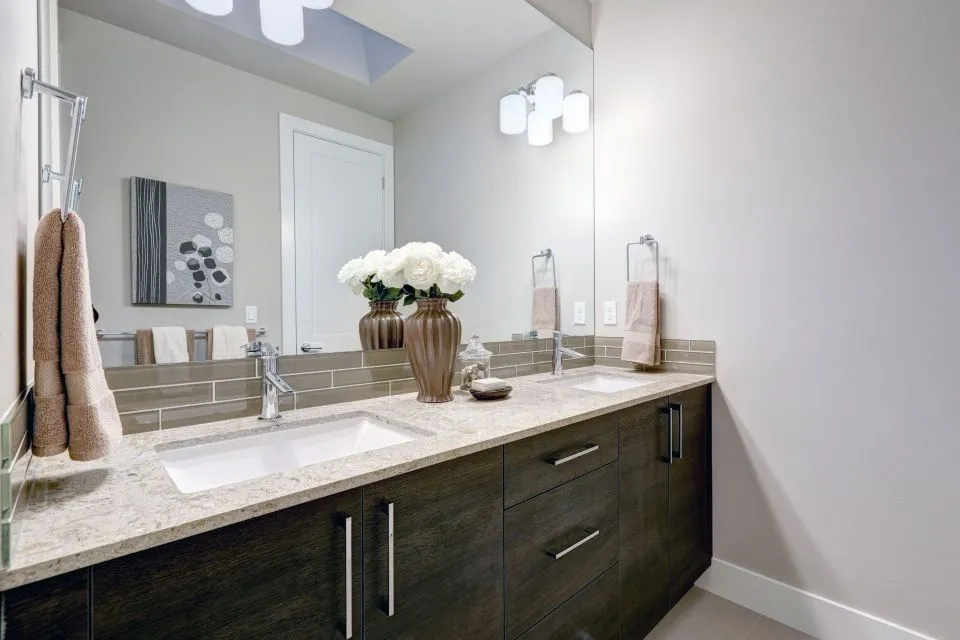
What Is an Undermount Sink and Why It Works Best with Stone Countertops
An undermount sink is installed beneath the countertop rather than resting on top of it. The countertop opening is carefully cut to match the basin, and the sink is secured underneath with adhesive, clips, brackets, or a combination of support methods. This creates a clean transition between the counter and the sink.
This style has become a popular choice for kitchen and bathroom remodeling because it gives the surface a continuous appearance. Crumbs, spilled liquids, and standing water can be pushed directly into the basin without catching on a raised rim. The result is a streamlined workspace that is easier to clean and visually well suited to modern, traditional, and transitional interiors.
Stone countertops are especially compatible with undermount installation because materials such as quartz, granite, marble, porcelain, and Dekton provide the strength and dimensional stability needed to support the sink. Their edges can also be precisely fabricated around the opening, allowing the exposed rim of the basin and the surrounding countertop to look intentional and finished.
Understanding The Undermount Sink Design
A top-mount sink, sometimes called a drop-in sink, has a rim that sits on top of the countertop and covers the edge of the cutout. An undermount model reverses that arrangement. The basin is positioned below the finished counter, leaving the countertop edge visible around the opening.
The visible edge may be polished, eased, beveled, or shaped with another countertop profile. Fabricators can create a small reveal, where the sink edge sits slightly inside the stone, or a flush reveal, where the counter and basin appear nearly aligned. Some homeowners prefer a positive reveal, which exposes a little more of the sink rim and makes cleaning around the edge easier.
This installation requires accurate measurements and a stable counter material. The sink cabinet must provide enough room for the basin, plumbing connections, faucet components, and any accessories. Sink size, bowl depth, drain location, garbage disposal clearance, and cabinet construction should all be reviewed before fabrication begins.
Why Stone Countertops Make A Strong Pairing
Natural and engineered stone offer the rigidity that undermount sinks need. Quartz is manufactured under controlled conditions, so it provides a consistent surface and dependable strength around a sink cutout. Granite is also dense and durable, making it a long-standing choice for kitchens that receive heavy daily use.
Marble can be used with an undermount basin as well, although its softer composition makes it more vulnerable to scratching, staining, and etching. A suitable sealer and thoughtful maintenance routine are important. Porcelain and Dekton are highly resistant to heat, moisture, and many types of staining, but they require experienced fabrication because their thin, hard surfaces must be cut and supported correctly.
The sink opening is one of the most important areas of a countertop installation. A professional fabricator can account for the stone’s thickness, the sink manufacturer’s specifications, the desired edge profile, and the support requirements beneath the surface. These details help prevent weak spots, uneven reveals, or moisture intrusion around the rim.
Comparing Countertop Materials For Sink Installation
The best material depends on the room’s design, expected use, maintenance preferences, and budget. All of the options below can support an undermount sink when properly fabricated, but their performance characteristics differ.
| Material | Strengths Around An Undermount Sink | Maintenance Considerations | Design Character |
|---|---|---|---|
| Quartz | Consistent, durable, and available in many colors | Usually low maintenance; avoid prolonged exposure to intense heat | Clean, adaptable, and uniform |
| Granite | Strong, heat resistant, and naturally distinctive | Periodic sealing may be recommended | Speckled or dramatic natural variation |
| Marble | Elegant veining and a classic appearance | Requires sealing and prompt cleanup of acidic spills | Luxurious, soft, and highly individual |
| Porcelain | Resistant to moisture, stains, and heat | Clean with nonabrasive products; edges require skilled fabrication | Modern patterns, stone looks, and bold finishes |
| Dekton | Very hard, durable, and resistant to heat and UV exposure | Generally simple care; fabrication must be precise | Contemporary and architectural |
| Soapstone | Nonporous, heat resistant, and naturally smooth | May be treated with mineral oil to deepen color | Rich, organic, and increasingly patinated |
| Butcher Block | Warm, tactile, and easy to customize | Needs regular oiling and careful moisture management | Natural, inviting, and traditional |
Quartz and granite are often selected for busy kitchens because they combine practical durability with broad design flexibility. Porcelain and Dekton are attractive choices for highly contemporary projects, especially when homeowners want a large-format appearance or a surface that coordinates with other architectural finishes.
Butcher block can be paired with an undermount sink, but the area around the cutout demands special attention. Wood is more sensitive to prolonged moisture than stone, so the sink rim, countertop edge, and sealant must be maintained carefully. In some designs, a stone work area around the sink is combined with wood on another section of the island to balance warmth and performance.
Cleaning Benefits And Visual Appeal
One of the clearest advantages of an undermount basin is the uninterrupted countertop surface. With no raised lip, a cloth or sponge can move across the counter and into the sink. This is especially useful near a food preparation area, where flour, crumbs, coffee grounds, and small pieces of produce can otherwise collect along the sink rim.
The design also makes the countertop appear larger. A visible sink rim can divide the surface into separate zones, while an undermount installation lets the stone extend visually toward the basin. This understated detail works well with minimalist kitchens, but it also complements farmhouse, craftsman, and classic cabinetry when paired with the right sink shape and edge treatment.
An undermount sink can support accessibility and everyday convenience, too. The user does not need to lift debris over a raised rim, and the basin can be positioned to create a comfortable working height. In a bathroom, the same configuration produces a furniture-like vanity surface with fewer ledges where dust, cosmetics, and moisture can gather.
The style is particularly effective when coordinated with a stone backsplash, shower wall, or integrated countertop feature. Homeowners planning a broader remodel can review available kitchen countertop services to coordinate material selection, sink fabrication, edge details, templating, and installation as part of one project.
How Fabrication And Installation Work
The process begins with selecting the sink and confirming its exact specifications. A sink should generally be purchased or identified before the countertop is templated because manufacturers may use different dimensions, corner radii, mounting flanges, and support requirements. A small difference in the model can affect the cutout and the final reveal.
During templating, the installer measures the cabinets, walls, appliances, and sink location. The template helps determine where the opening will fall in relation to cabinet dividers, drawers, faucets, backsplashes, and seams. Fabricators then cut the opening using specialized equipment and finish the exposed stone edge according to the selected profile.
The sink is mounted beneath the countertop with a combination of high-strength adhesive, mounting clips, brackets, or structural supports. The precise method depends on the sink’s weight, the countertop material, and the manufacturer’s guidance. Heavy cast iron or fireclay sinks may require additional cabinet reinforcement because the counter alone should not carry their full load.
After the counter is set on the cabinets, the plumbing is connected and the area is checked for leaks. The installer also verifies that the sink sits level, the faucet functions correctly, the drains align, and the cabinet doors and drawers operate without interference. Careful installation matters because correcting an undermount sink problem after the stone is installed can be difficult and expensive.
Care And Long-Term Performance
Routine care is usually straightforward. Wipe the countertop and sink rim with a soft cloth, warm water, and a manufacturer-approved cleaner. Avoid abrasive powders, scouring pads, and harsh chemicals that may dull the finish or damage sealants. For quartz, follow the product manufacturer’s cleaning guidance rather than assuming every household cleaner is suitable.
The joint between the sink and countertop should remain sealed and intact. If the caulk becomes cracked, discolored, or separated, moisture can reach the cabinet below and potentially affect the mounting system. Small maintenance issues are easier to address early than after water has damaged the cabinet base or weakened the adhesive.
Avoid placing excessive weight on the sink edge or using the countertop as a support point while standing or lifting heavy objects. A properly installed sink is durable, but the opening naturally removes some material from the counter. Good cabinet support and reasonable use help protect this high-traffic area.
Natural stone may need periodic sealing, depending on the material and the product used. Granite, marble, and soapstone have different care requirements, while quartz generally does not require routine sealing. Porcelain and Dekton are low-maintenance surfaces, but their edges and seams should still be cleaned gently and inspected as part of normal household care.
Planning The Right Sink And Counter Combination
Sink shape, size, color, and bowl configuration affect both function and appearance. A single deep basin is useful for washing large cookware, while a divided basin may suit households that prefer separate washing and rinsing areas. Low-divide designs offer some separation without limiting space for large pans.
The countertop thickness and edge profile also influence the finished look. A simple eased edge provides a clean transition around the sink, while a beveled or decorative profile can reinforce a more traditional design. With patterned granite or strongly veined marble, the direction and placement of the material around the cutout should be considered so the sink area feels balanced.
Before approving a layout, confirm the faucet hole locations, soap dispenser position, air switch, filtered water tap, and any accessories such as a drying rack or colander. These components need enough clearance from the wall, backsplash, sink bowl, and cabinet frame. Planning them together prevents crowded or unusable counter space.
Useful priorities for selecting an undermount installation include:
- Choose the sink model before the final countertop template is created.
- Match the basin size to cabinet width, plumbing placement, and daily cooking habits.
- Select a countertop material based on maintenance expectations as well as appearance.
- Confirm mounting support for heavy sinks such as cast iron or fireclay.
- Review the sink reveal, edge profile, faucet holes, and backsplash relationship before fabrication.
Making The Most Of A Custom Countertop Project
An undermount sink can be a small detail with a noticeable effect on the entire room. The uninterrupted surface improves cleanup, simplifies the visual lines of the counter, and helps the sink feel integrated rather than added on. When the opening, edge finish, cabinetry, and faucet layout are coordinated, the result looks deliberate from every angle.
The installation is most successful when measurements and material decisions are made early. A countertop professional can identify cabinet limitations, recommend suitable sink support, review stone characteristics, and explain how each material will perform around moisture and everyday wear. This preparation is especially valuable when the project includes a new island, backsplash, appliance layout, or custom vanity.
For homeowners in North Little Rock and nearby Arkansas communities, The Countertop Store can help bring these details together through consultation, templating, fabrication, and installation. Arrange a countertop consultation to select a durable surface, confirm sink compatibility, and create an undermount design that fits the way the kitchen or bathroom is used.