What Is the Difference Between Honed And Polished Finishes?
When selecting a countertop, the stone or slab itself is only part of the decision. The surface finish changes how the material reflects light, feels under the hand, shows everyday marks, and fits into the overall design. Two of the most common options are honed and polished finishes.
A polished surface has a reflective, glossy appearance created through progressively finer abrasives. A honed surface is smoothed to a lower sheen, producing a soft matte or satin look. Neither finish is automatically better; the right choice depends on the material, room, maintenance expectations, and visual style you want.
For homeowners planning a kitchen, bathroom, shower, fireplace, outdoor kitchen, or furniture piece in North Little Rock, Arkansas, finish selection is best handled alongside slab selection, edge design, measurements, and installation planning. Understanding the differences early can make the entire remodeling process more predictable.
How Honed And Polished Surfaces Look
A polished finish has a bright, mirror-like quality that reflects natural and artificial light. Colors often appear deeper and more saturated, while veining and mineral movement can look sharper. This finish is especially popular for granite, marble, and quartz countertops because it gives the surface a clean, refined presence.
Honed stone has a muted appearance with little or no visible reflection. Depending on the material and production process, it may be described as matte, satin, leathered, or soft-touch. The result is usually more understated and relaxed than a traditional high-gloss countertop.
Light affects the two finishes differently. A polished island may become a strong focal point because it catches pendant lighting and sunlight. A honed surface tends to blend more gently with cabinets, wood flooring, painted walls, and other textures. In a small kitchen, the visual difference can influence whether the room feels energetic and reflective or calm and grounded.
How Finish Changes Daily Performance
The finish does not change the fundamental composition of quartz, granite, porcelain, marble, or another slab. It does influence how the surface interacts with light, moisture, fingerprints, minor scratches, and spills. A polished countertop often makes cleaning feel simple because its smooth, reflective surface clearly shows where residue remains.
Honed finishes can be more forgiving when it comes to fingerprints, light dust, and small surface marks. Because there is less reflection, minor imperfections may be harder to notice from across the room. However, darker honed materials can show oily fingerprints, water rings, or areas where a spill temporarily changes the color.
Natural stone requires special consideration. Honed marble, limestone, and some softer stones can show etching from acidic foods and cleaners. Etching is a dull or lightened mark caused by a chemical reaction with the stone, rather than a conventional stain. Polished marble may make some marks more visible because the surrounding surface is glossy, while honed marble can disguise the contrast but may develop a broader patina over time.
The best finish also depends on heat and scratch expectations. For a detailed comparison of high-performance slab materials, homeowners can review how Dekton and granite compare before deciding which surface is suitable for a busy cooking area.
Material-Specific Differences At A Glance
Finish names do not mean exactly the same thing across every material. A honed quartz surface is manufactured to have a consistent matte appearance, while honed granite or marble may display more natural variation. Porcelain and Dekton can have smooth matte, silk, textured, or ultra-compact finishes that resemble honed stone without behaving in precisely the same way.
The underlying material remains important for sealing, heat resistance, scratch resistance, stain response, and repairability. For example, quartz is engineered from mineral content and resin, so it generally does not require routine sealing. Granite typically benefits from proper sealing, while marble calls for more careful use and cleaning regardless of whether its surface is honed or polished.
| Surface Material | Polished Appearance | Honed Or Matte Appearance | Key Consideration |
|---|---|---|---|
| Quartz | Glossy, crisp, and consistent | Soft, contemporary, and low sheen | Check the manufacturer’s care guidance for matte finishes |
| Granite | Highlights mineral movement and color | More natural and subdued | Sealing and slab-specific maintenance still matter |
| Marble | Enhances veining and visual depth | Creates a softer, lived-in character | Etching and staining require thoughtful care |
| Porcelain | Reflective and highly finished | Modern, understated, and often practical | Finish options vary by product line |
| Dekton | Sleek and refined | Low-glare, architectural, and tactile | Follow fabrication and cleaning recommendations |
| Soapstone | Usually limited sheen after treatment | Commonly smooth and matte | May darken or develop patina with use |
| Butcher Block | Can have a smoother, brighter coating | Natural, low-sheen wood appearance | Requires suitable oiling or protective treatment |
Fabrication can also affect the final appearance. Seam placement, edge profiles, cutouts, sink integration, and backsplash transitions may look more pronounced on a highly reflective countertop. A matte finish can create a quieter visual field, but it does not eliminate the need for accurate templating and careful installation.
Choosing A Finish For Kitchens
Polished countertops are a familiar choice for kitchens because they brighten the room and complement stainless steel, glass, glossy tile, and modern cabinetry. They can also emphasize the pattern of a dramatic quartz, granite, or marble island. If the kitchen has limited natural light, reflected illumination may help the space feel more open.
Honed countertops work especially well with Shaker cabinets, natural wood, limewash walls, handmade tile, and transitional or minimalist interiors. The low-gloss surface can soften a large island and reduce the visual intensity of bold veining. It is also appealing when the goal is a comfortable, residential look rather than a showroom-like shine.
Cooking habits should influence the selection. A household that frequently prepares acidic foods, oils, sauces, or red wine should understand how the chosen material reacts to spills. A finish may disguise some marks, but it cannot make a stone immune to chemical damage. Trivets, cutting boards, prompt cleanup, and manufacturer-approved cleaners remain important with either option.
Edges and surrounding surfaces should be considered at the same time. A polished countertop paired with a glossy backsplash creates continuity, while a honed counter next to textured tile introduces contrast. A fabricator can help coordinate the surface sheen with sink cutouts, waterfall sides, integrated backsplashes, and other custom details.
Selecting A Finish For Bathrooms And Showers
Bathrooms often benefit from the calm character of a honed or matte finish. Low-glare surfaces can make a vanity feel more spa-like, and they coordinate naturally with brushed metal fixtures, wood cabinetry, ribbed glass, and textured wall tile. Honed materials may also reduce the visibility of minor water spotting in some applications.
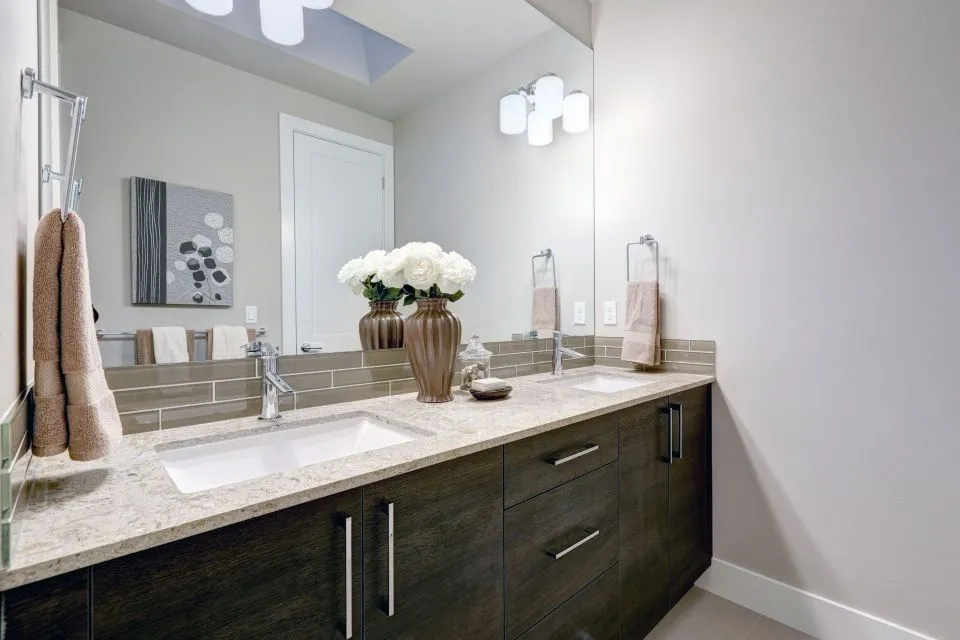
Polished quartz, porcelain, and stone remain popular for bathroom vanities because their reflective quality can make a compact room feel brighter. A polished wall panel or shower surround creates a clean, continuous look with fewer visual interruptions. The appropriate choice depends on slip considerations, product specifications, grout planning, and how the material will be used.
Shower walls and shower pans require more than a finish preference. Water management, slope, seams, drain placement, edge treatment, and substrate preparation all contribute to long-term performance. Homeowners planning a vanity, shower surround, quartz shower pan, or integrated sink can explore the available bathroom remodeling services while comparing finish options for each surface.
A polished finish is not automatically the best choice for every wet area, and a honed finish is not automatically slip-resistant. On floors and shower surfaces, use products specifically rated for that application. Wall panels, vanity tops, and shelves have different requirements from a shower floor, so the intended location should be discussed before fabrication begins.
Maintenance And Longevity Considerations
Routine care starts with using the cleaner recommended for the specific material. Mild, non-abrasive products are generally appropriate, while harsh acids, abrasive powders, and unapproved solvents can damage finishes or sealers. A soft cloth or non-scratch sponge is usually preferable to aggressive scrubbing.
Polished quartz and other low-porosity surfaces are often easy to wipe clean, but they still need prompt attention when exposed to staining substances. Honed quartz may require more frequent wiping in areas where grease or dark liquids are common because residue can be more apparent on a matte surface. Product-specific care instructions should take priority over general advice.
Sealing is relevant to many natural stones, especially porous varieties and surfaces used near sinks or food preparation areas. A sealer does not make stone indestructible, and it does not prevent etching on marble. It can reduce absorption and provide additional time to clean a spill. Resealing intervals vary according to the stone, finish, traffic, and sealer used.
Over time, both finishes can develop signs of use. Polished surfaces may show scratches or dull spots through changes in reflection. Honed surfaces may show darkening, burnishing, or areas of wear that blend into the low-sheen appearance. Professional assessment is helpful when a surface needs refinishing, repair, resealing, or a change in appearance.
Matching The Finish To Your Design Priorities
The most reliable selection process begins with the room rather than a trend. Consider cabinet color, backsplash texture, lighting temperature, hardware, flooring, and the amount of visual movement already present. If the room contains several bold elements, a honed finish may provide balance. If the design is restrained, polished stone can add dimension and light.
Touch and reflection are practical design factors. Some homeowners enjoy the smooth, cool feel of polished stone, while others prefer the velvety character of a honed surface. Viewing a full slab is especially important because small samples may not show how finish, pattern, and lighting interact across a large island or wall.
Finish can also be coordinated across a remodeling project. A kitchen may use polished quartz on the perimeter and a honed surface on the island, provided the materials work together. A bathroom might combine a matte shower wall with a polished vanity top. Mixing finishes adds interest, but the transition should appear intentional and should account for cleaning and maintenance differences.
Before finalizing the order, ask to review the actual slab or product sample, finish availability, lead time, edge options, seam locations, and care requirements. Accurate field measurements and templating ensure that the selected finish is carried consistently through sink cutouts, backsplashes, shower features, fireplace surrounds, and custom pieces.
A Practical Finish Selection Checklist
Use these factors to narrow the decision before meeting with a countertop professional:
- Choose polished surfaces when you want stronger light reflection, richer visual depth, and a traditional finished appearance.
- Choose honed or matte surfaces when you prefer low glare, a softer texture, and a more relaxed contemporary style.
- Match the finish to the material’s care requirements, especially for marble, limestone, granite, soapstone, and other natural stones.
- Consider where the surface will be installed, since a vanity top, shower wall, kitchen island, and shower floor have different performance needs.
- Review a full-size slab or large sample under the lighting used in your home before approving fabrication.
A professional consultation can turn these preferences into a workable specification. The process may include material selection, color and pattern review, field measurements, digital or physical templating, edge profiling, sink planning, seam placement, fabrication, and installation.
At The Countertop Store, finish selection can be coordinated with custom countertops and related surfaces throughout the property. That may include a kitchen island, bathroom vanity, shower wall, quartz shower pan, integrated sink, fireplace, mantel, outdoor kitchen, or furniture piece. The goal is to select a material and finish that suit the design while remaining practical for the way the space is used.
Honed and polished finishes offer two distinct ways to express the same material. Polished surfaces emphasize reflection and pattern, while honed surfaces provide a quieter, softer appearance. The better choice is the one that aligns with your maintenance habits, material, lighting, room function, and long-term design goals.
Bring your slab ideas, room photos, cabinet samples, and questions about maintenance to The Countertop Store serving North Little Rock and surrounding areas. Schedule a consultation to compare honed and polished samples, review fabrication options, and create a countertop or remodeling surface tailored to your home.