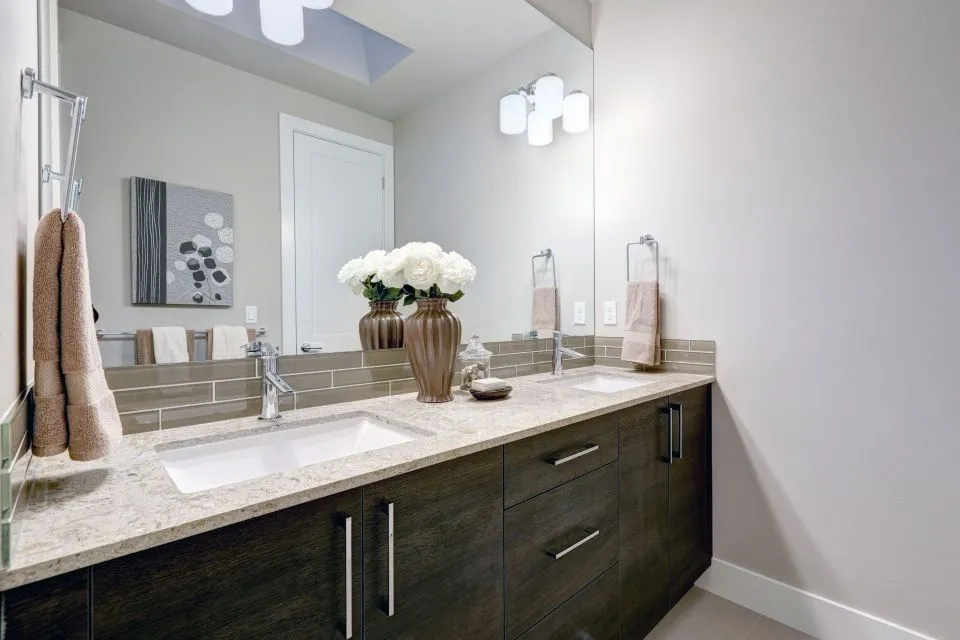
Choosing the right countertop material for a home office desk
Australia's home office landscape has shifted permanently. With professionals in Sydney, Melbourne, Brisbane, Perth, and Adelaide now splitting their week between corporate towers and spare bedrooms, the humble desk has become a serious design decision. Selecting the right surface for that workspace is no longer a matter of grabbing any flat board from a flat-pack shop. It shapes how you type, how you handle a morning flat white, how light falls during video calls, and how the room photographs when clients visit.
A home office desk is a working countertop. The same principles that guide a kitchen bench or a bathroom vanity apply: the material needs to handle daily abrasion, resist stains from pens and coffee, and stand up to the weight of monitors, printers, and the occasional leaning elbow. Add the unique demands of an Australian climate — bright UV, sticky coastal humidity, and dust drifting in from the garden — and the choice becomes more interesting than it first appears.
Daily use and durability demands
A desk sees more contact than almost any other surface in the house. Hands rest on it, forearms brush across it, mugs coast over it, and hard objects drop on it without warning. The material you pick has to absorb all of this without scarring or staining within the first six months.
Scratch resistance is the first filter. Quartz and Dekton rank highest because they are engineered under extreme heat and pressure, producing a dense, non-porous surface. Granite is naturally hard, though softer veining can chip if a heavy stapler lands edge-on. Marble scratches easily and develops a patina many people love, but it shows wear faster than engineered alternatives. If your daily routine involves sliding a laptop across the surface or stacking paperwork, this matters more than colour or price.
Stain resistance is the second filter. Pens, highlighters, turmeric-spiked lunches, and coffee rings all threaten an unprotected surface. Engineered quartz is non-porous, so most liquids wipe away with a damp cloth. Natural stone usually requires sealing once or twice a year to keep the same performance. Porcelain and Dekton are fully vitrified and essentially impervious, which suits anyone in Adelaide or Perth who treats their home office as a long, sunny studio.
Comparing popular materials for desk surfaces
Once you know what you need from the surface, the shortlist comes down to a handful of materials that consistently perform well as desk countertops. Each has trade-offs in feel, weight, and long-term appearance.
| Material | Scratch Resistance | Stain Resistance | Heat Tolerance | Typical Look | Approximate Cost (per m², installed) |
|---|---|---|---|---|---|
| Engineered Quartz | Very High | Very High | Moderate (avoid direct heat) | Even, modern, many colours | $450 – $750 |
| Dekton | Very High | Very High | Exceptional | Sleek, ultra-thin profiles possible | $600 – $900 |
| Granite | High | High (after sealing) | High | Natural veining, unique slabs | $400 – $700 |
| Porcelain (sintered) | High | Very High | Very High | Matte or polished, stone-like | $550 – $850 |
| Marble | Moderate | Low (requires sealing) | Moderate | Classic veining, soft patina | $500 – $900 |
| Solid Timber / Butcher Block | Low–Moderate | Low (needs oiling) | Low | Warm, natural grain | $300 – $600 |
Quartz is the safe all-rounder. It suits almost any home office style, from a renovated Queenslander in Brisbane's western suburbs to a contemporary apartment in inner Melbourne. Granite brings genuine uniqueness because no two slabs are identical, which appeals to people who want a one-off piece. Porcelain and Dekton are thinner, lighter, and ideal for floating desk installations or slim-line joinery. Marble remains the connoisseur's choice, accepting that it will slowly tell the story of every workday. Butcher block adds warmth to heritage homes in eastern Sydney and leafy Adelaide.
Aesthetic and workspace design considerations
A desk is rarely hidden in a cupboard. In most Australian homes, it sits where guests can see it, framed by a window or pressed against a wall that doubles as a video-call backdrop. The material therefore carries visual weight, sometimes literally.
Colour and tone set the mood of the room. Pale quartz with subtle veining brightens a south-facing study in Hobart, where daylight can be grey for weeks at a time. Dark granite or honed black porcelain adds drama and conceals the dust that drifts in from a sea breeze in Fremantle. If the desk sits against a brick wall in a converted warehouse loft in Sydney's Inner West, a warm-toned marble can soften the industrial edge.
Edge profile matters more than people realise. A square edge reads modern and clean, which suits minimalist offices in newer Perth builds. A bullnose or eased edge feels softer and more traditional, working well in federation-era renovations across Melbourne's inner north. For desks that double as a standing workstation, a thicker edge with a waterfall side can disguise the underlying cabinetry and create a furniture-grade finish.
Reflectivity also plays into video calls. A polished surface bounces overhead light back into the camera during long meetings. Honed or matte finishes reduce glare and flatter skin tones on screen, which is why honed Dekton has become a favourite for executive home offices in Brisbane's river-side suburbs.
Climate and environmental factors across Australia
Material choice should reflect the room's microclimate, not just national averages. Coastal Queensland humidity, dry interior heat, and the cool damp of a Tasmanian winter each push the decision in a different direction.
Heat and UV exposure are the biggest silent threats. Direct sun through a north-facing window in a Darwin home office will bleach organic materials and weaken adhesives on laminate edges. Stone and sintered surfaces handle this well, but timber desks fade and dry out unless protected by curtains or low-E glazing. Anyone in inland New South Wales, where summer temperatures regularly push past forty degrees, should treat heat tolerance as a non-negotiable feature.
Humidity is the second environmental factor. Engineered quartz and porcelain hold their shape and surface integrity in coastal air, which is why they're popular in homes around the Mornington Peninsula and the Gold Coast. Solid timber needs to acclimatise before installation and benefits from stable indoor humidity between forty and sixty per cent. Marble tolerates humidity but is vulnerable to salt-laden air on a verandah-adjacent study, where salty residue can etch the polish over time.
Dust and grit are an underrated concern in regional Australia. A honed surface hides fine red dust far better than polished, which matters for home offices in places like Alice Springs, Dubbo, or the Adelaide Hills where a dust storm can coat the desk by lunchtime.
Cable management, weight, and functional integration
A desk is part furniture, part workstation. The countertop has to play nicely with cable cutouts, monitor arms, charging pads, and the occasional under-desk treadmill.
Weight is a hidden cost. Granite and quartz slabs over two metres long require reinforced cabinetry and often two people to install. Porcelain and Dekton are lighter for their thickness, which simplifies the joinery and opens up options for wall-mounted or cantilevered desks popular in compact Sydney apartments. Solid timber is the lightest of the premium options but flexes more over long spans, so it usually needs a centre support.
Cable routing needs to be planned before fabrication. Templates for grommets, channels, and pop-up power modules are best cut at the workshop, not drilled by hand in the home office with the carpet still down. Discussing layout during templating avoids the awkward after-the-fact drilling that cracks porcelain and chips stone.
Integrated features such as wireless charging pads, recessed monitor risers, or a built-in document slot are easier to add when the fabricator sees the full design brief. Many Australian homeowners now commission bespoke desks that combine a stone surface with timber legs or steel frames, creating a hybrid piece that suits both modern apartments and heritage homes.
Maintenance habits that extend surface life
The best material still needs basic care, and the routine differs depending on what you install.
Wipe daily with a soft cloth and a pH-neutral cleaner. Avoid bleach, vinegar, and citrus sprays on marble and limestone because they etch the polish. Use coasters under mugs and a tray under pens to keep the surface free of micro-scratches. Re-seal natural stone annually or hire a stone-care professional if the desk is in heavy use. Keep direct heat sources like laptops, chargers, and desk lamps on trivets or felt pads.
Quartz and Dekton are forgiving. Spills, pen marks, and coffee drips all come up with mild soap and water. They do not need sealing, which suits busy professionals who would rather not add another yearly task to the calendar. Porcelain behaves similarly, though installers should be told about any underfloor heating because the slab expands at a different rate to the cabinetry below.
Timber and butcher block need the most attention. They benefit from a monthly oil with a food-safe mineral oil or hardwax blend, especially in dry climates like Perth or inland South Australia. Scratches can be sanded out and the surface re-finished, which is part of their long-term charm. Plan a small maintenance kit — oil, soft cloth, fine sandpaper — to keep the desk looking its best across the years.
Budget, lead time, and installation realities
Countertop pricing in Australia varies widely depending on the slab origin, the fabrication complexity, and the installation access. A simple straight desk in standard quartz might land at the lower end of the figures shown in the table above, while a long, shaped, or mitred installation can push costs well into premium territory.
Lead time is also worth planning around. Most fabricators quote three to five weeks from templating to installation, but popular colours and exotic imports can stretch to ten weeks, especially during the spring renovation rush in Sydney and Melbourne. Order samples early and confirm availability before locking in joinery or painting around the workspace.
Installation access matters in older Australian homes. Narrow staircases in Victorian terraces, low doorways in post-war brick houses, and tight lifts in inner-city apartment towers all restrict slab size. A skilled fabricator will visit the site during templating to confirm what can physically fit and may suggest an alternative join or seam location to keep the desk looking clean.
Look for a fabricator who understands residential detail. Articles on Dekton's heat-resistant qualities help if heat tolerance matters, while anyone weighing up long-term performance can learn from quartz in everyday settings. The same properties that protect a kitchen bench protect a hardworking desk.
Practical pointers for a confident selection
- Match the surface to your daily habits rather than to a magazine photo.
- Visit a slab yard in person to check colour, veining, and finish under real light.
- Take home samples and look at them against your wall paint and flooring.
- Confirm lead times and slab availability before signing off on joinery.
- Plan cable management, monitor arm mounting, and lighting during templating.
- Budget for sealing, maintenance products, and any edge detailing you want.
- Hire a fabricator experienced with residential joinery, not just large kitchens.