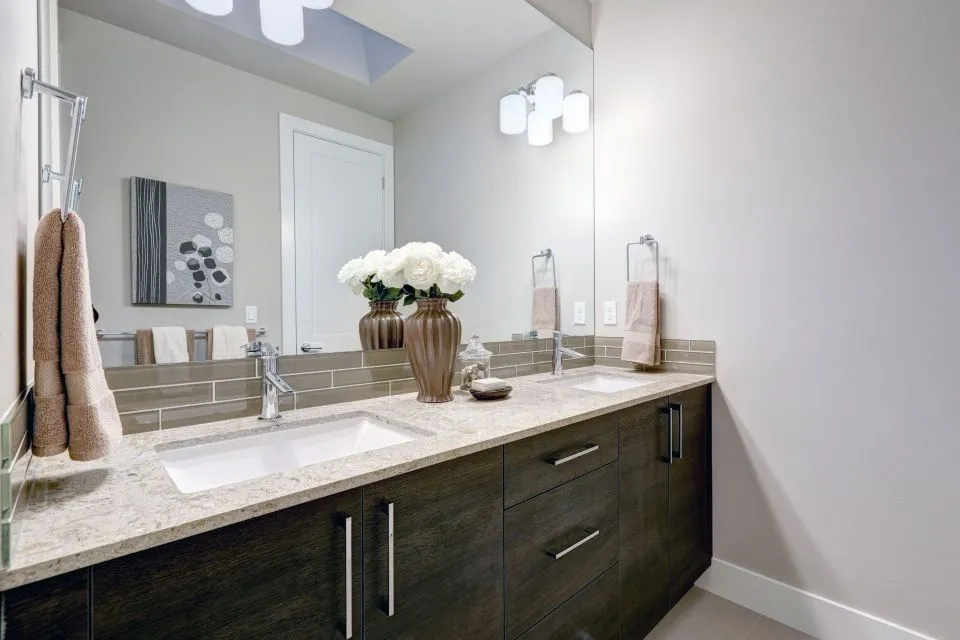
Choosing a countertop fabricator: portfolio and experience essentials
A new kitchen benchtop is one of the largest material investments you will make in a renovation, and the craftsman behind the slab matters as much as the stone itself. Across Brisbane, Sydney, Melbourne and Perth, homeowners increasingly ask for evidence of finished work before committing to a fabrication team. The portfolio is no longer a glossy afterthought; it is the single best predictor of how your own benchtop will look in five years.
Reviewing a fabricator's catalogue and track record takes time, but it saves thousands of dollars and weeks of frustration later. A well-documented body of work reveals tolerances, edge quality, seam placement and material familiarity at a glance. It also exposes whether the workshop handles the specific stone, colour and profile your project requires.
Reading project diversity and material fluency
A strong portfolio showcases breadth rather than repetition. Look for at least ten distinct installations spanning kitchens, bathrooms, laundries, alfresco servery tops and shower walls. Each environment stresses the stone differently — heat near cooktops, moisture around sinks, UV exposure on an outdoor kitchen under the harsh WA sun, or temperature swings on a Perth patio. A fabricator who has solved those challenges before will anticipate them on your job.
Material fluency is equally telling. The same worktop in quartz behaves differently to one in marble, granite, porcelain or Dekton during cutting, polishing and transport. Caesarstone and other engineered quartz lines popular in Australian renovations demand diamond tooling and consistent feed rates, while natural marble requires delicate handling around veining and fissure lines. A portfolio that shows successful work across multiple surfaces tells you the workshop owns the right blades, water jets and polishing pads for each.
A wide-ranging portfolio also points to healthy supplier relationships. Workshops that purchase slabs from several Australian distributors and import direct containers for premium lines handle material logistics confidently. Smaller operators who only stock one or two colours may struggle to source a matching slab if your first choice cracks during fabrication.
| Portfolio element | What it reveals | What to ask the fabricator |
|---|---|---|
| Variety of room types | Adaptability to moisture, heat and UV | "Can I see a similar installation to mine?" |
| Range of materials handled | Tooling, training and sourcing depth | "Which stone do you cut most often?" |
| Edge profile examples | Specialised router work and finishing | "Do you polish edges in-house?" |
| Seam placement photos | Templating accuracy on site | "How do you plan joins for my layout?" |
| Close-up texture shots | Slab inspection and quality control | "Do you select my actual slab?" |
This gives you a quick reference when scrolling through gallery pages. If any row is missing from the fabricator's website, treat it as a prompt to ask directly before signing a quote.
Spotting craftsmanship in close-up photography
Wide-angle kitchen shots look impressive but rarely tell the whole story. The real evidence hides in close-ups of mitred corners, undermount sinks, waterfall edges and integrated drainer grooves. Zoom in on the lighting reflections across the surface — consistent sheen means proper calibration of the polishing heads, while patchy gloss points to rushed finishing.
Pay particular attention to how veined stones are book-matched on waterfall panels. In a Brisbane riverside apartment we inspected, the fabricator had aligned a single Calacatta vein across the splashback and down the return, creating a single flowing line. That level of planning only emerges from careful slab selection and templating, not from generic digital fabrication.
Check the corners too. Tight, chip-free mitres around waterfall ends and L-shaped islands take time and skill. Hairline chips, dull edges or uneven returns suggest the team rushed the final pass. When reviewing older projects, ask whether the edge profile has held up after years of use — a 20 mm pencil round on a busy family island in Melbourne's eastern suburbs should still feel smooth, not pitted or wavy.
Verifying technical capability and workshop standards
A polished gallery can mask an under-equipped workshop. Ask whether the fabricator cuts with a CNC saw, waterjet or both, and whether they own or outsource templating. Digital templating using laser or photogrammetry tools has become standard across Australia, and a team that still uses cardboard strips may struggle with complex curves or waterfall panels.
Check whether the fabricator offers in-house slab inspection. Larger operations in Sydney and Adelaide now require clients to view and approve their specific slab before cutting, especially for natural stone where colour variation runs high. A workshop that photographs each reserved slab and emails the customer for sign-off demonstrates accountability that smaller operators sometimes skip.
Confirm fabrication tolerances. Standard industry allowance sits around 1.5 to 2 mm for seam gaps, but premium installers aim for under 1 mm. Inquire about seam placement strategy: good fabricators plan joins at sink corners or cooktop cut-outs where they disappear, rather than across open spans where crumbs and water collect.
Reputation, references and word-of-mouth signals
Photographs only capture one moment. To understand how a benchtop performs over years, talk to past clients directly. Reputable fabricators will share references from kitchens installed three, five or ten years ago, and will not mind a quick phone call. Avoid anyone who refuses to connect you with previous customers.
In regional centres like Geelong, the Central Coast or the Sunshine Coast, word travels fast through trade networks. Ask your cabinetmaker, plumber or builder which fabricators they trust — tradespeople see the long-term results of poor joins, stained seams and misaligned sinks long after the homeowner has signed off. A builder who has used the same team for a decade is endorsing more than skill; they are endorsing reliability under pressure.
Online reviews on Australian platforms reveal patterns, but read the negative ones closely. A fabricator with one or two complaints about delays is normal during peak renovation season, particularly between September and January. A pattern of broken slabs, incorrect cuts or unresolved warranty claims is a clearer warning sign than any single bad review.
Local sourcing, lead times and climate awareness
Stone sourcing differs noticeably across Australian states. NSW and Victoria enjoy the widest range of local distributors, meaning shorter lead times on Caesarstone, YDL Stone and Smartstone products. Western Australia and Tasmania rely more heavily on east-coast freight, so builders and renovators in Perth and Hobart should plan an extra two to four weeks for slab delivery and fabrication.
Climate matters too. Outdoor kitchens in Brisbane and the Gold Coast face intense summer humidity, salt spray from nearby waterways, and prolonged UV exposure. A fabricator experienced with these conditions will recommend UV-stable resins, sealed mitre joints and specific adhesives that resist thermal cycling. The same stone in a climate-controlled Adelaide kitchen can be finished with a different bonding approach.
Insist on Australian-made cabinetry compatibility. Local carcasses often use 18 mm or 32 mm board systems with slightly different tolerances than imported flat-packs. A fabricator who regularly measures for local cabinetmakers will template accurately first time and avoid costly return visits.
Comparing quotes, warranties and aftercare
A lower quote often hides lower-grade workmanship, subcontracted cutting or imported materials of uncertain origin. Compare quotes line by line: which stone brand and batch, which edge profile, which sink and cooktop cut-outs, which splashback height, and whether the price includes templating, delivery, installation and rubbish removal. Vague line items are a flag, not a savings.
Warranty terms reveal confidence. Look for written coverage on seams, against cracking and against resin discolouration, ideally for ten years on engineered quartz and five on natural stone. Labour coverage is more meaningful than stone replacement alone — stone is rarely the failure point, but poor installation often is.
Aftercare guidance separates the best fabricators from the rest. A team that emails cleaning instructions, recommended sealants and a maintenance schedule for your specific stone is investing in your long-term satisfaction. Before booking your templating visit, you can Contact the workshop to confirm what documentation they provide post-install.