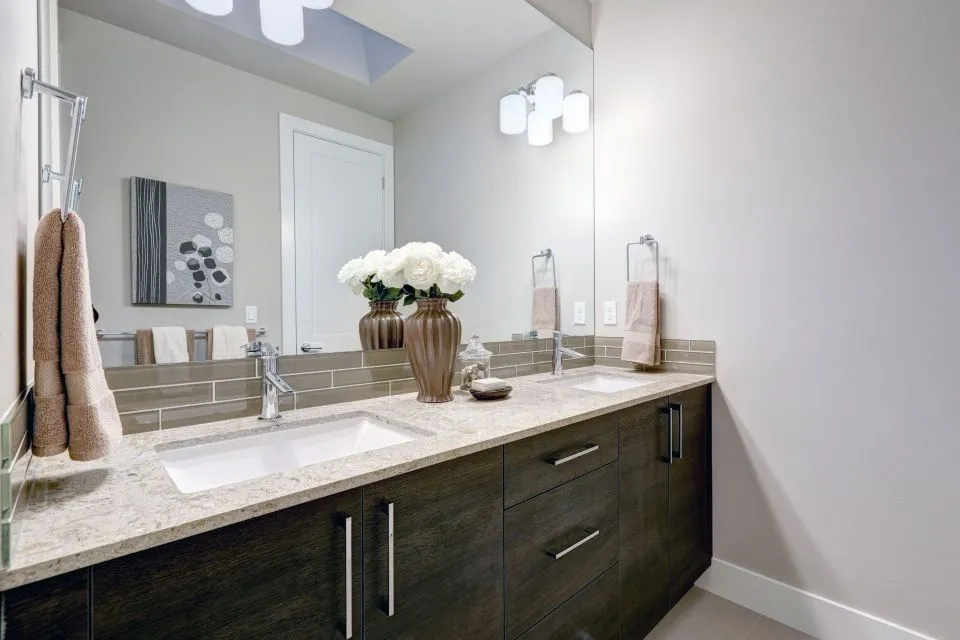
Choosing Natural Stone for a Dark Cabinetry Kitchen
Dark cabinetry can give a kitchen a rich, architectural feel, but the benchtop has to do more than fill the gap between cupboards. It controls how much light is reflected around the room, sets the visual temperature, and can determine whether the space feels sophisticated or gloomy. Natural stone offers plenty of character, yet every slab has its own veining, undertones, porosity and maintenance requirements.
For an Australian renovation, the decision also needs to account for strong sunlight, open-plan living, busy family use and the way local stonemasons price fabrication. Whether the project is a Melbourne terrace, a Brisbane extension or a coastal home near Perth, the right stone should suit the room’s light, the household’s habits and the practical demands of daily cooking.
Start With The Cabinet Undertones
Black, charcoal, navy and deep green cabinets do not all behave in the same way. A blue-black kitchen can look sharp with a cool white marble, while brown-black timber cabinetry often sits more comfortably beside cream, beige, taupe or gold-toned stone. Place a door sample next to several stone options in daylight before making a decision. Showroom lighting can disguise yellow, pink or blue undertones.
The floor, wall paint, tapware and appliances should be considered at the same time. A dark kitchen with pale flooring may need a stone with enough warmth to connect the two areas. If the floor is timber, a greige or softly veined benchtop can create a smoother transition than brilliant white. In a compact Sydney or Melbourne kitchen, a reflective pale surface can also bounce daylight into corners that dark joinery would otherwise absorb.
Contrast is useful, but it does not have to be extreme. A charcoal granite with silver and soft white flecks can create definition without the starkness of a pure white slab. Conversely, a heavily patterned stone may be the best choice when the cabinetry is plain and handleless. The aim is to establish a deliberate relationship between the stone and the joinery rather than selecting a surface in isolation.
Read The Slab, Not Just The Sample
Natural stone is quarried, so colour and pattern vary from slab to slab. A small showroom sample may show the general family of a material but cannot reveal a long vein, a cloudy patch or a change in background colour across a full island. Ask to view the actual slab, or at least high-resolution images of the slabs allocated to the job, before approving the order.
Granite is often a confident choice for dark cabinetry because it offers excellent scratch and heat resistance, along with patterns ranging from quiet speckling to dramatic mineral movement. Black granite can look sleek, although honed finishes may show fingerprints and pale marks more readily than a polished surface. Leathered granite adds texture and can soften an otherwise glossy, high-contrast kitchen.
Marble brings distinctive veining and a softer, more luxurious appearance. White and grey varieties can brighten dark cupboards, while green, brown or burgundy marbles create a more layered scheme. Marble is porous and can etch when exposed to acids such as lemon juice, vinegar or some cleaning products. That change is part of the material’s character for some households, but it is a poor fit for anyone expecting a permanently uniform finish.
Soapstone and dark quartzite are worth considering when a deep, grounded look is preferred. Soapstone has a smooth, tactile surface and develops a patina, while quartzite can deliver marble-like movement with strong everyday durability. Confirm the stone’s identity with the supplier: similar names are sometimes used loosely, and true quartzite should not be confused with engineered quartz.
Consider Australian Light And Living
Australian homes often receive intense natural light, particularly through north-facing glazing and large open-plan areas. Direct sun can make a polished surface appear brighter at certain times of the day and can emphasise every reflection from pendant lights, windows and stainless-steel appliances. Take stone samples outside or near the project’s actual windows to see how the colour changes from morning to afternoon.
Heat and outdoor entertaining are also relevant. In Brisbane and northern New South Wales, a kitchen may open directly onto a patio or barbecue area, so a dark internal benchtop needs to work with exterior paving, outdoor cabinetry and strong summer glare. In Perth, pale mineral veining can pick up the warm tones of limestone, timber and sandy landscaping. Coastal homes may benefit from a surface and edge detail that do not visually compete with bright walls and ocean light.
Natural stone still needs sensible care. Use trivets for very hot cookware, wipe spills promptly and follow the fabricator’s advice about sealing. Sealer reduces absorption; it does not make marble or limestone completely stain-proof. A busy household that wants minimal upkeep may prefer a dense granite or quartzite over a softer calcareous stone, particularly around a sink, cooktop or island seating area.
Australia’s engineered-stone market has also changed significantly since the national prohibition on the manufacture, import and installation of engineered stone benchtops began on 1 July 2024. Natural stone remains available, but buyers should still ask for clear product information, safe fabrication practices and evidence of responsible dust control. A reputable stonemason should be able to explain what the slab is, where it is being cut and how installation will be managed.
Plan The Cut, Edge And Splashback
The most attractive slab can lose its impact if the layout ignores its movement. Veins should be positioned intentionally across the island, waterfall ends and main run of cabinetry. A fabricator may be able to book-match adjoining pieces, align a strong diagonal vein or place a quieter section beneath the sink. These choices can increase material use and cost, so they should be discussed before templating.
Edge profiles influence the character of dark cabinetry. A simple pencil edge or small arris keeps the kitchen contemporary, while a slightly eased edge feels comfortable in a family home. Thickened mitred edges can give a substantial island a furniture-like appearance, but they require precise fabrication and may reveal a mismatch if the stone pattern is difficult to align. Rounded edges are practical where children move around an island frequently.
The splashback deserves equal attention. A full-height slab splashback can extend the stone’s pattern up the wall and make a dark kitchen feel taller, while a tiled splashback may introduce colour and texture at a lower cost. If the benchtop has dramatic veining, a restrained splashback often prevents the room from becoming visually busy. Integrated sinks and quartz shower pans are among the custom surface options available through the company’s background, although the same principles of accurate measurement and careful finishing apply to any stone project.
Allow space for tap holes, power points, hotplates and appliances before the template is finalised. Australian appliance dimensions are not always identical to imported cabinetry systems, and a last-minute change can affect both the stone cut-out and the cabinet support below. A professional measure should verify walls, corners, overhangs and uneven surfaces rather than relying solely on the cabinetmaker’s drawings.
Check The Quote And Installation Details
A natural-stone quote should explain more than the price per square metre. Ask whether it includes the slab, delivery, digital templating, cut-outs, edging, joins, sealing, installation and disposal of the old benchtop. Clarify whether the quoted material is a full slab or an allowance, because a large island may require an additional slab even when the total calculated area appears modest.
Local market conditions can affect pricing. A stonemason in regional Queensland may have different freight and scheduling costs from a fabricator in metropolitan Melbourne, while a remote Western Australian project may require longer lead times for slab delivery. Renovation work is commonly coordinated among a cabinetmaker, plumber, electrician and stone installer, so confirm who is responsible for each stage. A reliable tradie will identify access issues early, especially in apartments, narrow terraces and homes with steep driveways.
Before installation, inspect the slab for the agreed colour and pattern, and confirm the join locations. Dark stones can make joins less noticeable when the pattern is quiet, but polished surfaces may still show a fine line under certain lighting. Protect nearby floors and cabinetry during fitting, and avoid loading the new benchtop until adhesives and joins have fully cured. If an existing laminate surface has a scorch or burn mark, a useful burn mark guide can help distinguish a cosmetic issue from damage that requires replacement.
Questions To Take To The Slab Yard
- What is the stone’s exact geological or commercial name?
- Can the allocated slabs be viewed before fabrication?
- Which areas are most likely to show staining, etching or fingerprints?
- Is sealing included, and how often should it be renewed?
Details To Confirm Before Templating
- Island overhangs, seating clearances and cabinet support
- Sink, cooktop, tap and power-point positions
- Vein direction, joins and waterfall-end layout
- Access, installation timing and protection of finished surfaces
A dark cabinetry kitchen usually benefits from a benchtop that brings light, texture or controlled contrast into the room. The best natural stone is not necessarily the palest or most expensive slab. It is the one whose undertone suits the joinery, whose pattern can be fabricated successfully, and whose maintenance needs match the way the household cooks and entertains. Careful slab selection and a detailed installation plan will keep the finished kitchen looking intentional long after the renovation dust has settled.