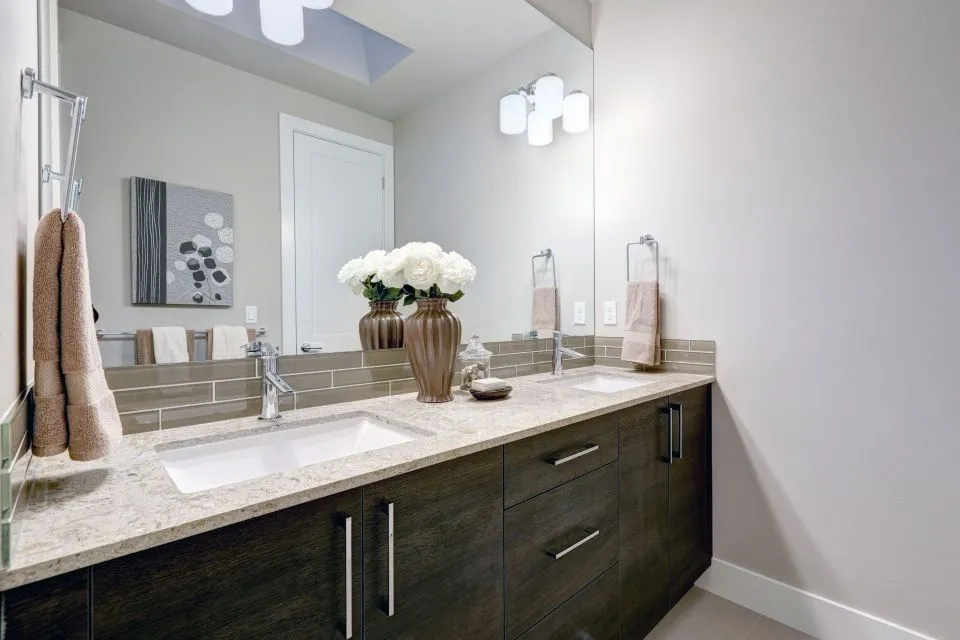
How a leathered granite finish keeps fingerprints out of sight
Most Australian families shop around for stone benchtops expecting the glossy magazine look. The showroom gloss fades the moment a toddler presses both palms flat on the surface, or someone hauling groceries sets down a wet tote. Smudges become a constant backdrop in homes where cooking happens daily. Granite with a leathered finish flips that script. Instead of catching every droplet of oil and pad of a fingertip, the surface absorbs the visual evidence of life happening around it. In a country where kitchens typically open onto alfresco dining areas and the climate encourages plenty of indoor-outdoor movement, that forgiveness carries real weight.
Australian weather shapes how surfaces are used more than most newcomers realise. Humid mornings in Brisbane, dry heat in Adelaide, salt-laden breezes along the Mornington Peninsula coast — each condition affects how a benchtop looks and how often it needs wiping. Polished granite throws fingerprints, water spots and oily smears back at you under overhead downlights. A leathered surface breaks that reflection, softening the contrast between clean areas and the trails left behind between cleans.
Many owners also choose stone because they want something that ages gracefully. Marble etches, and some engineered surfaces can dull over years. Granite with a treated, slightly textured face keeps character without telling on the user. That balance — beauty plus a tolerance for daily chaos — explains why the leathered look has spread beyond boutique renovations into mainstream kitchen projects across suburban Australia.
Modern diamond brushes can now produce a uniform, soft-touch surface on granite slabs that once would have been reserved for honed finishes. Homeowners have a genuine choice between mirror polish, matte hone, and leathered treatment without compromising on slab selection.
What a leathered finish actually is
A leathered surface is not simply rough or unfinished. The treatment starts with a honed slab, which is stone that has been ground flat without the final polishing stage. Diamond-tipped brushes move across the stone, taking off the softer minerals and leaving the harder components in slight relief. The result feels like suede or fine leather under the fingertips. Compared to a truly flamed or bush-hammered surface, it remains smooth, but it carries enough micro-texture to scatter light.
The process preserves the natural movement within granite. Veins, feldspar flecks and quartz clusters keep their individuality, but instead of leaping out under reflections, they sit quietly within the slab. Colours read more like a landscape painting than a glossy photograph. This is why designers in places like Sydney and the inner Brisbane suburbs often recommend the leathered look for kitchens where natural stone is meant to be touched rather than worshipped.
The technique is sometimes called antiqued or brushed depending on the fabricator. All three names refer to the same family of treatments. The slight unevenness across the slab is not a defect — it is the entire point, lending warmth and authenticity that polished granite can struggle to convey in spaces with lots of natural light and timber.
How texture scrambles the look of fingerprints
The core reason fingerprints vanish on a leathered surface comes down to light. A polished benchtop behaves almost like a dark mirror. Skin oils leave a thin film on the glass-smooth face, and because the rest of the slab is highly reflective, the film becomes visible as a darker patch. Cut a glossy black car in dim light and you see the same effect: any contact becomes a mark.
A leathered granite benchtop scatters incoming light across thousands of tiny facets. Oils from a hand still land on the stone, but the surrounding area no longer shows a clear reflection, so the change in surface reflectance becomes much harder to spot. Daylight through a window, recessed LED downlights and pendant lamps hit the slab and bounce off in many directions instead of one. Your eye cannot lock onto the residue.
The same physics helps with water. A dripping tap, a glass pulled from the fridge, even a kid's juice cup — on polished surfaces these leave obvious rings or tide marks. On the leathered face they still occur but merge into the natural variation of the stone as the water dries. Many homeowners report going from wiping the bench every couple of hours to a quick once-over in the evening.
The texture also masks fingerprints on darker granites particularly well. Absolute black, charcoal-toned or deep green stones tend to show every touch when polished. Once leathered, those same slabs become far more forgiving. For households that entertain often or have teenagers doing homework at the kitchen island, that practical difference is enormous.
Day-to-day cleaning and maintenance
A leathered surface still needs care, but the routine is simpler than most people expect. Warm water, a soft microfibre cloth and a pH-neutral stone cleaner handle daily spills. Abrasive pads should be avoided because they can polish up small patches and ruin the uniform texture. Harsh chemicals like undiluted bleach will etch the feldspar and dull colour over time.
For households that bake often or cook with oils, the leathered face is generally easier to live with than a mirror polish. Olive oil flicked from the pan, paprika ground straight onto the bench, butter smears from rolling dough — on glossy slabs these show up as a temporary dark patch until cleaned. On the leathered surface, the spill still needs wiping, but there is no emergency quality to it. The change in colour is subtle, and the residue absorbs into the micro-pores until the next wipe-down.
Sealing is recommended once a year for most granites, leathered or otherwise. Quality impregnating sealers soak into the stone and reduce the chance of staining from wine, coffee or beetroot juice. Because the leathered texture has slightly more surface area than a honed or polished finish, sealers tend to soak in evenly, giving long-lasting protection without changing the feel.
For homes that combine indoor kitchens with covered alfresco benches, leathered granite across both creates a coherent look. The texture and colour read the same whether the slab is touched by afternoon sun on the patio or LED strip lighting inside. Cleaning habits stay consistent, and the surfaces meet expectations as you move between the two zones.
Climate, light and how Australian homes behave
Australian housing stock throws plenty of curveballs at benchtops. Classic Queenslanders in Brisbane suburbs like Paddington or Hawthorne lean on cross-ventilation and catch plenty of direct sun. Federation houses in Melbourne's inner east often combine pressed metal ceilings with dark timber kitchens that emphasise any smudge on a polished surface. Newer builds in coastal Queensland or Western Australia favour large banks of glass that flood the kitchen with light for most of the day.
Plenty of light is wonderful for living but punishing on reflective stone. The leathered finish accepts all that brightness without a constant shimmer of fingerprints. In homes where the kitchen island doubles as the homework station, the breakfast bar and the snack-prep area, anything that softens the visual clutter matters.
Coastal conditions add another consideration. Salt air, sea spray carried in through open windows, and high humidity encourage smears to set on glass-smooth slabs. The slightly porous surface of leathered granite gives those films somewhere to disappear into. For homes in beachside suburbs from Bondi to Cottesloe, this often tilts the decision towards the textured finish over the polished one.
Heat rarely affects granite itself. The stone tolerates harsh afternoon sun through west-facing windows without warping or discolouring. What heat does affect is the perception of the surface. A polished slab in full afternoon sun can feel almost sticky underfoot because every mark is amplified. A leathered surface under the same light simply looks like a softly textured piece of natural material doing its job.
Style choices and where the finish works best
Leathered granite pairs well with a wide range of kitchen moods. Soft timber floors, hand-glazed tiles and brushed brass tapware all settle into the texture comfortably. Modern matte cabinetry in deep navy, forest green or warm putty finds an easy companion in the muted reflection of a leathered slab. Even heritage-inspired spaces, including Hamptons-style kitchens popular across Sydney and Perth, work beautifully because the softened reflection lets shiplap walls, v-groove panels and soft white joinery hold their own without competing with the benchtop.
Consider the surrounding materials when choosing stone colour. Light granites with creamy backgrounds and gentle veining read as calm and almost linen-like. Darker granites shift toward a moodier feel — leathered black or near-black stone next to pale cabinetry produces a dramatic contrast that still does not show fingerprints between cleans. Patterned granites with bold movement look more painterly under the leathered treatment, because the scattered light softens sharp transitions within the slab.
For anyone weighing up the decision between a leathered or polished granite kitchen, the practical case for the textured finish is hard to argue against. The slabs keep their look intact between cleans, suit the bright open layouts common across Australian homes, and handle everything from afternoon tea out on the verandah to weeknight pasta prep without constant wiping. Anyone interested in seeing how this finish looks across full benchtop, splashback and island installations can browse the kitchen services on offer through fabricators who work the finish day in, day out.