Why a Marine-Grade Butcher Block Is Ideal for a Kitchen Near a Pool
An outdoor kitchen beside a swimming pool has become almost standard issue for new homes from the Gold Coast to the western suburbs of Perth, and the benchtop you choose for that space has to cope with conditions no indoor surface ever faces. Marine-grade butcher block has quietly become the favourite of builders and homeowners who want warmth, character, and a forgiving surface in a spot that cops splashes, salt, sun, and the occasional wet towel. Few materials handle that mix as gracefully, and the reasons are worth understanding before you commit to a slab.
A poolside benchtop is rarely just a chopping surface. It anchors the BBQ, the drinks bench, the morning coffee station, and the late-afternoon cheese board. Choosing something that performs well in that role without looking like a stainless steel galley means thinking differently about timber, adhesives, and finishes than you would for an interior kitchen.
What "Marine-Grade" Actually Means for a Kitchen Surface
Marine-grade timber is built to the same standard as the ply and boards used in boat hulls, deck fittings, and cabinetry that lives in salt spray. The grading refers to the adhesive bonding the layers or staves together, not the wood species itself. A WBP (weather and boil-proof) phenolic resin, or a similar marine-spec glue, is used in place of standard PVA, so the joints will not delaminate when they get wet and stay wet. The timber is also typically free of voids, with tight grain and minimal run-off between laminations.
That construction matters enormously when a benchtop is within a metre of a chlorinated or salt water pool. Splash zones stay damp for hours. Wet glasses, dripping thongs, and dripping ice buckets leave puddles that evaporate slowly. A standard kitchen butcher block, made with interior PVA, will swell, lift at the seams, and eventually split along the glue lines. A marine-grade board shrugs the same abuse off because the glue line is fundamentally waterproof.
The other half of the equation is the finish. Quality marine-grade butcher blocks used for outdoor kitchens are usually sealed with a food-safe oil, a hard wax oil, or a marine spar varnish rated for UV and water exposure. The finish takes the beating; the wood underneath stays stable. Re-oiling once or twice a year keeps the surface looking like new and adds another layer of moisture defence.
The Harsh Realities of a Pool-Adjacent Kitchen
A benchtop near a pool lives in a microclimate. Salt aerosols drift further than most people expect, especially around saltwater pools, which are the default in most Australian backyards from Brisbane down to the Mornington Peninsula. Chlorine vapour sits in the warm air just above the water and gets carried onto nearby surfaces by every breeze. Add sunscreen, sweat, acidic drinks like lemon water and Aperol, and you have a chemistry set attacking the benchtop every weekend.
Sun exposure is the second punishing factor. UV breaks down lignin in timber and degrades most oils and sealers if they are not UV-inhibited. A bench that sits in full sun from 9 am to 4 pm in a Sydney summer will bleach out, dry out, and roughen up far faster than the same board placed under a covered alfresco roof. Poolside kitchens that face north or west need a UV-rated topcoat and ideally some overhead cover, even a simple colorbond pergola.
Then there is the thermal cycling. A benchtop beside a pool goes from cool and damp at 6 am to hot and dry by 2 pm, then back to cool and humid after sundown as the pool gives off its stored heat. Timber that is properly stabilised handles that swing well; poorly seasoned boards cup and check. Marine-grade construction also tends to use thicker staves with longer grain runs, which move less across the day.
How Australian Conditions Shape Material Choices
Australian conditions are unusually tough on outdoor materials, and the trade has learned this the hard way. Coastal suburbs from Coogee to Mooloolaba deal with salt-laden sea breezes that travel several blocks inland. Inland pool zones, particularly in places like the Hills District or the Adelaide Hills, deal with dry heat and bushfire-season ember attack. Timber used outdoors in this country is almost always specified with marine or exterior-rated adhesives, even on small jobs like a window seat.
Termites, often called white ants, are another Australian-specific reason to choose a marine-grade product rather than a DIY butcher block kit from Bunnings. Marine spec boards are typically made from imported hardwoods or dense local species that are less attractive to termites, and the phenolic glues contain no starches that insects can digest. A standard interior-grade block, by contrast, is a known termite attractant if placed near a garden bed.
The comparison below shows how the most common poolside surfaces stack up against the conditions they actually face in Australian backyards.
| Surface | Splash Tolerance | Heat Tolerance | Maintenance | Look & Feel | Poolside Suitability |
|---|---|---|---|---|---|
| Marine-grade butcher block | High (with proper finish) | Moderate (needs UV protection) | Re-oil 1–2x yearly | Warm, natural, customisable | Excellent for covered or semi-covered kitchens |
| Granite | High | High | Seal every 2–3 years | Polished stone, cool to touch | Very good, but slippery when wet |
| Quartz (engineered) | Moderate | Moderate (resin can yellow) | Low | Modern, uniform | Good under cover, poor in direct UV |
| Porcelain slab | Very high | Very high | None | Sleek, contemporary | Excellent, but cold and hard |
| Dekton | Very high | Very high | None | Slim, architectural | Excellent, but pricey |
| Stainless steel | Very high | High | Wipe clean | Industrial | Functional but harsh in a backyard |
Local regulations also matter. Many Australian councils treat outdoor kitchens as part of the dwelling's floor area when they are roofed and have plumbing, which can affect approvals. Choosing a timber benchtop that meets marine standards helps future-proof the build if you ever extend the structure or sell.
How Marine-Grade Timber Stacks Up Against Alternatives
Granite and porcelain are the typical rivals for a poolside bench, and both perform brilliantly in pure durability terms. The trade-off is feel. Timber absorbs the clink of glasses, the chatter of guests, and the warmth of an arvo sun, while stone and steel tend to amplify every sound and feel chilly on a cool morning. For an entertaining-focused outdoor kitchen, the softer acoustic profile and tactile warmth of timber often win the room.
Quartz has become fashionable indoors, but its resin content reacts poorly to prolonged UV, yellowing and chalking within a season or two if used outside. Dekton and full-body porcelain handle everything the climate can throw at them, but they come at a price per square metre that puts them out of reach for many renovations, and they share the same acoustic hardness as granite. Marine-grade timber sits in a useful middle ground: serious performance, lower cost than high-end sintered stone, and a look that suits the relaxed feel of an Australian backyard.
It also repairs better. A deep scratch or a small burn on a stone bench usually means a full replacement of the slab. The same damage on a butcher block can be sanded out in an afternoon and re-oiled, which is a meaningful advantage for a high-use entertaining surface.
The Entertaining Edge for Alfresco Living
Outdoor entertaining is a way of life in Australia, and the benchtop is the centre of it. A marine-grade butcher block gives you a forgiving prep surface that takes a knife, a pizza wheel, and a stack of chopping boards without complaint, which matters when the same bench has to handle breakfast toast, lunch platters, and dinner prep in a single day.
It also photographs beautifully. The natural grain reads as relaxed and high-end in a way that grey stone sometimes does not, and it pairs effortlessly with the spotted gum decking, merbau screening, and bluestone paving that dominate new Australian builds. For homeowners planning a coordinated palette, timber ties the kitchen to the surrounding landscape in a way that stone rarely does.
Functionally, timber is also quieter underfoot and softer on dropped glassware than porcelain or granite. Around a pool, where kids are running barefoot and drinks are being carried with one hand, that softness is not a small thing.
Caring for a Hardworking Benchtop Near Water
A well-maintained marine-grade butcher block can easily last fifteen to twenty years beside a pool. The short list of habits that keep it that way is worth memorising.
- Wipe standing water off the surface within an hour rather than letting it pool, especially around a saltwater pool.
- Re-apply a food-safe hard wax oil every six to twelve months, or sooner if water stops beading on the surface.
- Keep the bench under some form of cover, even a tensioned shade sail, to limit UV bleaching.
- Avoid leaving hot pots or trays directly on the wood; use a trivet.
The other piece of care is seasonal. Once a year, lightly sand the surface with a fine grit to remove weathering, then apply two fresh coats of oil. The process takes a Saturday morning and resets the look completely. Compared with the cost of replacing a cracked porcelain slab or a yellowed quartz top, the upkeep is gentle and well within the skill set of any homeowner who owns a random orbital sander.
Where to Use It and What to Pair It With
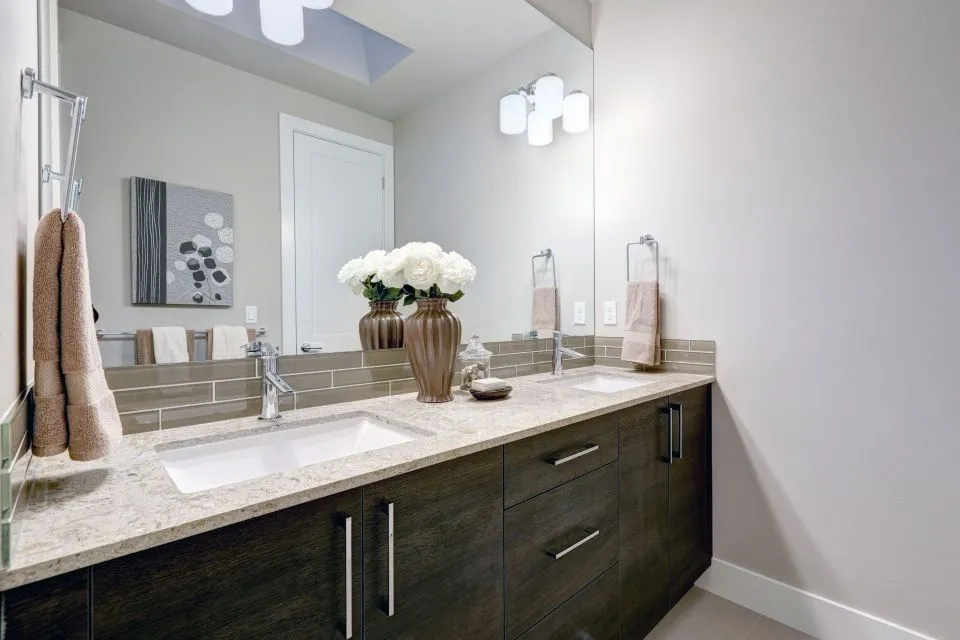
A marine-grade butcher block is not just for the main BBQ run. It works equally well as a bar leaner beside the pool steps, a prep island next to the smoker, or a serving surface on a covered alfresco. For pool houses that include a shower and a small vanity, the same timber can flow through to create visual continuity, and many fabricators will colour-match the vanity top and the kitchen bench for a calm, unified look. Homeowners planning a full outdoor renovation that includes new poolside amenities can coordinate the timber with the bathroom services on offer, keeping the palette consistent from splash zone to shower.
The best pairings locally are:
- Spotted gum or blackbutt battens overhead to echo the bench grain.
- Brushed brass or aged copper tapware that warms up alongside the timber.
- A stone or concrete kick plate along the wet edge to protect the most exposed part of the bench.
- Soft white or eucalypt-green cabinetry in the body of the outdoor kitchen to let the timber sing.
Marine-grade butcher block is one of those rare materials that genuinely earns its place beside a pool. It works hard, looks warm, and ages into the landscape rather than against it. For an Australian backyard built around outdoor living, that combination is hard to beat.