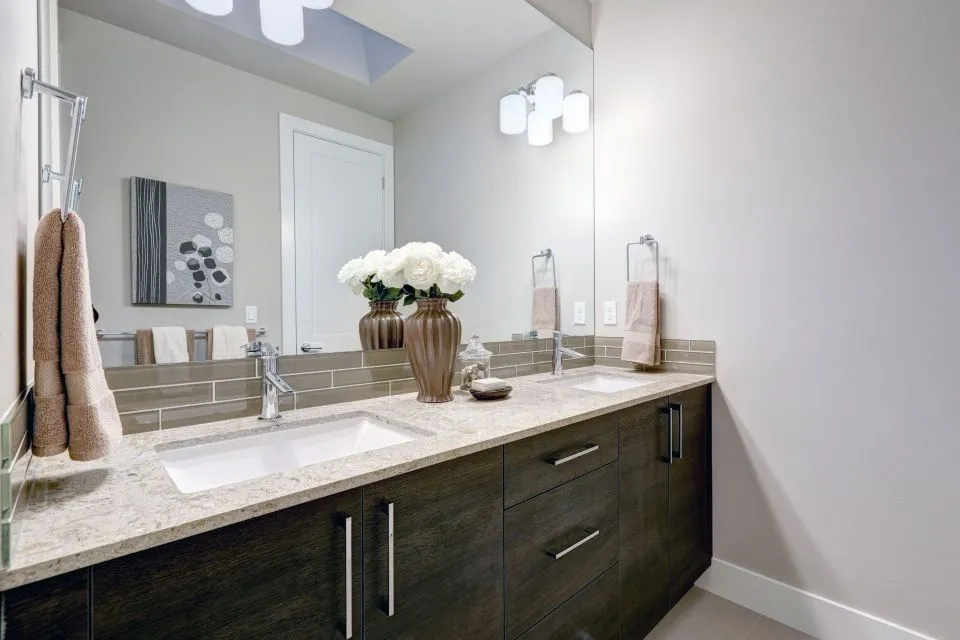
Countertop Works Beautifully in a Home Office
Across Sydney, Melbourne, and the newer suburbs of Brisbane, Australian households have spent the last several years carving out dedicated work zones inside their homes. The spare bedroom no longer doubles as a guest room; the dining table has been reclaimed for dinner. Instead, a proper workspace now anchors the back of the house, the corner of a renovated verandah, or a purpose-built shed out the back of a Queenslander.
When that workspace calls for a custom work surface, the choice of material matters more than many people first assume. A home office countertop is not quite a kitchen bench and not quite a desk from a flat-pack warehouse. It absorbs coffee spills, holds the weight of a monitor and printer, and becomes the daily platform for several hours of focused work. Engineered quartz has quietly become one of the most popular surfaces for these custom installations, and for good reason.
Quartz is a manufactured stone made from roughly ninety percent natural quartz crystals bound together with resins and pigments. Unlike slabs pulled straight from a quarry, every sheet is produced under controlled conditions, which gives it a consistency that natural stone rarely matches. That consistency translates directly into how the surface performs on a busy desk, where uneven texture or unpredictable porosity can become a daily frustration.
For Australians weighing up a study renovation, the material offers a blend of practicality and visual polish that fits both contemporary apartments and the more substantial family homes found across Adelaide, Perth, and Hobart. The sections below look at why quartz earns its place in a hardworking home office.
Built for daily work demands
A work surface in a home office copes with the same physical punishment as a kitchen, minus the hot pots. Monitors are dragged forward and pushed back. Laptops open and close on the same patch of bench hundreds of times a year. Cables rub across the surface, heels of a chair bump the edge, and the corner near the printer is forever collecting toner dust and paper scraps.
Quartz handles this kind of daily wear exceptionally well. The resin binders create a dense, non-porous surface that resists scratching from laptops, keyboards, and the ceramic mug that always seems to migrate from the kitchen. For home offices in shared family homes in suburban Melbourne or Perth, that scratch resistance is particularly useful when children decide the office bench makes an excellent drawing platform.
Edge profiles can be custom-fabricated to soften corners, which is helpful in compact studies where every square metre counts. Bullnose, pencil round, and bevelled edges are all available from most fabricators, and the engineered nature of the stone means each cut is precise. There is no risk of a hidden vein running through a load-bearing corner, something that occasionally happens with natural stone and can complicate a desk installation.
Weight is one practical point worth noting. Quartz is heavier than timber or laminate, so any custom bench longer than about two and a half metres will need solid cabinetry beneath it. For homeowners converting a walk-in robe or a nook off a hallway, a fabricator can advise on reinforcement during the templating stage.
A surface that handles coffee, ink, and the occasional spill
Spills are inevitable in any workspace. The morning flat white tips sideways, a pen leaks, a child wanders in with muddy hands after cricket practice in the backyard. The question is not whether the bench will get stained, but how well it recovers.
Because engineered quartz is non-porous, liquids do not soak into the surface the way they do with granite, marble, or unsealed timber. Red wine, turmeric from a lunch wrap, beetroot juice from the health smoothie sitting on a coaster that someone forgot to use — most of these wipe away with a damp cloth and a mild detergent. Ink from a ballpoint pen, which is notoriously difficult to lift off timber, comes off quartz with a little isopropyl alcohol and no lasting mark.
This characteristic is especially valuable in Australian homes where open-plan living often places the home office close to the kitchen. In a renovated Brisbane Queenslander with the study opening off the dining room, or a Sydney terrace where the workspace sits next to the breakfast bar, the bench will inevitably cop its share of food and drink splashes.
Daily maintenance is minimal. Warm water, a soft cloth, and a non-abrasive cleaner are enough. There is no need for annual sealing, which is the routine requirement for granite and some other natural stones. For busy professionals working from a home study in Adelaide or Canberra, that low-maintenance profile is one less thing to remember on the weekend to-do list.
Australian climate considerations and quartz performance
Australia's varied climate creates specific demands for interior surfaces, and the home office is no exception. In Brisbane and the coastal strip of northern New South Wales, humidity climbs for several months of the year. In Hobart and the alpine regions of Victoria, winter brings condensation and chilly mornings. Perth and parts of South Australia face the opposite problem, with extremely dry conditions through summer and a fair amount of airborne dust.
Engineered quartz handles all of these conditions well. The non-porous structure means humidity cannot penetrate the slab, which protects against the warping and mould risk that affect some timber desks. Equally, dry air does not cause quartz to crack or split the way some solid surfaces can when moisture levels fluctuate.
Heat is worth mentioning separately. Quartz is more heat-resistant than laminate or vinyl, but it is not indestructible. Placing a laptop that has been running hard for several hours directly onto the surface is fine, but a hot mug fresh from the coffee machine should sit on a trivet. Most resin-bonded stones can discolour or develop a faint mark if exposed to sustained high heat. In Perth homes where afternoon sun streams through a west-facing window, positioning the desk away from direct glare is wise for both the worker and the bench.
For homes in bushfire-prone areas around the edges of Sydney or in regional Victoria, quartz also offers a degree of fire resistance that timber cannot match. It will not contribute fuel to a flame, which is a small but meaningful consideration for anyone building a freestanding home office in a garden studio.
Style that complements Federation cottages and modern apartments
A home office is a visible part of the home, even if only the household sees it. The bench needs to look considered rather than temporary. Quartz offers an extensive range of colours and patterns, from pale Carrara-inspired whites with soft veining through to bold charcoal greys, warm taupes, and the increasingly popular concrete-look finishes.
In a Federation cottage in Sydney's inner west or a Californian bungalow in Adelaide's leafy suburbs, a soft white or marble-look quartz can echo the period detail without veering into pastiche. Pair it with a timber leg system in spotted gum or blackbutt, two timbers that are widely available and sustainably sourced in Australia, and the result feels grounded and intentional.
In a new apartment in Melbourne's Docklands or a townhouse in Brisbane's Fortitude Valley, a concrete-look or veined grey quartz pairs well with black steel framing and matte black tapware for an industrial edge. The uniformity of engineered stone also makes it easier to match slabs across longer bench runs or to continue the same surface into a built-in shelf, which is a common request in compact study nooks.
Lighting is a final design consideration. A polished quartz surface will reflect overhead task lighting, which can be helpful in darker studies but may create glare on screen. A honed or matte finish softens the reflection and hides fingerprints more effectively, an option worth requesting during the consultation with a fabricator. Many Australian suppliers offer samples to take home before committing.
Practical considerations before you commit
Choosing a quartz countertop for a home office is a decision that pays off in daily use, but a little preparation makes the installation smoother. The first step is accurate measurement and templating, particularly for built-in studies where the bench wraps around a corner or sits beneath a window. Most fabricators offer this service, drawing on the same approach used for kitchen services, and will produce a digital template before any cutting begins.
The second consideration is cabinetry. Quartz is heavy, and the cabinetry beneath it needs to be level, solid, and properly fixed. In older Australian homes, particularly weatherboard houses in Hobart or Brisbane where floors can be slightly uneven, shimming and bracing are often required. A reputable installer will check this during the site visit.
Lead times vary, but most custom quartz benches take between two and four weeks from template to installation, depending on the complexity of the cut and the availability of the chosen slab. Planning ahead avoids the frustration of having a workspace out of action longer than necessary.
Budget is the final piece. Quartz sits in the mid-to-upper price bracket compared with laminate or timber, but below many natural marbles and some exotic granites. For a custom home office bench in a standard study, most Australian homeowners can expect to pay somewhere between $600 and $1,200 per square metre installed, depending on the edge profile, cut-outs for cable management, and the chosen brand.
Below is a quick comparison of the most common work surface materials for a home office:
| Material | Durability | Maintenance | Cost (per m² installed) | Best for |
|---|---|---|---|---|
| Engineered Quartz | Very high | Low – wipe with damp cloth | $600–$1,200 | Long-term workspaces, humid climates |
| Natural Granite | High | Moderate – annual sealing | $500–$1,000 | Period homes, lovers of natural variation |
| Solid Timber | Moderate | Moderate – oil every 6–12 months | $400–$900 | Traditional studies, warm aesthetic |
| Laminate | Low to moderate | Low | $150–$400 | Budget renovations, short-term use |
| Concrete | High | Moderate – sealing required | $700–$1,400 | Industrial looks, custom shapes |
After weighing the options, the following points are worth keeping in mind when planning your workspace bench:
- Book a site consultation before finalising cabinetry, so the template accounts for any quirks in older Australian homes.
- Request a honed finish if your study faces strong afternoon sun or relies on overhead downlights.
- Confirm cable management cut-outs during templating, as retro-fitting them is messy.
- Choose a colour with some movement or veining if you want to disguise the small scratches that build up over years of use.
- Ask about off-cuts. Smaller leftover pieces are useful for matching window sills, floating shelves, or a small printer stand.
- Check the warranty offered by both the slab manufacturer and the installer, and keep the documentation in a safe place.
- Plan the desk position to avoid placing hot items directly on the surface, particularly in summer when items arrive from the kitchen already warm.
A well-chosen quartz bench turns a corner of the house into a proper place to work, and lasts long enough to outlive several laptops, careers, and the inevitable shift back to hybrid routines. For homeowners who want a workspace that looks deliberate and performs reliably, the material earns its place.