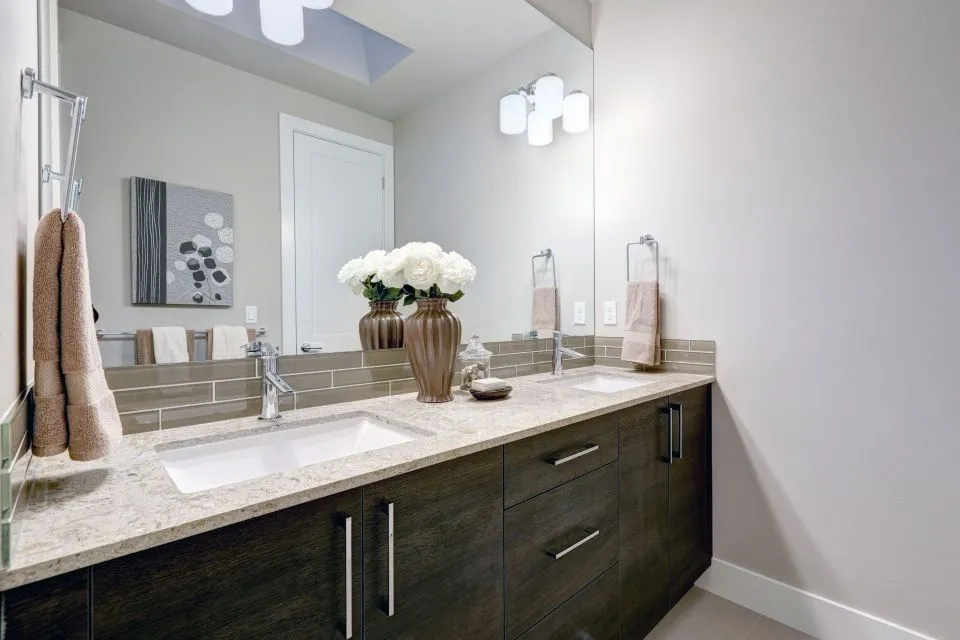
Why a Quartz Countertop with a Coarse Grain Looks So Much Like Real Stone
Quartz countertops with a coarse grain have become a quiet favourite among renovators who want the personality of stone without the unpredictability that comes with it. The look captures the speckled depth of granite and the soft movement of marble in a single surface, giving kitchens and bathrooms a layered, geological feel. Homeowners who once chased the rarest slabs from quarries now find that engineered quartz delivers a remarkably similar atmosphere in a far more consistent package.
The appeal in Australia is especially strong. Buyers from Sydney's leafy North Shore to the weatherboard homes of coastal Victoria are drawn to surfaces that look at ease in both modern renovations and heritage restorations. Coarse grain patterns offer visual texture that complements timber benchtops in Queenslander renovations as well as concrete floors in newer townhouses popping up around Brisbane's inner suburbs.
What separates a coarse grain quartz from the smoother, more uniform styles is the way the aggregates are blended during production. Larger fragments of quartz crystals and mineral chips are suspended throughout the slab, creating irregular speckles and veining. This deliberate irregularity is what gives the surface its convincing stone-like character.
For anyone weighing up a renovation, the choice often comes down to appearance, performance, and practicality. The following sections explore how coarse grain quartz achieves its natural look, why it suits Australian homes so well, and what to consider before committing to a slab.
Understanding Coarse Grain Quartz Patterns
Coarse grain quartz is defined by its visible aggregates. Rather than a flat colour or a subtle marbling, the surface shows clusters of mineral-like specks in varying sizes. These specks can mimic feldspar, mica, and other inclusions found in granite, giving the eye plenty to land on. Some patterns lean toward warm tones with cream, gold, and rust-coloured flecks, while others favour cooler greys, charcoals, and silvers.
The variation within a single slab is what fools the eye. Natural stone rarely presents a uniform background, so when quartz captures that randomness, the result reads as authentic. Designers in Adelaide's heritage suburbs often pair these slabs with shaker cabinetry and brass hardware, leaning into a transitional look that feels collected rather than catalogued.
Veining can be layered on top of the grain. Some manufacturers build long, sweeping lines that cut across the speckled background, echoing the drama of Calacatta marble. Others keep the grain tighter, producing a closer resemblance to honed granite or basalt. The choice influences whether the benchtop becomes the focal point or a quiet supporting player.
Because the grain is baked into the slab through industrial pressing, the pattern runs consistently from one end to the other. This consistency makes layout planning easier, particularly for long waterfall edges or expansive island benches. A benchtop that looks like stone but lays out like engineered material is a rare combination, and it explains why so many renovators are moving away from imported slabs.
How Modern Manufacturing Mimics Geological Formations
The process behind coarse grain quartz is a blend of geology and engineering. Crushed quartz, one of the hardest minerals on earth, is combined with polyester resins, pigments, and recycled glass or mirror chips. The mixture is poured into moulds and subjected to intense vibration and pressure, which compacts the aggregates into a dense slab. Heat cures the resin, locking everything in place. The result is a surface that is roughly ninety percent quartz by weight, with the remainder providing colour, pattern, and binding.
What makes coarse grain convincing is the way manufacturers vary particle size. By introducing chips in multiple grades, from fine dust to pea-sized fragments, the slab develops visual depth. Light catches the larger pieces, while finer particles fill the gaps. It is a careful balance, because too much variation reads as busy, while too little looks synthetic.
Breton technology, used by most major quartz producers, allows fabricators to control grain distribution with remarkable precision. Some factories now use digital scanning to replicate the veining of specific natural stones, then scatter coarse aggregates across that printed movement. The blending of engineered vein and organic-looking grain is what gives the latest generations of quartz their lifelike quality.
For homeowners, this means a benchtop that resembles a quarry-fresh slab of granite without the fissures, pitting, or colour surprises that natural stone often hides. Inspecting a coarse grain quartz slab feels like inspecting stone, yet the slab is uniform enough to be cut, edged, and joined with confidence.
Coarse Grain Quartz Compared to Marble and Granite
Marble has long been the benchmark for veined luxury, while granite has dominated the speckled-stone market. Coarse grain quartz sits somewhere between the two, borrowing visual cues from both. Where marble offers soft, directional movement, coarse grain quartz offers that movement plus a base texture that reads as mineral. Where granite offers depth through natural crystal formation, coarse grain quartz offers similar depth without the unpredictability.
Performance is where the comparison shifts decisively in quartz's favour. Marble is porous and reacts to lemon juice, wine, and tomato sauce. Granite is tougher but still requires sealing and can crack under impact. Coarse grain quartz is non-porous, resistant to stains, and holds up against the kind of daily use that wears down softer stones. A Brisbane family cooking three meals a day on a stone-look benchtop will find that quartz shrugs off the splashes that would etch a marble surface.
Pricing also tends to favour quartz. While the rarest Italian marbles remain expensive due to quarrying and transport, coarse grain quartz delivers a comparable visual statement at a more accessible price point. For Australian renovators managing budgets across trades, that predictability matters. There is no sudden discovery of a vein that ruins a slab, no freight surcharge for a particular container.
Aesthetically, the choice often comes down to the rest of the room. A heritage home in Melbourne's Fitzroy with restored Baltic pine floors might lean toward the warm, earthy grain patterns that echo terrazzo. A coastal renovation in Fremantle might favour cooler greys with soft white veining for contrast against whitewashed brick. Coarse grain quartz offers enough range to serve both briefs.
Everyday Performance in Australian Kitchens
Kitchens in Australia take a beating. Between the morning rush, the long summer lunches that spill onto benchtops, and the evening entertaining that gathers around islands, a benchtop needs to keep up. Coarse grain quartz handles this lifestyle without the fuss associated with natural stone.
Heat resistance is reasonable, though trivets are still recommended for hot pans straight from the oven. Stain resistance is excellent, since the resins seal the surface against coffee, red wine, turmeric, and beetroot, all common offenders in Australian cooking. The non-porous nature of the slab prevents bacteria from settling into the surface, which is particularly valuable for families with young children preparing food directly on the bench.
Cleaning is straightforward. A wipe with warm water and a mild detergent is usually enough. There is no need for specialty stone cleaners, no sealing schedule, no anxiety about using lemon near the prep zone. For households that cook often and clean quickly, this ease of care is one of the biggest draws of quartz over marble.
Durability also extends to impact resistance. While no benchtop is indestructible, the dense composition of coarse grain quartz means dropped jars and heavy pots are less likely to chip the edge. In homes where the kitchen bench doubles as homework station, breakfast bar, and buffet line during weekend gatherings, that toughness is quietly reassuring.
Matching the Look with Local Design Styles
Australia's architectural range is broad, and coarse grain quartz adapts well to most of it. In the Queenslander homes around Brisbane and the Gold Coast, where timber is a defining feature, a benchtop with warm taupe grain and subtle veining feels like a natural extension of the VJ walls and hoop pine cabinetry. The speckled texture picks up the warmth of the timber without competing with it.
In the terrace houses of Sydney's inner east and Melbourne's inner north, designers often pair coarse grain quartz with handleless cabinetry and integrated appliances. The grain adds visual interest to clean compositions, preventing the kitchen from feeling cold or flat. A charcoal-heavy quartz with silver flecks works particularly well in these monochrome schemes, giving the eye somewhere to rest without introducing colour.
Coastal homes from Byron Bay to Margaret River tend to favour lighter palettes. A coarse grain quartz with creamy whites and soft grey movement can read like limestone, while still delivering the durability needed for sandy feet and saltwater exposure. Outdoor kitchens, which have become a near-standard feature in Australian homes, often use the same coarse grain slabs to create a visual link between the indoor and outdoor entertaining zones.
For commercial spaces, such as cafés in Adelaide's CBD or boutique retail in Perth's Fremantle, coarse grain quartz offers a hospitality-grade surface that photographs beautifully and withstands the rigours of public use. It is a versatile material that respects the local context rather than overriding it.
Practical Considerations Before You Order
A few details worth thinking through before finalising a slab selection:
- Slab dimensions and how they relate to your benchtop layout, including any seams or joins
- Edge profile options, from simple pencil rounds to more decorative ogees
- The position of sinks, cooktops, and tapware relative to the grain pattern
- Lighting in the room, since coarse grain can look very different under warm versus cool light
Working with Fabricators for a Flawless Result
The best coarse grain quartz slab in the world will still disappoint if the fabrication and installation are rushed. Templating, cutting, and edging all require experienced hands, particularly when the benchtop includes curves, waterfall ends, or integrated features like a stone-look shower surround or matching backsplash. Choosing a fabricator who specialises in quartz work is worth the small premium, since the tools, adhesives, and techniques differ from those used with natural stone.
For larger projects, including expansive kitchen islands, it is worth reading about the benefits of a full slab before committing to a layout. A single slab eliminates joins and lets the coarse grain pattern flow uninterrupted, which is often where the most striking visual effect is found.
Communication between the homeowner, cabinetmaker, and fabricator keeps the project on track. Decisions about overhangs, support brackets, and appliance clearances should be locked in before templating begins. Once the slab is cut, changes are costly.
Quartz fabrication is fast compared to natural stone, with most kitchens completed within a day or two of installation. The fit-and-finish of a quartz benchtop, particularly one with the visual complexity of coarse grain, can rival or exceed the appearance of imported marble, without the maintenance trade-offs that often discourage buyers from choosing the real thing.
Preparation Tips for Homeowners
A small amount of preparation helps the installation day run smoothly:
- Clear the existing benchtops and the path through the home
- Confirm that cabinetry is level, plumb, and securely fixed
- Have sinks, cooktops, and tapware on site or confirmed for fitment
- Discuss seam placement and finish with the fabricator in advance
A coarse grain quartz benchtop rewards thoughtful planning. When the slab is chosen for its pattern, the fabrication is done with care, and the room's lighting is tuned to highlight the stone-like texture, the result feels closer to a geological feature than a manufactured product. For Australian homes seeking that connection to natural materials without the maintenance demands, coarse grain quartz offers a balance that few other surfaces can match.