Why a soapstone countertop is a good fit for a craftsman-style home
Craftsman-style architecture arrived in Australia in the late nineteenth and early twentieth centuries, carried by the same British Arts and Crafts movement that shaped the Federation bungalows of Sydney's eastern suburbs and the timber-clad villas of Melbourne's inner north. Today, restored Queenslanders in Brisbane, weatherboard cottages in Hobart and red-brick bungalows in North Adelaide still carry the hallmarks of the style: exposed rafter tails, jarrah or blackbutt joinery, stained-glass windows and an emphasis on honest, hand-worked materials. Choosing a countertop for such a home means finding a surface that feels rooted in the same values — something with weight, character and a story.
Soapstone answers that brief in a way few other stones can. Quarried in regions of Brazil, India and Finland, soapstone is a metamorphic rock rich in talc, which gives it a soft, almost waxy feel and a deep grey-to-charcoal hue shot through with lighter veining. Unlike engineered surfaces that aim for flawless uniformity, soapstone carries visible variation. Every slab is different, and that irregularity is precisely what designers working on Federation and Californian bungalow renovations say they are after.
The combination suits Australian renovation projects where owners want authenticity rather than imitation. A soapstone benchtop in a Paddington terrace or a Fremantle limestone cottage reads as a natural extension of the home's original palette of stone, timber and copper. The sections that follow look at how the material performs, ages, compares with alternatives and integrates with the other features that define a craftsman interior.
The natural character of soapstone and the Arts and Crafts sensibility
The Arts and Crafts philosophy championed materials that revealed their origin and the hand of the maker. Soapstone does this without effort. The veining in a well-chosen slab traces the slow geological folding that produced it, and its matte surface invites touch rather than repelling it. In a kitchen where the original jarrah benchtops have been sanded back and oiled, a soapstone island becomes a focal point that respects the same handmade vocabulary.
Veining patterns also echo the grain of the blackbutt, spotted gum or red gum typically used in Australian craftsman joinery. Where timber grain runs warm and linear, soapstone's veins offer a cooler, cloud-like counterpoint. Designers often select slabs with broader, sweeping movement for island benches and more linear veining for perimeter counters, creating a deliberate hierarchy within the room.
Colour is another point of alignment. Soapstone deepens from a chalky grey when freshly quarried to a rich charcoal once oiled, settling into a tone that pairs naturally with the muted palettes of Federation-era homes — oxblood, deep green, mustard and cream. The stone does not compete with the warm reds of terracotta floors, the green patina of restored copper light fittings or the stained-glass windows that often define the dining zone.
Performance in a working Australian kitchen
Aesthetics matter, but a benchtop must also stand up to daily use. Soapstone is dense and non-porous, which means it resists staining from red wine, balsamic vinegar, lemon juice and coffee far better than marble or unsealed granite. In homes where the kitchen opens onto a deck and serves as the hub for entertaining, that resistance matters.
Heat tolerance is one of soapstone's standout qualities. The same talc-rich composition that makes the stone soft to touch also lets it absorb high temperatures without scorching or cracking. A frypan straight off a cast-iron skillet, a tray from the oven or a pot lifted from a gas burner can be set directly on the surface. For households that cook with heavy pans or transfer dishes from the barbecue to the bench, this is a meaningful advantage.
Soapstone is also unaffected by acids that etch marble. A splash of lemon or a splash of shiraz left overnight will not leave the dull marks that often appear on limestone or honed marble. Over decades, owners tend to see surface marks as part of the stone's life rather than as damage, and minor scuffs can be sanded out with fine paper and re-oiled at home.
A patina that improves with age
Quartz and engineered stones aim to look the same in year fifteen as they did on installation day. Soapstone takes the opposite path. Within weeks of being treated with mineral oil or a specialty wax, the surface deepens and the veining grows more pronounced. With each passing year, the stone takes on a soft sheen that designers describe as a quiet kind of patina.
This willingness to age suits craftsman homes, where the appeal lies in materials that have settled into themselves. A brand-new soapstone island can feel almost too pristine beside a century-old mantelpiece; within months it catches up. The same scratches and oil marks that would prompt a warranty call on an engineered surface become the marks of a kitchen that has been used, loved and lived in.
Maintenance is modest. Most owners re-oil the surface every few months for the first year, then once or twice a year afterwards. Light sanding and re-oiling can refresh an area that has become particularly worn. Compared with marble, which often demands professional polishing, or granite, which may need periodic resealing, soapstone is unusually forgiving.
How soapstone compares with quartz, granite and marble
For many renovators, the choice comes down to how soapstone stacks up against the materials they see in showrooms across Sydney, Melbourne and Brisbane. The most common comparisons are summarised below.
| Property | Soapstone | Quartz (engineered) | Granite | Marble |
|---|---|---|---|---|
| Origin | Natural metamorphic | Engineered from quartz and resin | Natural igneous | Natural metamorphic |
| Typical colour range | Charcoal, grey, soft blue-black | Wide, including marble-look patterns | Speckled blacks, creams, reds, greens | White, cream, grey veining |
| Porosity | Non-porous | Non-porous | Porous unless sealed | Porous |
| Heat tolerance | Very high | Moderate — resin can scorch | High | Moderate |
| Acid resistance | Excellent | Good | Good | Poor |
| Surface behaviour over time | Develops patina, ages visibly | Stays uniform | Stays largely uniform | Etches and patinas |
| Visible veining | Soft, flowing, unique to each slab | Printed patterns repeat | Mineral speckle | Bold veining |
| Repairability | Scratches sand out easily | Chips usually need a professional | Chips repairable with resin | Etches hard to remove |
| Typical price band in Australia (per m², supply only) | AUD $450–$900 | AUD $350–$700 | AUD $300–$650 | AUD $400–$850 |
Price ranges are indicative and reflect supply-only figures seen across Australian stonemason yards in 2024–2025. Installation, edge profiling and cut-outs are typically quoted separately.
Climate, sourcing and the Australian market
Australia's climate puts unusual demands on building materials. In Brisbane and Perth, summer heat can push unconditioned kitchens well above 35 °C, and stones that expand dramatically with temperature swings can suffer at joins. Soapstone's thermal stability is well documented; it expands very little when heated, which is why it has been used for centuries around fireplaces and stoves.
Coastal conditions in Sydney, the Central Coast and the Mornington Peninsula add another consideration. Salt-laden air can pit and corrode some metals used in stone fixings, and porous stones may trap moisture that draws salts to the face of the slab. Soapstone's density keeps moisture out, but stainless or marine-grade fixings are still worth specifying for any craftsman renovation within a few hundred metres of the coast.
Most soapstone sold in Australia is imported. Slabs typically arrive through stone yards in Sydney, Melbourne or Brisbane, with the largest range held by specialists who import directly from Brazil or India. Lead times of six to twelve weeks are common, particularly for the larger pieces used on island benches, so ordering early in a renovation is wise. The National Construction Code (NCC) sets the overarching standards for wet-area sealing, ventilation and substrate preparation, and reputable fabricators will work to those specifications without prompting.
For owners in designated bushfire-prone areas — much of regional Victoria, the Adelaide Hills, parts of the NSW Southern Tablelands and the Perth Hills — soapstone's density and thermal mass also make it a sensible choice for hearths, fireplace surrounds and outdoor barbecue benches where ember attack is a genuine concern.
Living with soapstone in a craftsman home
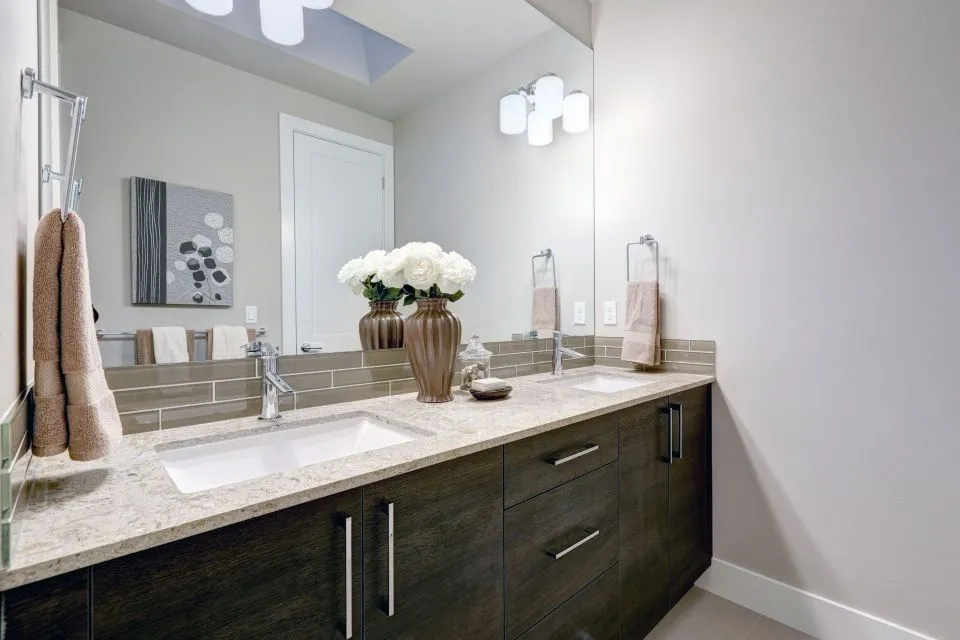
A craftsman renovation usually extends beyond the kitchen. Soapstone lends itself well to the wider material palette, from integrated bathroom vanity tops to fire surrounds and outdoor servery benches. Its softness makes it easy to carve or shape, and the same veining that defines a kitchen island can flow into a powder-room basin or a fireplace hearth.
In bathrooms, soapstone is often used for vanity tops and integrated sinks but is less common inside the shower itself. Owners weighing which surfaces belong where in a wet area often look at adjacent upgrades; reading about why a quartz shower pan is more hygienic than traditional tile helps clarify which product suits which zone in a craftsman bathroom scheme.
For fireplace surrounds, mantels and hearths in living rooms with original timber overmantels, soapstone offers a soft, tactile contrast that absorbs heat without discolouring. Outdoor kitchens in Brisbane, Perth and Sydney's western suburbs benefit from the same heat tolerance and weather resistance, particularly when paired with a stainless or blackened-steel barbecue unit. Some local fabricators even produce soapstone coffee tables and side tables to match the kitchen island, continuing the material story across adjoining rooms.
A small care routine keeps the surface looking its best through long, dry summers and short, bright winters.
- Oil the bench every six to twelve months with a food-safe mineral oil, or apply a specialty soapstone wax for a longer-lasting finish.
- Wipe acidic spills promptly, even though the stone resists etching, to keep the oiled finish even.
- Sand out deeper scratches with 220-grit paper, then re-oil the area to blend it back into the surrounding patina.
- Use trivets where possible, even though the stone tolerates heat, to keep the oiled finish uniform.
- Avoid harsh bleach or ammonia cleaners; a soft cloth and warm soapy water are all that is needed.