Why Large Format Porcelain Works So Well In Australian Bathrooms
A large format porcelain slab can give a bathroom vanity a crisp, architectural finish with very few joins. Instead of assembling several smaller tiles or relying on a conventional benchtop with a separate splashback, a fabricator can cut one carefully templated sheet for the vanity surface, upstand, wall lining or shower feature. The result is a calm visual field that suits both compact apartment bathrooms and generous family ensuites.
Porcelain is made from refined minerals fired at very high temperatures, creating a dense, hard-wearing surface. It can reproduce the appearance of marble, concrete, limestone, terrazzo and timber while offering its own practical advantages. For Australian homes, where bathrooms may need to handle beach sand, strong sunlight, damp coastal air or frequent family use, that combination of appearance and resilience is valuable.
The term “large format” generally refers to slabs that are much larger than ordinary wall or floor tiles. Exact dimensions vary between manufacturers, so the available sheet size must be checked before the design is finalised. Doorways, stairwells, lifts and tight hallways in Sydney or Melbourne apartments can affect delivery and handling, while a Brisbane renovation may require careful planning around humidity and ventilation.
A slab is still a manufactured product that needs skilled cutting, edge finishing and installation. It is not a substitute for correct waterproofing, sound cabinetry or professional trade work. When the material, design and installation method are considered together, a porcelain vanity top can become a durable centrepiece rather than simply a decorative surface.
A Cleaner Look With Fewer Joins
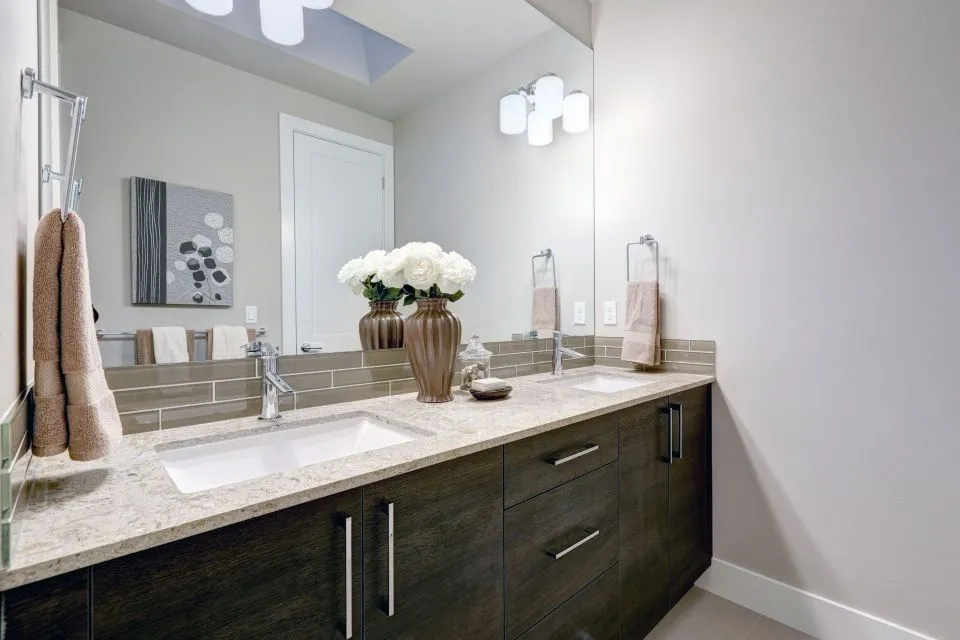
The most noticeable benefit is visual continuity. A single porcelain sheet can span a double vanity with a restrained number of seams, allowing veining or colour movement to flow across the surface. This works especially well with contemporary Australian bathroom styles, where wall-hung cabinetry, frameless shower screens and simple brushed metal tapware create a clean, uncluttered setting.
Fewer joins also mean fewer lines where soap residue, dust or moisture can accumulate. No surface is completely maintenance-free, and the junction between the top, basin and wall still needs proper sealing. However, reducing the number of grout lines can make daily wiping easier than cleaning a vanity assembled from many small tiles.
Large slabs are particularly effective in narrow bathrooms because continuous surfaces make the room feel less visually interrupted. A matching porcelain splashback or wall panel can extend the impression of space behind the basin. In a compact terrace home in inner Melbourne or an apartment in central Sydney, this continuity can make a modest room feel more considered without adding bulky decoration.
The edge profile also contributes to the finished appearance. A slim square edge reinforces a modern design, while a mitred edge can create the impression of a thicker, more substantial top. These details should be agreed during templating because they affect the amount of material required and the way the slab will be cut.
Hygiene, Moisture And Everyday Durability
A properly manufactured porcelain surface has very low water absorption, making it well suited to a vanity environment. Water splashes, toothpaste, cosmetics and hand soap can usually be removed with a soft cloth and a pH-neutral cleaner. Unlike some natural stones, many porcelain finishes do not require routine sealing, although the manufacturer’s care instructions should always take priority.
Porcelain is also resistant to staining, scratching and heat under normal bathroom conditions. A hot hair-styling tool should still be placed on a suitable mat, and abrasive powders or harsh chemicals can damage the finish or leave marks. The material is tough, but its performance depends on choosing a product rated for the intended use and protecting vulnerable cut-outs during fabrication.
Bathrooms in coastal areas such as Gold Coast, Wollongong and Perth may be exposed to humid air and salt carried indoors from nearby beaches. Porcelain itself handles moisture well, but cabinetry, silicone joints, wall substrates and plumbing penetrations still need attention. Good extraction, adequate drying time and correctly detailed waterproofing are essential parts of a successful renovation.
For comparison, homeowners considering other vanity materials can review these quartz vanity benefits. Quartz remains a popular option, while porcelain may appeal to people seeking a thinner profile, dramatic marble-style patterns or a surface suitable for matching wall applications.
Everyday Features Worth Prioritising
- Low water absorption for splash-prone vanity areas
- Resistance to common bathroom stains and cosmetics
- A finish that suits the cleaning products used at home
- Correctly sealed basin and wall junctions
Design Freedom Beyond A Marble Effect
Porcelain is available in a broad range of colours and patterns. Some slabs imitate Calacatta or Carrara marble with fine grey veining, while others resemble travertine, sandstone, cement or dark soapstone. This gives homeowners greater freedom to coordinate a vanity top with floor tiles, cabinetry, tapware and wall paint without sourcing several different materials.
Bookmatching can be used when two adjoining pieces display mirrored or aligned veining. It can create a strong feature behind a freestanding basin or across a wide double vanity, although it requires extra planning and may produce more offcuts. A fabricator should confirm the slab’s pattern direction before cutting, especially where drawers, tap holes and an undermount basin must fit within the layout.
A porcelain top can be paired with a tiled wall, a full-height slab splashback or a separate material such as timber veneer. In an Australian coastal home, pale stone-look porcelain with light oak cabinetry can create a relaxed scheme. In a heritage Queenslander, a softly veined surface can bridge traditional joinery and modern plumbing fixtures without appearing overly stark.
The same design language can continue into a shower niche, bath hob, shelf or wall panel. This creates a coordinated room without requiring every surface to be identical. Broader surface material inspiration can help when comparing finishes and textures, although the final selection should be based on bathroom suitability, slab availability and local fabrication advice.
Colour samples should be viewed in the actual room or under lighting that resembles it. Warm LED lights can make cream and beige surfaces appear richer, while cool daylight may emphasise blue or grey undertones. A small sample viewed beside the cabinetry, floor and grout is more reliable than a digital image on a phone.
Installation Details That Protect The Investment
Porcelain is highly durable once installed, but slabs can be vulnerable at unsupported edges, corners and cut-outs during transport and handling. Professional templating is important because the installer needs to account for cabinet dimensions, wall irregularities, tap positions, basin type and clearances. A rushed measurement can create alignment problems that are difficult to correct after the slab has been cut.
The cabinet base must be level, stable and adequately supported. Large vanities may need additional reinforcement around an undermount basin or wide overhang. Wall-hung cabinetry requires particular care because the frame and fixing system carry the combined weight of the cabinet, slab, basin and stored items. The slab supplier’s span and support requirements should guide the design.
Cut-outs for basins, mixers and waste fittings need rounded internal corners where appropriate, rather than sharp stress points. Edge treatment should be selected according to the slab thickness and the desired style. A qualified installer will also use suitable adhesives, flexible sealants and movement allowances so the vanity can cope with minor building movement.
Australian wet-area work must be coordinated with the relevant state or territory requirements and the National Construction Code. Waterproofing is a separate trade responsibility from installing the vanity top. The top should not be expected to compensate for a failed membrane, poor fall or unsealed penetration. Clear coordination between the builder, plumber, waterproofer, cabinetmaker and stone or porcelain installer prevents many avoidable defects.
Access planning matters in renovated apartments and older homes. A slab that fits comfortably through a warehouse door may not pass through a narrow stairwell or lift. Measuring the route before fabrication can avoid expensive redesigns. In regional areas, it is also sensible to confirm lead times and replacement availability before committing to a particular colour.
Questions For Your Fabricator
- What slab dimensions and thicknesses are available?
- How will the sheet be supported during transport and installation?
- Where will seams, joins and pattern changes be positioned?
- Which cleaners, sealants and edge treatments are recommended?
Value, Maintenance And Material Selection
The initial price of a porcelain vanity top depends on more than the square metre rate. Slab size, pattern, thickness, edge detail, cut-outs, splashbacks, delivery distance and installation complexity all influence the final cost. A dramatic marble-look sheet may have a higher price and more waste than a plain colour, particularly when the design requires careful vein placement.
The long service life can make porcelain attractive for a renovation intended to last for many years. Its colour and pattern are generally consistent through the manufactured surface, although the appearance at a cut edge depends on the product construction. A small damaged section may not be simple to repair invisibly, so careful handling and a suitable installer are important.
Routine care is straightforward. Wipe spills promptly, use a soft cloth and follow the manufacturer’s cleaning advice. Avoid dragging metal containers, leaving harsh hair-dye products on the surface or using scourers intended for cookware. Silicone around a basin or wall junction may need renewal over time, which is normal maintenance rather than a failure of the slab itself.
Material safety is also relevant in Australia. Since engineered stone benchtops were prohibited nationally from 1 July 2024 because of respirable crystalline silica risks, homeowners should ask exactly what product is being specified and how it will be fabricated. Porcelain is a different manufactured material and may be regulated differently, but cutting and polishing any silica-containing slab requires controlled wet processing, suitable dust management and trained workers. State and territory requirements should be checked for the project.
The Countertop Store’s broader fabrication approach illustrates why consultation, templating, edging and installation should be treated as one connected process. Whether a project uses porcelain, quartz, granite or another surface, a successful bathroom top depends on accurate measurements, appropriate support and a finish that fits the way the room will be used. A large format porcelain slab is most effective when its visual impact is matched by careful technical planning.