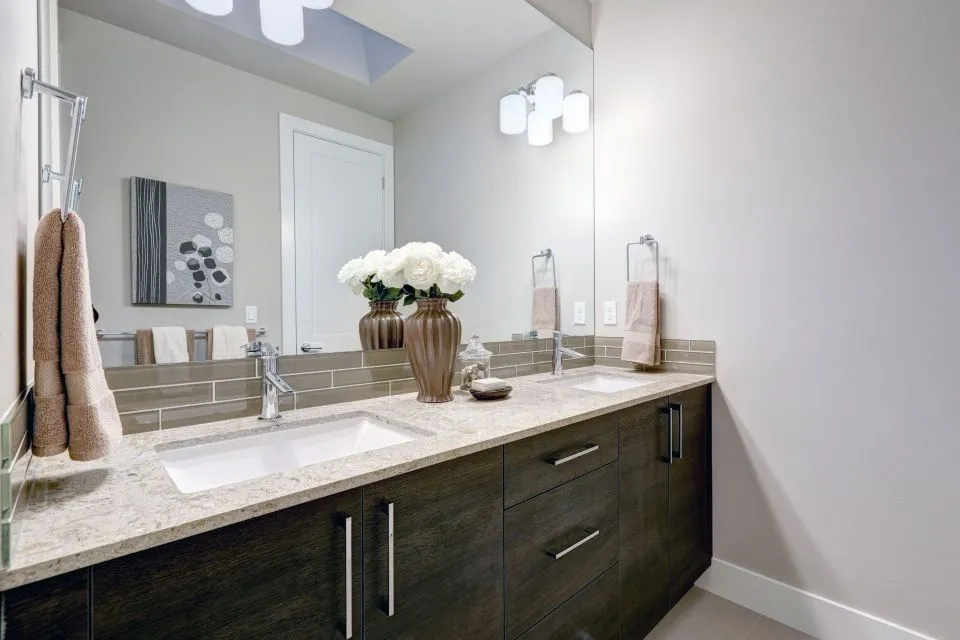
Why quartz shower seats and niches elevate Australian master bathrooms
The master bathroom, or "ensuite" as most Aussies call it, has quietly become one of the most renovated spaces in the average family home. With renovation loans, accelerated depreciation write-offs for investment properties, and a steady stream of lifestyle TV shows championing the spa-at-home look, more homeowners from the Mornington Peninsula to the Sunshine Coast are investing in features that look polished and perform day in, day out. A custom shower seat and matching wall niches sit high on that wish list, and quartz has emerged as the go-to material for good reason.
Engineered quartz has long been celebrated for kitchen benchtops, but its move into the shower has been more recent and is gaining serious traction in new builds across the western suburbs of Sydney, Brisbane's inner north, and Adelaide's heritage rebuilds. Because quartz is manufactured under heat and pressure with resin binders, it behaves predictably in wet environments where natural stone can struggle. That predictability matters when you are committing thousands of dollars to a wet-area feature that you expect to look immaculate for a decade or more.
Homeowners often approach this kind of decision with a shopping list of worries: will it stain, will it mildew, will it crack where the slope meets the drain, and will the colour still feel current in five years' time. Quartz answers most of those concerns without the sealing rituals that marble or granite demand. The rest of this article unpacks what makes quartz such a strong contender for shower seats and niches, and where its limits sit honestly.
Why quartz suits the Australian climate and lifestyle
Humidity rolling in from the Tasman Sea and across from the Indian Ocean keeps surfaces damp for hours after a shower, while inland summers in places like Tamworth or Mildura send dry heat bouncing off tile. Quartz holds its own in both extremes because it does not expand and contract the way some natural stones do, and the resin content keeps the slab dimensionally stable through temperature swings.
For households with school-age kids, the morning routine in a typical suburban ensuite is a blur of steam, wet towels, and shampoo bottles being dragged across every horizontal surface. A solid quartz seat at the end of the shower turns into a practical perch for shaving legs, bathing toddlers, or simply sitting under the rainfall head without sitting on the cold tile. The same applies for older homeowners renovating to age in place, which is a growing market in regional towns such as Ballarat and Toowoomba where retirement-friendly upgrades are common.
There is also the matter of water quality. Australian homes, particularly in parts of Melbourne and regional Victoria, live with hard water that leaves chalky residue on glass and stone. Quartz's dense surface resists mineral build-up far better than porous alternatives, so a quick squeegee at the end of the week is usually enough to keep the seat and niches looking new. That ease of care is a real selling point for time-poor households juggling work, school pick-up, and weekend sport.
The hygiene advantage in steamy bathroom conditions
A shower is essentially a small, warm, humid room that cycles between hot and cool several times a day. For any material used in that environment, mould and mildew resistance is non-negotiable. Because quartz is non-porous, the resin matrix prevents water from seeping below the surface, denying mould the moisture it needs to take hold. This is a tangible advantage over materials like marble or unsealed granite, where micro-pores can harbour bacteria and require periodic sealing.
Quartz shower niches work on the same principle. Instead of tiled cubbies with grout lines that discolour over time, a solid quartz niche presents a seamless, easy-wipe cavity. The absence of grout is more than a styling choice. Grout is famously the first thing to deteriorate in a wet area, and replacing it in a behind-the-tile cavity is a job most homeowners would rather avoid. With a quartz insert, that maintenance headache essentially disappears.
For households with allergies or asthma, the low-VOC, mould-resistant nature of quality quartz can also make the ensuite a more comfortable space. Several Australian fabricators now stock brands that carry Greenguard or similar certifications, which is worth asking about if indoor air quality matters to your family. It is the kind of detail that tends to come up in conversations with builders working on the higher-end homes of Mosman, Brighton, or Cottesloe.
Design flexibility for built-in benches and alcoves
A custom shower seat is rarely a one-size-fits-all rectangle. It might need to curve around a corner, drop down at one end for easier access, or match a sloping ceiling in a second-storey addition. Quartz fabricators cut seats from slabs on CNC machines, which means curves, gentle radii, and even chamfered corners are all achievable without the cost jumping dramatically. The material can also be mitred to wrap seamlessly around a hob or up onto the wall, creating the kind of integrated look you see in display suites at Sydney's Rozelle or Melbourne's Albert Park.
Niches offer similar freedom. Rather than a single square shelf at shoulder height, a series of vertical niches can be stacked along one wall to suit bottles of varying heights, or a single wide horizontal alcove can run the length of the shower for a hotel-style feel. Matching the niche interior to the seat creates visual continuity, while a contrasting stone in a darker tone can frame the shower like a piece of furniture. This is where quartz shines: it is manufactured in consistent batches, so colour matching across multiple pieces is reliable, unlike natural stone where veining can vary from slab to slab.
Edge profiles are another small detail with a big impact. A pencil round edge on the seat front feels softer underfoot, while a shark-nose or mitred apron delivers a more architectural, contemporary look. Both are stock-standard requests for most Australian fabricators, and the choice usually comes down to whether the broader bathroom leans federation, coastal Hamptons, or minimalist modern. For homeowners still weighing up broader surface choices, this marble vs porcelain comparison covers the surrounding benchtop decision in useful detail.
Long-term durability for family ensuites
Durability in a shower seat is about more than surviving a dropped shampoo bottle. It means the surface will not pit under constant exposure to soap, body wash, and the occasional hair dye session. Quartz rates around 7 on the Mohs hardness scale, which puts it well ahead of marble and on par with many granites. That hardness translates into scratch resistance during everyday use, and because the colour runs through the engineered slab rather than sitting as a surface coating, minor scuffs do not reveal a different colour underneath.
For busy households in growth corridors like Sydney's North West or Perth's northern suburbs, ensuites cop a hammering. Between the kids' nightly baths and the parents' morning rush, a shower seat can see thousands of contact hours a year. Quartz handles this cycle without the surface fatigue that can affect fibreglass inserts or the chipping that occasionally happens with porcelain panels. Most manufacturers back their product with a 10 to 15 year residential warranty, which gives renovators some reassurance when they are weighing the upfront cost.
It is worth noting that quartz is not indestructible. Heavy impact from a dropped tile or a wrench during future plumbing work can chip an edge, and prolonged exposure to certain harsh chemicals can dull the finish. Used as intended inside a residential shower, though, quartz has a track record that has been refined over more than three decades of manufacturing. It is a mature product, which matters when you are tying the look of your ensuite to it.
Style choices that complement Australian homes
Australian home design leans coastal, earthy, and increasingly warm. The crisp whites and pale greys of the early 2010s have given way to softer creams, sandy beiges, sage greens, and the occasional dramatic charcoal. Quartz manufacturers have followed this shift, and current ranges offer an extensive palette that suits everything from a Californian bungalow in Fremantle to a new build in Brisbane's Brookwater estate.
For a classic coastal look, soft whites with subtle veining read beautifully against handmade subway tiles and brushed brass tapware. For a more grounded, earthy aesthetic, warm taupe or limestone-look quartz pairs well with timber vanities and matte black fittings, a combination very much on trend in the display homes of Melbourne's Mickleham and the new estates popping up around Geelong. For those chasing a moodier, hotel-style ensuite, deep grey or almost-black quartz with honed finishes is a popular pick in renovated terraces from Paddington to Prahran.
Book-matching, where mirror-image slabs are placed on opposite walls to create a symmetrical veining pattern, is a feature borrowed from luxury hotel design and now showing up in higher-end Australian homes. It is particularly striking in a walk-in shower where the eye is drawn into the space. Talk to your fabricator early if you want this effect, as it requires careful slab selection and layout planning well before installation day.
Practical choices that make a quartz shower work
The path from showroom sample to finished shower seat involves several stages: templating, fabrication, and installation. A reputable fabricator will visit the site once the shower walls are waterproofed but before tiling to take precise measurements. Lead time is typically two to four weeks depending on the fabricator's workload, and it pays to book early if you are renovating around a holiday period or building into a tight settlement.
Day-to-day care is refreshingly simple once installation is complete. A wipe-down with a pH-neutral cleaner and a soft cloth handles most marks, and a squeegee after each shower keeps water spots at bay. Avoid abrasive pads, bleach-based products, and solvents, as these can break down the resin over time. With that small amount of attention, a quartz seat and matching niches will look as crisp in year ten as the week they were installed. Keep these final pointers in mind when planning your project:
- Choose a light, warm-toned quartz if the ensuite lacks natural light, particularly in inner-city apartments where borrowed daylight is limited.
- Specify a slip-resistant finish on the seat surface, such as a lightly textured or honed option, to reduce the chance of slipping when wet.
- Match the niche colour to the seat for a cohesive look, or pick a slightly darker tone to create a deliberate frame around the shower.
- Plan the niche heights around your tallest bottle or your tallest family member, then add a 30 millimetre buffer for easier cleaning.
- Ask the fabricator about mitred joins and how they hide silicone lines, especially if you want a seamless look from seat to wall.
- Confirm the warranty terms in writing, including what counts as fair wear and tear versus accidental damage.
- Book templating only after waterproofing is signed off and tiles are selected, as late changes can affect the final fit.