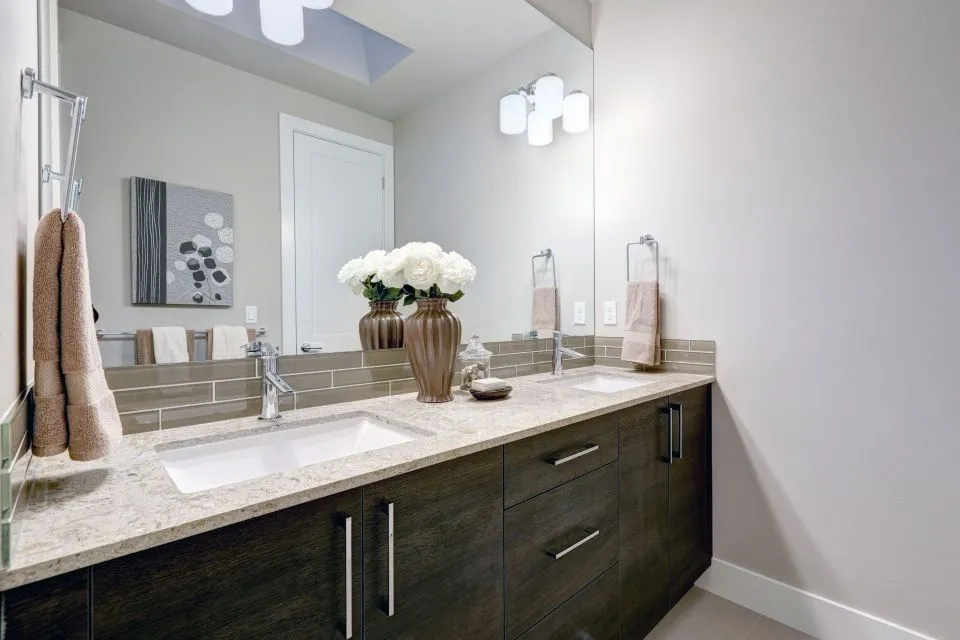
Choosing the Right Countertop for a Wine Fridge Home Bar
A home bar built around a wine fridge needs more thought than a standard drinks bench. The surface must cope with bottle weight, condensation, corkscrews, ice, citrus, spilled red wine and the occasional hot serving board. It also needs to work with the fridge’s ventilation requirements and leave enough room for glasses, decanters and preparation.
The best surface depends on the bar’s location and how it will be used. A compact indoor bar in a Brisbane apartment has different needs from a large alfresco entertaining area in Perth, while a refined wine room near Adelaide may place greater importance on veining and texture than on resistance to cooking heat.
Australian homeowners should also consider current material regulations. Engineered stone benchtops containing crystalline silica have been prohibited nationally since 1 July 2024, with implementation and transition details managed through workplace safety systems in each state and territory. Product composition, fabrication practices and local requirements should be checked before ordering any quartz-style surface.
| Material | Main strengths | Points to consider | Best suited to |
|---|---|---|---|
| Quartz | Consistent appearance, low maintenance, broad colour range | Check Australian compliance and product composition; avoid direct heat | Indoor bars and entertaining areas |
| Porcelain | Heat, stain, UV and moisture resistance | Edges and corners need careful fabrication | Alfresco bars and contemporary interiors |
| Dekton | Highly durable, heat and scratch resistant | Premium cost and specialist installation | High-use bars and outdoor kitchens |
| Granite | Natural character, strong performance, heat resistance | Needs periodic sealing depending on the stone | Traditional or statement bars |
| Soapstone | Soft matte finish, excellent heat resistance | Scratches and patinas over time | Relaxed, tactile interiors |
| Marble | Distinctive veining and luxury appearance | Can etch or stain without careful care | Low-volume feature bars |
| Butcher block | Warmth, easy visual integration and repairability | Requires oiling and protection from moisture | Rustic, Hamptons and heritage-style bars |
Start with the wine fridge and room
The wine fridge should determine the first measurements, rather than being treated as an appliance added at the end. Most under-bench units require ventilation through the front or a specified clearance around the cabinet. A solid countertop should not obstruct the vent, and the opening needs to allow the fridge door to open fully without striking an adjacent wall, panel or bar stool.
Allow space beside the fridge for setting down bottles before opening them. A narrow landing zone may be enough for a small apartment bar, while a wider preparation area makes sense in a family home. For a typical Australian entertaining layout, a benchtop depth of around 600 millimetres works with many under-counter appliances, although the final dimension depends on cabinetry and the selected fridge.
Location affects the material choice as well. A bar near a sunny window in Melbourne may experience strong seasonal temperature changes, while a coastal home around the Gold Coast or Newcastle may deal with humid air and salt-laden moisture. Outdoor bars in Queensland and Western Australia need surfaces that cope with UV exposure, rain and rapid heating far better than an interior drinks station.
A home bar near the pool or patio also benefits from rounded edges and a practical overhang. These details reduce sharp corners in busy walkways and create comfortable seating without placing excessive weight on the cabinet frame. Wine bottles are heavy, so the cabinetry and any cantilevered section should be structurally supported.
Quartz for controlled, easy-care entertaining
Quartz has long appealed to homeowners who want a clean, predictable benchtop with minimal daily maintenance. Its manufactured patterning can resemble marble, concrete or natural stone, making it easy to coordinate with timber cabinetry, dark joinery or a tiled splashback. A pale quartz surface can brighten a compact bar, while charcoal and mid-grey options conceal small marks between cleans.
For an indoor drinks area, quartz resists many common stains from wine, cordial and mixers. Its non-porous surface does not require the same routine sealing as many natural stones, and a soft cloth with mild detergent is usually sufficient for cleaning. It also offers consistent slab colour, which can be useful when a bar includes a waterfall end, shelf or matching splashback.
The latest quartz technology includes improved patterns and finishes that can create a more natural stone-like appearance. Even so, quartz should not be treated as heatproof. Hot pans, heated serving trays and direct contact with a kettle or portable appliance can mark the resin content, so trivets remain essential.
Australian buyers need to distinguish between older engineered stone products and newer compliant surfaces. Since the national silica-related ban, the word “quartz” can describe several different product categories, and availability varies between suppliers. Ask for written product information, fabrication controls and confirmation that the selected material is legal for the intended use in the relevant state or territory.
Porcelain and Dekton for heat and outdoor settings
Porcelain slabs are particularly useful when the bar sits in an alfresco area, beside a barbecue or in a bright entertaining zone. They are resistant to UV, moisture, staining and high temperatures, which suits the conditions found in many Australian backyards. A well-selected porcelain surface can continue from an indoor kitchen through to an outdoor drinks counter for a cohesive look.
The same material can provide a thin, contemporary profile or a thicker fabricated edge. Large-format porcelain can mimic marble, terrazzo, timber or oxidised metal, giving designers considerable scope. It is also useful for a matching splashback behind the wine fridge, where wine splashes and fingerprints would otherwise show on painted plaster or porous tile grout. More background on the material’s surface performance appears in this guide to porcelain slab benefits.
Porcelain is hard and durable, though its edges can be vulnerable if a bottle or heavy glass strikes an unsupported corner. Fabrication should be completed by an experienced stone professional using the correct cutting, reinforcement and edge techniques. The cabinet base must be level and adequately supported because large porcelain pieces are less forgiving of movement during installation.
Dekton is another strong option for a demanding bar. Its dense, ultra-compact construction makes it highly resistant to scratches, heat and UV exposure. That performance is useful for an outdoor kitchen or a high-traffic entertaining area around Sydney, Canberra or Perth. Dekton generally sits at a higher price point, and its weight, handling requirements and specialised fabrication need to be included in the project budget.
Granite and soapstone for natural character
Granite remains a reliable choice for homeowners who want genuine stone with visible variation. Each slab has its own mineral movement, so a bar can become a strong architectural feature rather than a background surface. Deep green, black, blue-grey and warm brown granites work well with timber cabinetry and brass, aged bronze or brushed nickel hardware.
Granite handles heat better than resin-based surfaces and generally performs well around drink-making equipment. It still benefits from prompt cleaning after red wine, coffee liqueur or acidic mixers are spilled. Some granite varieties are more absorbent than others, so sealing requirements should be discussed when the slab is selected rather than assumed.
Soapstone offers a different look: a soft, matte finish with deep grey, charcoal or blue-green tones. It is dense and highly resistant to heat, making it a practical match for a bar beside a fireplace or barbecue. The surface can scratch, but many owners appreciate the way light marks and rubbing gradually create a lived-in patina. Minor scratches can often be blended or sanded according to the fabricator’s advice.
Both stones suit Australian homes that favour natural materials and indoor-outdoor connections. Granite may feel more formal in a polished finish, while honed soapstone suits relaxed coastal, country or industrial interiors. Sample viewing is important because showroom pieces rarely capture the full variation of a complete slab.
Marble and butcher block for a distinctive finish
Marble delivers a level of visual movement that is difficult to reproduce convincingly. White marble with grey veining can make a small bar feel light and elegant, while darker varieties create a moody wine-cellar atmosphere. It pairs particularly well with fluted timber, mirrored cabinetry and warm lighting.
The trade-off is that marble is more vulnerable to etching from acidic ingredients such as lemon, lime, wine and some cleaning products. Etching is a change to the polish rather than a conventional stain, so it may remain visible even after the surface is cleaned. Honed marble can disguise some marks better than a high-polish finish, and regular sealing adds protection without making the stone maintenance-free.
Butcher block brings warmth that hard surfaces cannot match. Timber works beautifully with a wine fridge in a federation home, Queenslander or Hamptons-inspired kitchen, especially when the cabinetry is painted or the room contains open shelving. It is also comfortable under the forearm when guests gather at the bar.
Wood needs more attention around wet bottles and condensation. A properly finished top should be wiped dry, protected from standing water and periodically maintained with the recommended food-safe oil or coating. Butcher block should be kept away from direct heat and may be a better choice for a dedicated indoor drinks station than an exposed outdoor bar. Its ability to be lightly sanded and refinished can extend its service life.
Design, installation and care details
The edge profile has a practical role in a drinks area. A small pencil edge or eased edge feels comfortable against the arm and reduces the chance of sharp impact points. More elaborate ogee or bevelled edges can suit traditional joinery, although intricate profiles may increase fabrication costs and create more areas to clean around.
A backsplash or low upstand behind the bar protects the wall from splashes and makes wiping easier. Porcelain, matching quartz-style material, glass and glazed ceramic tile are all suitable options, depending on the overall design. If an integrated sink, ice trough or drainboard is included, the fabricator should coordinate the cut-outs with the plumber and cabinetmaker before the slab is produced.
Templating must account for the wine fridge, appliance clearances, sink position, power access and any wall irregularities. In older Australian homes, walls and cabinets are not always perfectly square, particularly after renovations to brick terraces, weatherboard houses or elevated Queensland homes. A precise site measure helps prevent a visible gap or a door that cannot open correctly.
Daily care is straightforward when the surface matches the way the bar is used. Wipe spills promptly, use coasters beneath chilled bottles and keep a trivet nearby for heated items. Avoid abrasive powders and harsh solvents unless the manufacturer specifically approves them. With the right material, sound support and careful fabrication, a wine fridge bar can remain practical for regular gatherings while adding a tailored feature to the kitchen, dining room or alfresco area.