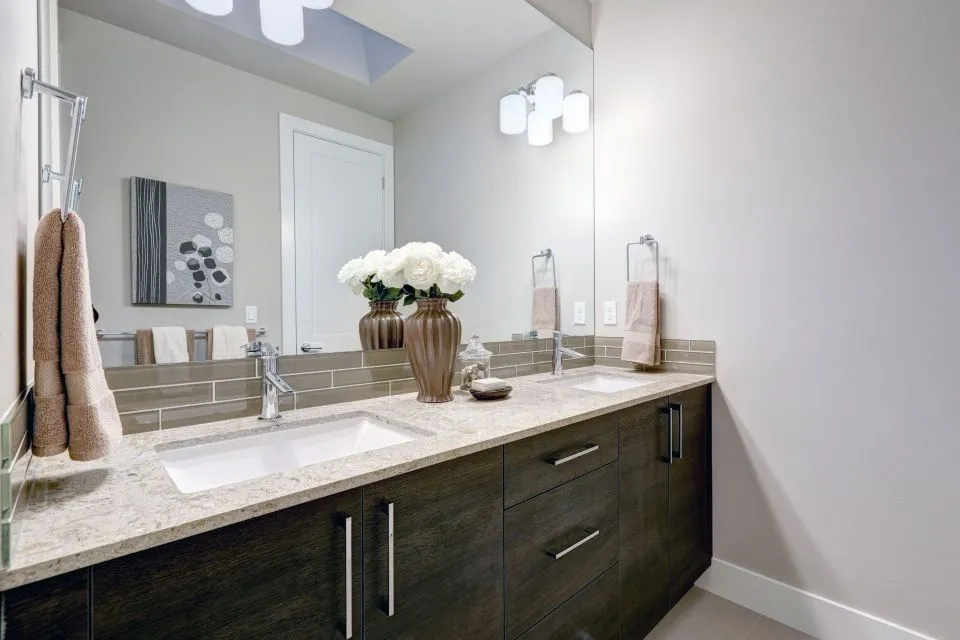
Quartzite and Granite Compared in a Sunlit Kitchen
Australians have long embraced sunlight as a design feature rather than something to be screened out. From the wide verandahs of Brisbane Queenslanders to the double-hung windows of Sydney's Federation terraces, homes across the country invite natural light deep into the heart of the home. The kitchen sits at the centre of that tradition, particularly in open-plan layouts that flow toward the deck, the courtyard, or the backyard pool.
When sunlight pours across a benchtop for hours each day, the material beneath it becomes a defining visual element. Two natural stones dominate the conversation among renovators in Sydney, Melbourne, Brisbane, and Perth: quartzite and granite. Both are quarried, both are hard, both bring organic movement to a room. Yet they behave differently under bright light, respond differently to spills and heat, and age in their own particular way. Choosing between them is less about finding a winner and more about understanding which stone matches the way an Australian household actually lives.
This comparison looks past showroom samples and marketing claims. It walks through the geological character of each stone, the way colour and veining shift in a north-facing kitchen, the daily wear each surface tolerates, the maintenance routines that keep them looking sharp, and the realities of price and availability in the Australian market. By the end, the choice between quartzite and granite should feel less like a coin flip and more like a deliberate decision tied to the home itself.
Origin and Composition
Quartzite begins its story as sandstone. Over millions of years, heat and tectonic pressure fuse the quartz grains together into a metamorphic rock that ranks among the hardest used in residential design. Granite, by contrast, is an igneous rock that forms when molten magma cools slowly beneath the earth's surface, allowing visible crystals of feldspar, quartz, and mica to grow and interlock. The two stones share a quartz-rich chemistry, but they arrived at their hardness through very different journeys.
In practical terms, both materials are tough. Quartzite generally scores slightly higher on the Mohs hardness scale than granite, which means it resists scratching from knife work, dragged serving boards, and the everyday grit that settles on a benchtop after a trip back from the beach. Granite remains impressively hard in its own right and offers comparable scratch resistance for typical kitchen use.
The difference that often surprises renovators is porosity. Quartzite is denser and less porous than many granites, particularly the lighter and more exotic varieties. That density influences how each stone reacts to oil, wine, coffee, and the turmeric-heavy curries popular in many Australian households. A well-sealed slab of either material will resist spills, but the underlying structure of the stone shapes how forgiving each surface is when the seal begins to wear.
Appearance Under Australian Sunlight
Sunlight in Australia tends to be intense, especially in western Sydney, Adelaide, and Perth, where homes often orient living areas to capture the afternoon sun. In that light, granite reveals its crystalline personality. The speckled pattern of feldspar and mica becomes more pronounced, and lighter granites can shimmer almost like glass. The stone reads as busy, energetic, and confident.
Quartzite under the same conditions tends to feel calmer. Its veining resembles marble more closely than granite, with sweeping lines and soft tonal shifts. Whites, soft greys, creamy beiges, and the occasional blush or green vein appear more like brushstrokes than crystals. In a coastal home near Byron Bay or in a Hamptons-style build in Mosman, quartzite offers the marble look that designers love without the same anxiety about etching, and the stone can flow uninterrupted from benchtop to sink in the manner described in What Is an Undermount Sink and Why It Works Best with Stone Countertops.
Colour stability matters when a benchtop faces north or west. Both stones hold their colour well, but the resins sometimes used to fill micro-fissures in quartzite can yellow slightly over years of UV exposure, particularly in unshaded alfresco kitchens. Granite, without resin treatment, holds its original tone more reliably. For homeowners planning a fully open servery window that connects the indoor kitchen to an outdoor entertaining area, that distinction is worth weighing carefully.
Strength, Heat, and Daily Wear
Australian kitchens see a particular kind of wear. Hot pots come straight off the wok burner or the Weber barbecue. Slow cookers run for hours during winter in Melbourne and Canberra. Espresso machines steam continuously in households that take their morning flat white seriously. The benchtop needs to absorb that thermal and mechanical stress without complaint.
Granite handles direct heat very well. A saucepan placed briefly on the surface will not scorch or discolour it. Both stones perform well here, though quartzite holds a slight edge in heat tolerance thanks to its metamorphic formation. Trivets remain a sensible precaution, particularly where resin-filled fissures exist.
Mechanical stress tells a different story. Quartzite resists chips and cracks better than most granites, especially along cutouts for sinks and cooktops. The corners around an undermount basin are common weak points in any stone installation, and quartzite's density offers a small but real margin of safety. Granite can chip if a heavy cast-iron pan is dropped on a corner, though it generally copes with everyday knocks without issue. Slab thickness plays a role here as well. A countertop thickness guide helps clarify why a 30mm slab feels different from a 20mm one, and why builders in heritage suburbs like Paddington or Fitzroy often favour thicker profiles for visual weight in rooms with high ceilings.
Daily wear also includes knife work. Neither stone is scratch-proof, but both resist casual contact with cutlery, ceramic dishes, and glassware. Using a chopping board is good practice with either material, partly to protect the surface and partly to protect the blade.
Care, Sealing, and Stain Resistance
Sealing is the unglamorous part of owning a natural stone benchtop, and it is where many well-informed homeowners feel uncertain. Granite generally benefits from a penetrating sealer at installation and a refresh every one to three years depending on use. Quartzite is often sold pre-sealed, though a top-up in the first twelve months is a common recommendation from Australian fabricators.
The seal is what determines how a stone reacts to a spilled glass of shiraz during a Saturday night dinner, a splash of olive oil while cooking, or the squashed berries a toddler leaves on the island bench. A well-maintained seal lets the liquid sit briefly without staining. A worn seal allows the same liquid to seep into the stone and leave a mark that requires poultice treatment to lift.
Cleaning routines are similar for both. A pH-neutral spray, a soft cloth, and warm water handle ninety percent of what an Australian kitchen throws at a benchtop. Acidic cleaners, bleach, and abrasive powders should be avoided on either stone. Quartzite, being slightly less porous, often forgives a missed seal by a few months, while a neglected granite can show a stain from a forgotten soy sauce puddle within hours.
For families who cook with turmeric, beetroot, and red wine — staples of the modern Australian kitchen — quartzite often proves the more relaxed companion. The stone still demands care, but it tolerates small lapses in attention with more grace. Granite rewards a stricter routine and, when cared for diligently, looks every bit as good decades later.
Price, Sourcing, and the Local Market
Cost shapes most renovation decisions, and the price gap between quartzite and granite in Australia varies by slab, supplier, and current import conditions. Granite remains widely available through distributors such as CDK Stone, WK Marble & Granite, and Marble & Ceramic Corp, with exotics costing more. Quartzite sits in a similar range for common varieties, while the most sought-after patterns, particularly those resembling Italian Calacatta marble, can push the price well beyond a typical granite budget.
Sourcing affects lead times. Granite arrives in steady supply from established quarries in Brazil, India, and Norway, with predictable shipping schedules. Quartzite often travels longer distances from Brazil, with some premium slabs coming from Italy or the United States. Delays do happen, particularly when shipping schedules out of Santos or Genoa fall behind. Planning ahead, ideally two to three months before cabinet installation, gives both the homeowner and the fabricator room to absorb any disruption.
Fabrication costs depend on edge profile, cutout count, and slab thickness. Both stones require diamond tooling, skilled templating, and careful handling. Quotes from reputable Australian fabricators should always specify the slab name, dimensions, finish, edge profile, and any sink or cooktop cutouts. Renovation budgets in Sydney and Melbourne tend to run higher than in Brisbane or Adelaide, mostly because of labour costs rather than material costs.
Local availability of remnant pieces offers another path for smaller projects, including bathroom vanities, laundry benchtops, and shower niches. Both quartzite and granite remnants turn up at stonemason yards around the major capitals, often at a fraction of the full-slab price. For a secondary benchtop or a fireplace hearth, remnants make a great deal of sense.
Choosing a Stone That Suits the Home
A handful of practical points tends to settle the decision for most Australian households weighing these two natural stones.
- Quartzite suits households chasing a soft, marble-like aesthetic with stronger scratch and etch resistance.
- Granite suits households that prefer a speckled, crystalline look with predictable behaviour and reliable colour stability under strong UV.
- Sun-drenched north-facing kitchens benefit from quartzite's light palette, though resin-filled slabs should be assessed for UV sensitivity.
- Households that cook often and tolerate the occasional spill find quartzite slightly more forgiving between seals.
- Heritage homes in suburbs like Paddington, Fitzroy, and North Adelaide often pair naturally with granite's traditional weight and patterning.
- Coastal builds in Noosa, Sorrento, or Byron Bay lean toward quartzite for its softer, beach-appropriate palette.
- Engaging a local fabricator for templating and edge selection always outperforms choosing a slab sight unseen from an online catalogue.